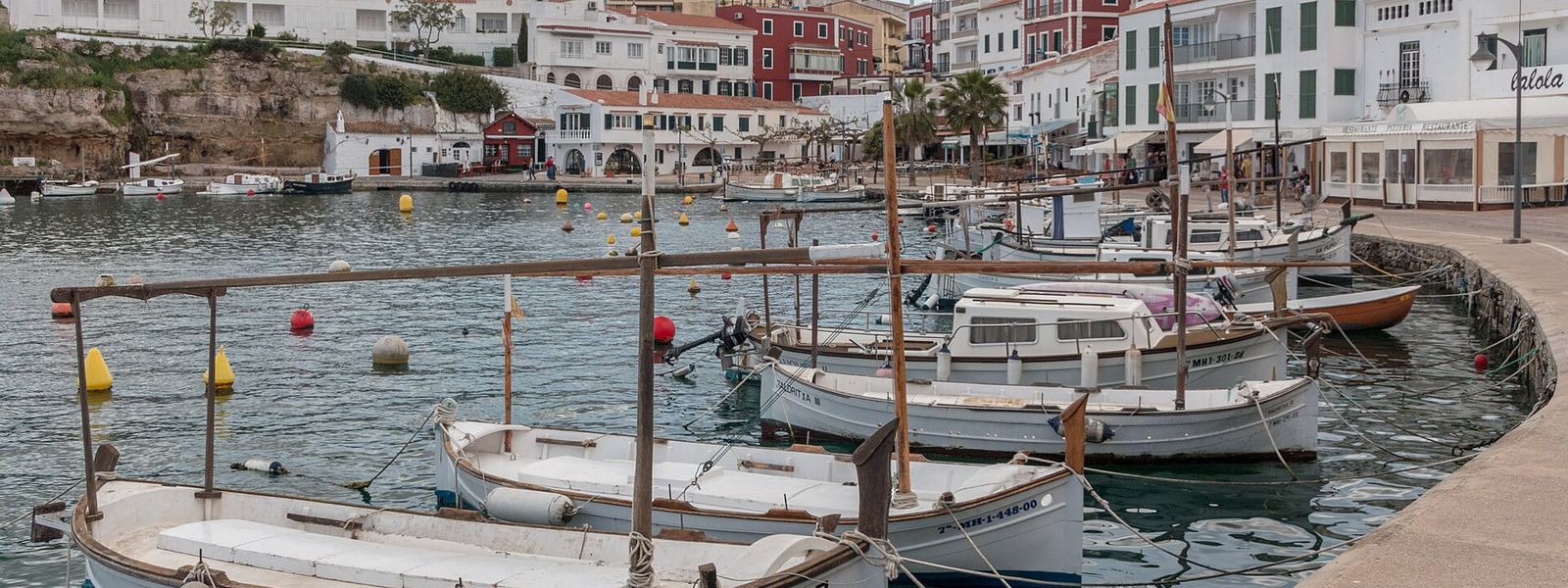
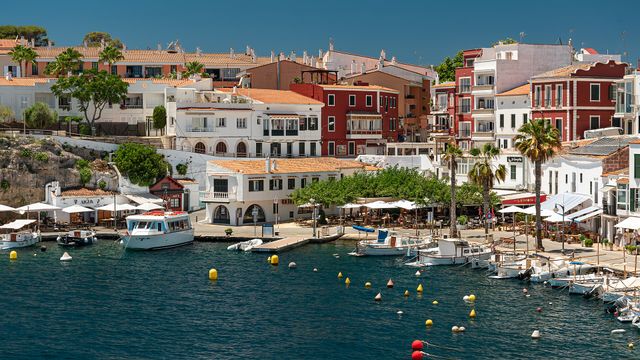
Es Castell stands at the mouth of Maó harbour, facing east across the water, which makes it the first town in Spain to see the sun come up. The British laid it out in 1771 as Georgetown, in honour of George III, and the straight streets around the central square are still theirs. The present name comes from the fort nearby, St Philip's Castle, also given as the Castle of San Felipe. Restaurants sit along the harbour front below the town; the rest is a working town of under 8,000 people.
Es Castell
- Currency
- Euro (EUR, €). Credit and debit cards are widely accepted in cities and tourist areas. ATMs are abundant; most charge €2–7 per foreign card withdrawal. Some shops request ID before accepting a credit card. €500 banknotes are not accepted in most shops.
- Language
- The local language is Menorquí, a Catalan sub-dialect not easily understood by Spanish speakers. Most inhabitants speak Spanish and English to a reasonable standard, especially in tourist areas.
- Power plug
- Europlug (Type C) and Schuko (Type F) sockets; 230 V, 50 Hz
- Visa
- Schengen area: EU, EEA and Swiss nationals enter on national ID card or passport. Many non-EU nationalities have 90-day visa-free access. Non-EEA citizens staying longer than 90 days require an advance visa.
- Time zone
- Europe/Madrid (UTC+01:00 winter time, UTC+02:00 summer time from last Sunday in March to last Sunday in October). Canary Islands are one hour behind mainland Spain.
- Tap water
- Safe to drink throughout Spain. In some southern regions it has high mineral content and may taste unfamiliar; locals often drink bottled water instead. Bottled water is inexpensive and widely available.
- Tipping
- Not mandatory or customary. In restaurants: not expected for simple meals or basic establishments; 5–10% in mid-range or upscale venues if service was exceptional. Always pay cash to the server, not on card. Taxi drivers and hotel staff may appreciate small tips in upscale settings but it is not expected.
- Emergency
- 112
When to go
Shoulder
Apr – May
Spring light suits an east-facing town: the sun is up over the harbour mouth early, and the tables along the water fill slowly as the season builds.
High season
Jun – Sep
The busiest stretch, with the harbour front full in the evenings and the heat at its heaviest in August.
Shoulder
Oct – Nov
The crowds go, the light softens over the harbour, and evenings by the water turn cool.
Low season
Dec – Mar
Winter on the island means wind and rain off the sea, and the town is left to its residents; the earliest sunrise in Spain at least arrives at a civilised hour.
How long to stay
Half a day covers the town itself: the central square, the lanes running down to the water, the harbour front and a meal at the end of it. Two or three nights are the better call if the east of the island is the plan — Es Castell sits on the same harbour as Maó, and the Me-1 runs the length of Menorca from here. Anyone here for 1 June should add a day: Foundation Day is marked with 18th-century dress and ceremony, and the town council, the St Philip's Castle Foundation and Son Granot all take part.
Getting around
Es Castell is small, and the streets around the central square and the lanes down to the harbour front are done on foot. Beyond the town, the Me-1 expressway runs east to west across the whole island and links the airport with Es Castell and the other towns, so with a car the rest of Menorca opens up as day trips. The TMSA bus lines that cross the island serve the town, which is enough for Maó and the main towns without driving. Timetables are the thing to check before you build a day around the bus.
What to see

Destinations in Es Castell
Frequently asked questions
Why is the town called Es Castell?
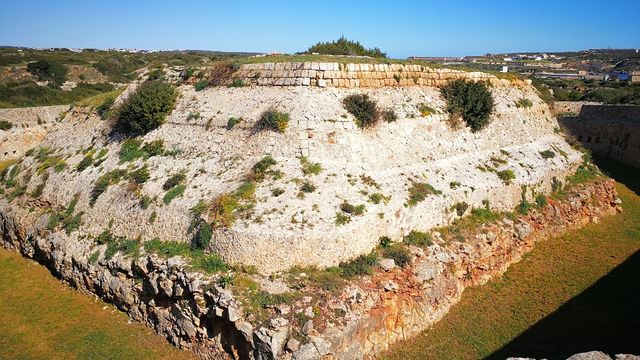
After the fort at the harbour mouth — St Philip's Castle to the British, also given as the Castle of San Felipe, built in the 16th century to defend the island against Turkish attack. The town itself was founded in 1771 by the British as Georgetown, in honour of George III, and was later Villacarlos; the name Es Castell, or El Castell in Spanish, has been in use since 1985, and Villacarlos is still heard.How do you reach Es Castell?
The Me-1 expressway crosses the island east to west and links the airport with Es Castell and the other towns. The TMSA bus lines that run across Menorca also serve the town.Is this really the first town in Spain to see the sunrise?
Yes. Its position in eastern Menorca, looking straight out over the mouth of Maó harbour, gives it the earliest sunrise in the country.Where do you buy food and everyday things?
Three large supermarkets, plus traditional bakeries, butchers and greengrocers selling produce straight from the farm. The weekly market fills the central square on Tuesdays from 08:00 to 12:00.What happens on Foundation Day?
On 1 June the town marks its founding with 18th-century themed festivities, run between the town council, the St Philip's Castle Foundation, Son Granot and other institutions. Son Granot was the house of Patrick Mackellar, the British chief engineer of Menorca who laid the town out in 1771.