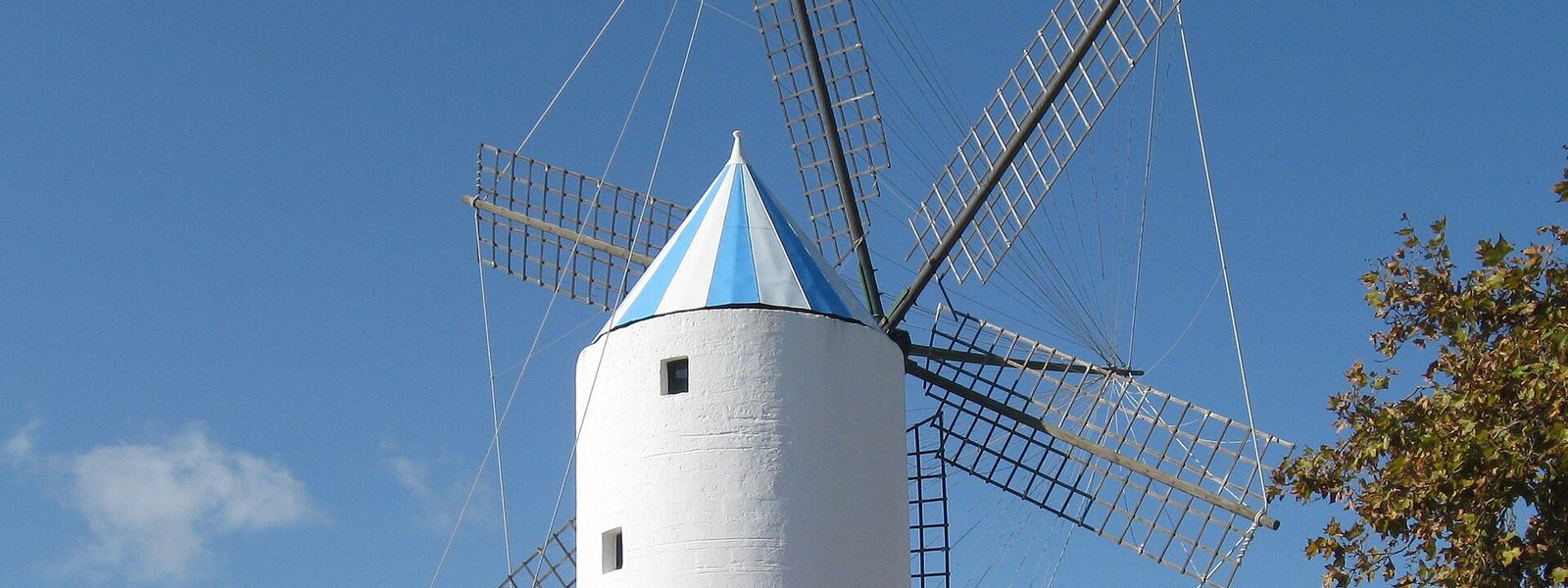
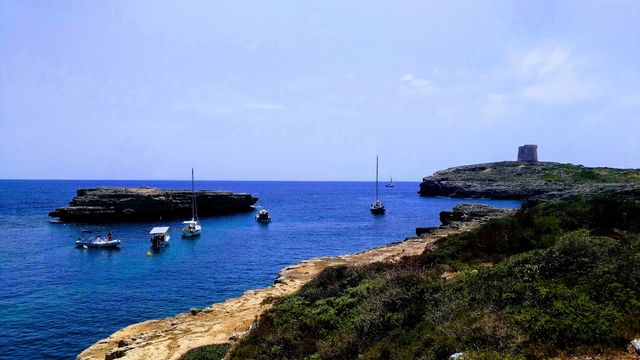
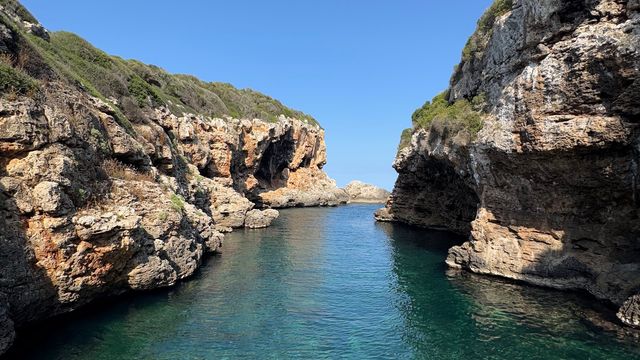
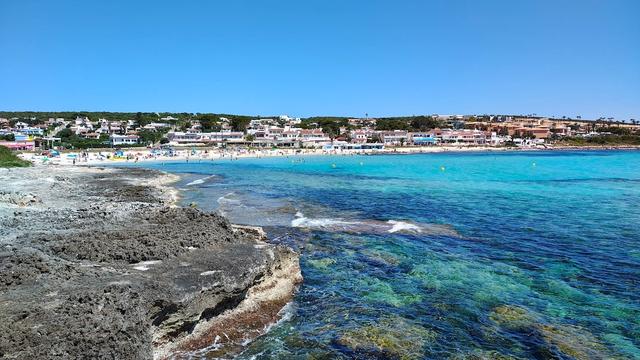
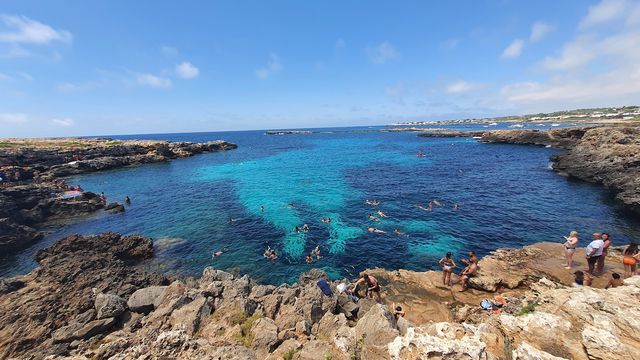
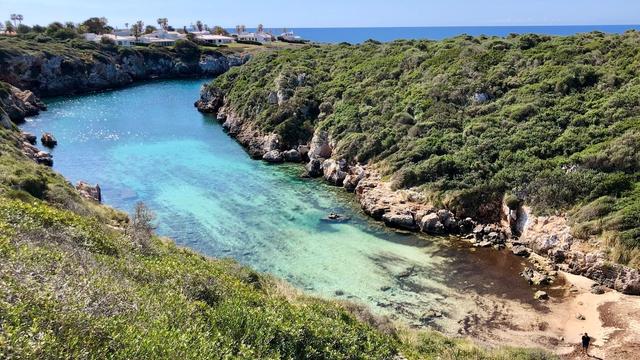
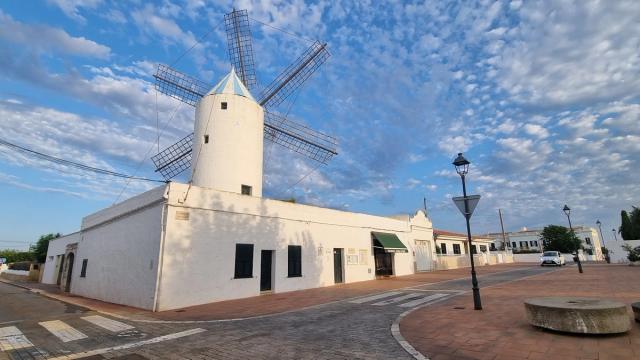
The French laid out the town in 1761, during their occupation of Menorca, and the plan still reads clearly: wide straight streets in a grid, a whitewashed neoclassical church at the centre dedicated to Louis IX, and a tree-lined square, Pla de sa Creu, on the land opposite it. Two blocks north stands Es Molí de Dalt, a restored windmill that now holds a museum and the tourist information centre. The town sits inland; what brings most visitors is the shore below it — Punta Prima, S'Algar, Alcafar and the whitewashed fishermen's coves of Binibeca, Biniancolla and Binissafúller.
Sant Lluís
- Currency
- Euro (EUR, €). Credit and debit cards are widely accepted in cities and tourist areas. ATMs are abundant; most charge €2–7 per foreign card withdrawal. Some shops request ID before accepting a credit card. €500 banknotes are not accepted in most shops.
- Language
- Catalan is the official language, and what residents speak among themselves is menorquí, the island's variant of it. Spanish is universal. English is common in the resorts along the southern coast and among the retired British residents who live there.
- Power plug
- Europlug (Type C) and Schuko (Type F) sockets; 230 V, 50 Hz
- Visa
- Schengen area: EU, EEA and Swiss nationals enter on national ID card or passport. Many non-EU nationalities have 90-day visa-free access. Non-EEA citizens staying longer than 90 days require an advance visa.
- Time zone
- Europe/Madrid (UTC+01:00 winter time, UTC+02:00 summer time from last Sunday in March to last Sunday in October). Canary Islands are one hour behind mainland Spain.
- Tap water
- Safe to drink throughout Spain. In some southern regions it has high mineral content and may taste unfamiliar; locals often drink bottled water instead. Bottled water is inexpensive and widely available.
- Tipping
- Not mandatory or customary. In restaurants: not expected for simple meals or basic establishments; 5–10% in mid-range or upscale venues if service was exceptional. Always pay cash to the server, not on card. Taxi drivers and hotel staff may appreciate small tips in upscale settings but it is not expected.
- Emergency
- 112
When to go
Shoulder
Apr – May
Warm days without the summer heat: the dry shrubland inland is still green and in flower, the beaches on the south-east shore are all but empty, and the sea has not warmed up yet.
High season
Jun – Sep
Hot and dry, and this is when Punta Prima, S'Algar, Alcafar and Binibeca fill with northern European holidaymakers. The town's own festival, the Feast of St Luis, falls at the end of August, and trotting races run at the hippodrome on the Maó road on Saturday evenings.
Shoulder
Oct – Nov
The resorts thin out through October while the sea is still warm, and by November the south coast has gone quiet and Sant Lluís is back to being a working town.
Low season
Dec – Mar
Cool winters, the resort coast empty, and the town's life down to the shopping street and the square. Trotting races move to Sunday mornings.
How long to stay
Half a day covers the town: the church, the windmill museum, the shopping street and the green square facing the church. Everything else is on the coast. Three or four days is enough to work through Punta Prima, S'Algar, Alcafar and the Binibeca coves without rushing, and still get into Maó, 5 km north. Anyone here for a beach holiday will want a week — the southern resorts are built to be used that way, and they stay quieter through the season than the island's better-known resorts.
Getting around
In the town itself everything is within a couple of blocks: the church, the windmill, the three banks and the shopping street with its supermarkets, bakeries and butchers. The grid of wide straight streets makes it hard to get lost.
The coast is the part that needs wheels. The resorts and coves are strung along the south-east shore, and a car is the usual answer. Menorca's airport lies just west of the municipality, with taxis at the terminal, car hire, and coach transfers to the resorts bookable online. Buses from the airport run to Maó (€1.50, 15 minutes) every half hour from around 06:00 to 22:00, then hourly until midnight; onward buses to the towns and resorts across the island leave from the Maó bus station.
What to see




Destinations in Sant Lluís
Frequently asked questions
How far is Sant Lluís from Maó and the airport?
The town sits 5 km south of Maó. Menorca's airport is just west of the municipality: the municipal boundary runs westwards up to the airport on one side and northwards towards the outskirts of Maó on the other, and Es Castell is the third neighbour.Is Sant Lluís on the sea?
No. The town is inland, on flat ground 60 m above sea level. The municipality's shoreline runs along the south-east tip of the island, and that is where Punta Prima, S'Algar, Alcafar and the coves of Binibeca, Biniancolla and Binissafúller are, along with capes, islets and medieval defensive towers.What is there to see in the town itself?
Es Molí de Dalt, a fully restored traditional windmill two blocks north of the church, now a museum and the tourist information centre. The church is the whitewashed neoclassical one the French colonists built and named after Louis IX; opposite it lies Pla de sa Creu, a tree-lined public green. The grid of wide straight streets, with Es Cós as the main street, is the French plan of 1761 still in use.What is pomada?
Gin with lemonade or freshly squeezed lemon juice. Gin on Menorca is a legacy of English rule. Sant Lluís also grows wine grapes: Chardonnay, Macabeo, Malvasía, Moscatel, Parellada and Moll among the whites, Cabernet Sauvignon, Merlot, Monastrell, Syrah and Tempranillo among the reds.Does Punta Prima really get Spain's first sunrise?
Menorca is the most easterly part of Spain, and Punta Prima is the first beach in the country to catch the sun. It is also one of the oldest resorts on this coast.