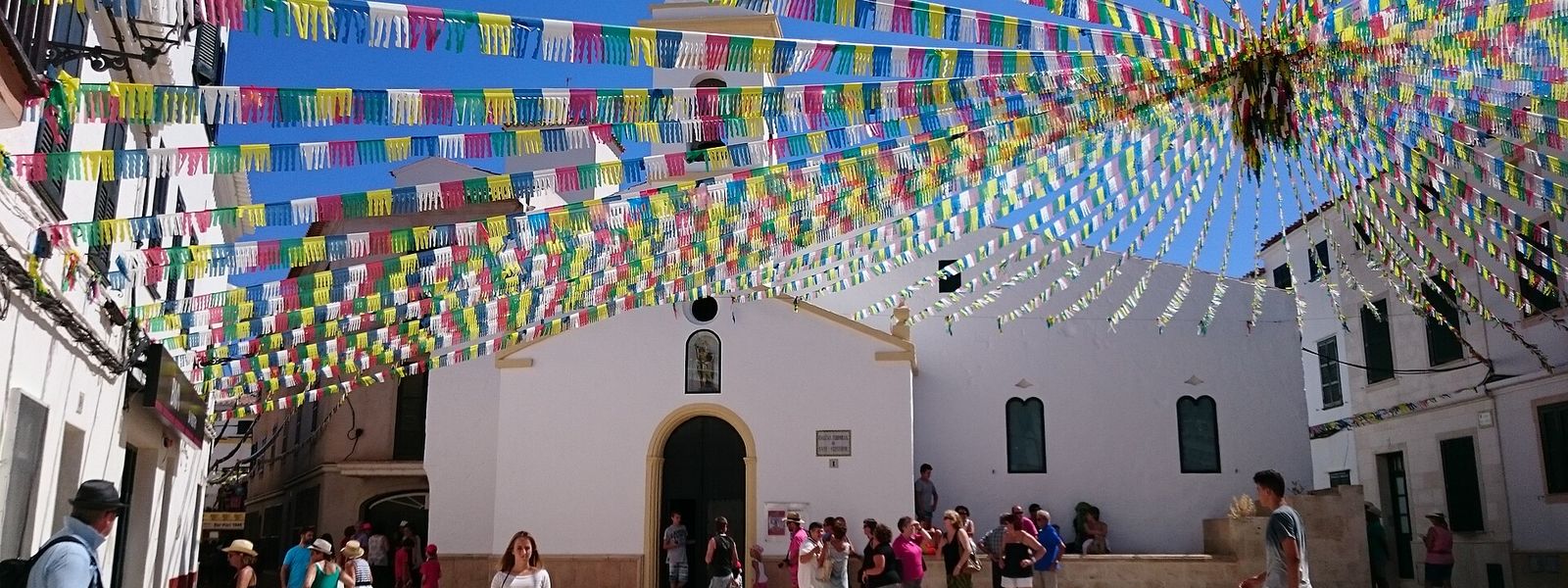
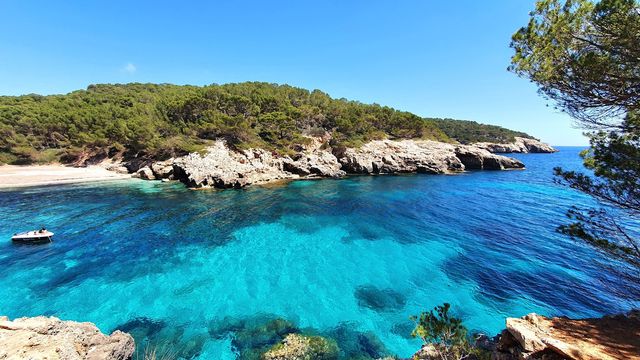
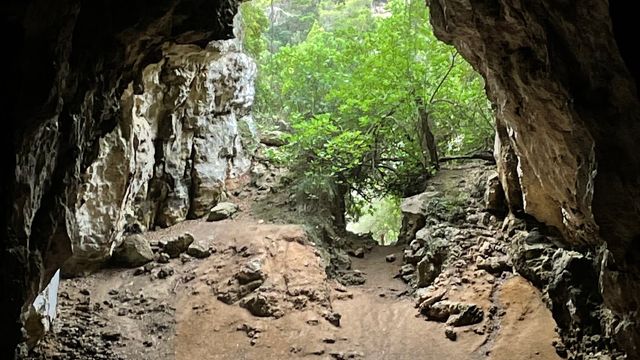
Narrow streets, a handful of tapas bars and the small church of San Cristobal at the centre — that is the whole of Es Migjorn Gran, a village that began as a rural settlement in the 18th century and belonged to Es Mercadal until 1989, when it became a municipality in its own right, the newest on Menorca. Pine-clad hills close in around it, with talaiots and caves in the hillsides. Its coast runs out to Sant Tomàs, the one resort, and small sandy coves lie either side of it, reached on foot or from the sea.
Es Migjorn Gran
- Currency
- Euro (EUR, €). Credit and debit cards are widely accepted in cities and tourist areas. ATMs are abundant; most charge €2–7 per foreign card withdrawal. Some shops request ID before accepting a credit card. €500 banknotes are not accepted in most shops.
- Language
- The local language is Menorquí, a Catalan sub-dialect not easily understood by Spanish speakers. Most inhabitants speak Spanish and English to a reasonable standard, especially in tourist areas.
- Power plug
- Europlug (Type C) and Schuko (Type F) sockets; 230 V, 50 Hz
- Visa
- Schengen area: EU, EEA and Swiss nationals enter on national ID card or passport. Many non-EU nationalities have 90-day visa-free access. Non-EEA citizens staying longer than 90 days require an advance visa.
- Time zone
- Europe/Madrid (UTC+01:00 winter time, UTC+02:00 summer time from last Sunday in March to last Sunday in October). Canary Islands are one hour behind mainland Spain.
- Tap water
- Safe to drink throughout Spain. In some southern regions it has high mineral content and may taste unfamiliar; locals often drink bottled water instead. Bottled water is inexpensive and widely available.
- Tipping
- Not mandatory or customary. In restaurants: not expected for simple meals or basic establishments; 5–10% in mid-range or upscale venues if service was exceptional. Always pay cash to the server, not on card. Taxi drivers and hotel staff may appreciate small tips in upscale settings but it is not expected.
- Emergency
- 112
When to go
Shoulder
Apr – May
Spring sits well on the hills around the village: green ground under the pines, warm days without the summer heat, and the sand at Sant Tomàs mostly empty.
High season
Jun – Aug
The busy weeks. Sant Tomàs fills, and so do the nearby resorts of Son Bou and Cala Galdana, while the coves you have to walk to stay very rarely busy. Midday on the coast is hard going; the narrow streets of the village hold what shade there is.
Shoulder
Sep – Oct
Numbers drop away and the light softens on a coast that faces south and keeps the sun all day. Good weeks for the cove walks.
Low season
Nov – Mar
The shore empties and Es Migjorn Gran goes back to being an ordinary working village of narrow streets and a few bars. Rain greens the hills and leaves the cove paths slippery, and there is little to do here in it.
How long to stay
A morning covers the village: the church of San Cristobal, the narrow streets, a coffee or a beer in one of the tapas bars. The coast is what earns a longer stay — two or three days is enough to work along the coves on either side of Sant Tomàs, since each one is a walk in and a walk back out again. As a base for the rest of the island this corner works, but the Mahón–Ciutadella road does not pass through the municipality, and that shows up in every drive across Menorca.
Getting around
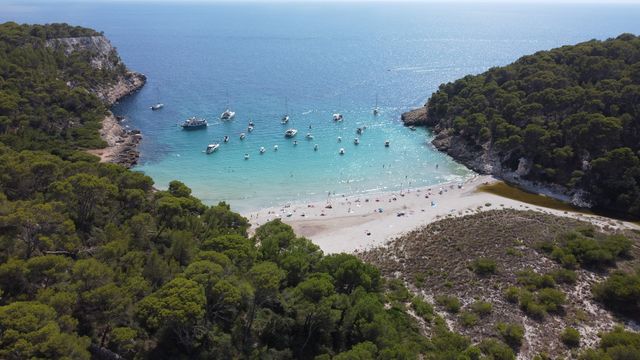
Es Migjorn Gran is one of the main towns the Mahón–Ciutadella road misses, so arriving means turning off the island's spine and heading inland. The village itself is walked, with the church of San Cristobal as the obvious landmark. The coast takes more thought. Sant Tomàs is the municipality's one resort and the only built-up stretch of its shore; the sandy coves along the pine-covered cliffs either side have no road to them at all and are reached on foot or by boat. Above those coves the cliff edges are unfenced, and the water below is open sea — never turn your back on it.
What to see
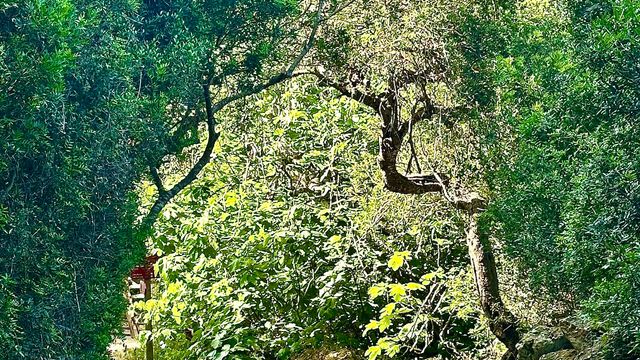
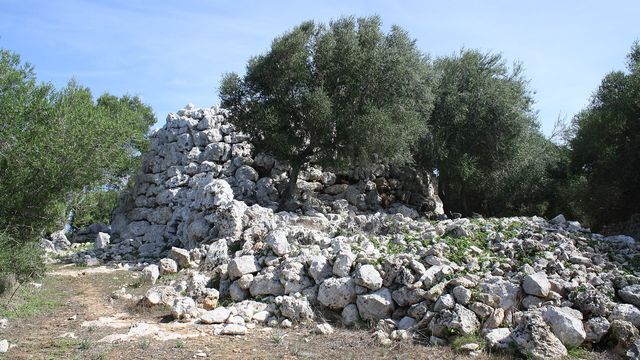
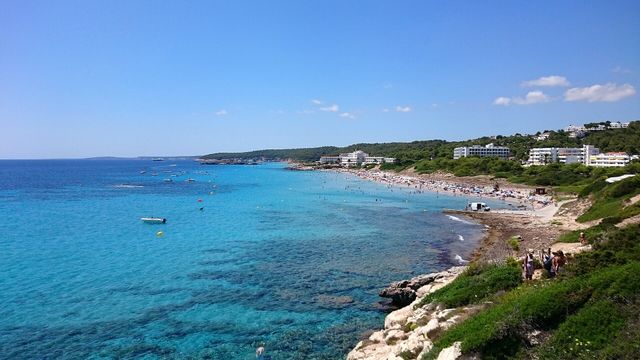


Destinations in Es Migjorn Gran
Frequently asked questions
Is Es Migjorn Gran on the coast?
No. The village stands inland in the central south of Menorca, among pine-clad hills at about 115 m. The municipality does reach the sea, though: Sant Tomàs is its resort, and a run of small sandy coves lies along the cliffs either side of it.How do you get to the small coves?
On foot or by boat — no road goes down to them. They sit under pine-covered cliffs, and because walking in is the only way, they stay very rarely busy even in high summer. The cliff edges above are unfenced and the water is open sea.What is there to see in the village?
The small church of San Cristobal in the centre is the landmark, with narrow streets and a handful of tapas bars around it. The municipality also holds prehistoric sites — talaiots, abandoned settlements of the kind found across Menorca — and caves in the hillsides.Why is Es Migjorn Gran called Menorca's newest municipality?
It belonged to Es Mercadal until 1989, when the area around the village was made a municipality of its own — the island's newest, and its second smallest, with 1,765 people spread over 32 km². It was also the home of Joan Riudavets, the oldest Spanish citizen on record.