Sa Cudia Cremada is an archaeological site on a private estate of the same name on the outskirts of Maó, Menorca. Its remains belong to the Talayotic culture of the Bronze and Iron Ages. Roman pottery from the late 2nd and 1st centuries BC and scattered fragments of Muslim ware point to later occupation. The site holds three talayots, a taula enclosure, several hypogea used as collective tombs, a storage pit and stretches of cyclopean wall. It is one of the 32 sites in the Menorca Talayótica bid for UNESCO World Heritage status.
Sa Cudia Cremada
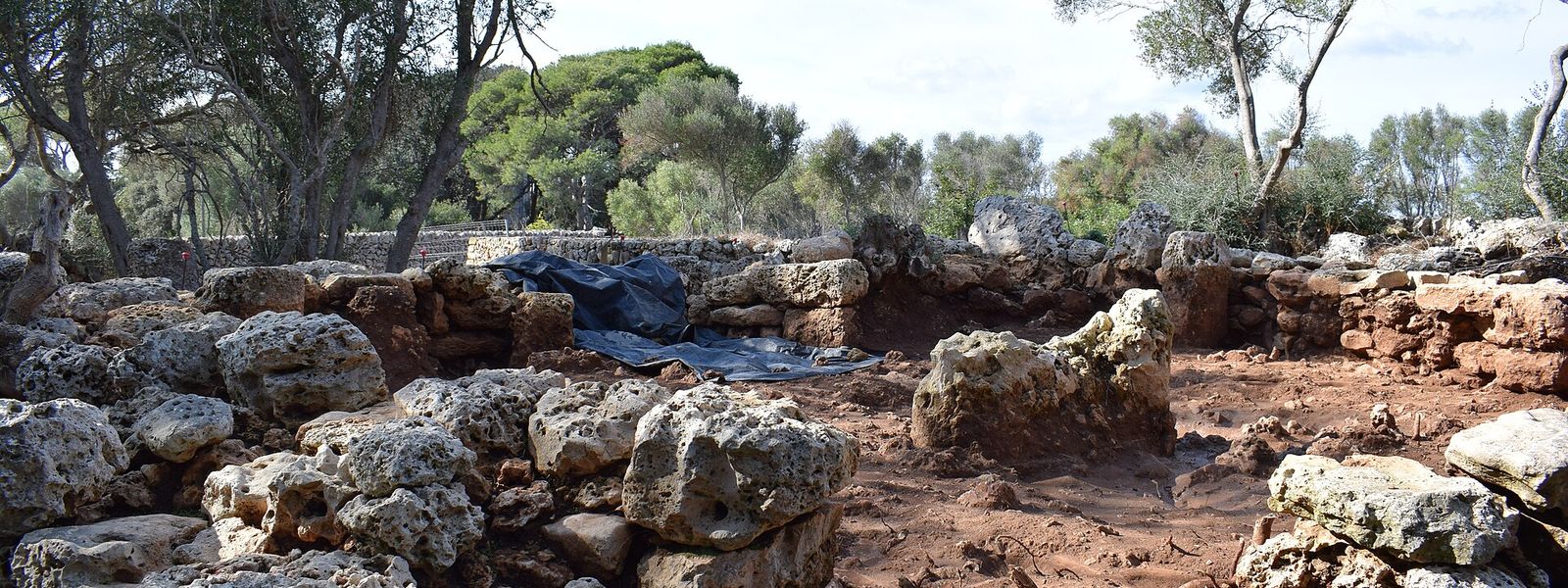
Talayotic settlement with three talayots, a taula enclosure and rock-cut burial caves, on an estate outside Maó
- Parking
- The nearest mapped car parks, about 600 m away in a straight line, are free but reserved for customers.
- Difficulty
- The remains are spread out: the eastern talayot stands about 200 m from the main group, so the visit means walking between them.
- Transport
- Bus stops Es Campets and Camí de Baix 26, about 530 and 580 m away in a straight line.
- Advance booking
- Required: visits are by appointment with the estate.
- Address
- Carretera San Clemente, 34, 07703 Maó, Illes Balears, Spain
What makes it special
The largest talayot is a solid oval mass of stone 20 metres across and 5 metres high, roughly the height of a two-storey house, and a wall still standing 1.5 metres tall runs up against it. Its southern side may once have carried a flight of steps, as at Cornia Nou.
About 200 metres away stands the easternmost talayot, oval with a base 19 metres across. A doorway in its south-facing, slightly concave façade leads into an inner chamber, and part of the roof survives: huge stone blocks laid so they close in towards the top.
Close to the main group sits the taula enclosure, the settlement's sanctuary, apse-shaped and facing south, its entrance blocked. A smaller round talayot, a rectangular building whose purpose is still unknown, a pit sealed with a stone slab and a large standing stone complete the picture. Around them, hypogea cut into the bedrock served as collective tombs.
Good to know
- Private land. The ruins stand on the Sa Cudia Cremada estate, which also takes guests. Arrange the visit before you set out.
- No facilities. There are no toilets, drinking water or information point at the site or nearby. Bring water.
- Spread out. The eastern talayot stands about 200 m from the main group, so plan on walking between the two.
- Summer sun. The remains are open ground; in high summer, come with a hat.
Getting there
Sa Cudia Cremada lies on the outskirts of Maó, off the road to Sant Climent. The nearest bus stops, Es Campets and Camí de Baix 26, are about 530 and 580 m away in a straight line, so the last stretch is on foot. The only car parks mapped nearby, about 600 m away, are for customers, so ask about parking when you arrange the visit.
Best time to visit
Best: early morning or late afternoon, in spring or autumn.
Avoid: midday in high summer.
The ruins are open stone ground with the Menorcan sun full on it at midday, and low light picks out the joints of the cyclopean masonry on the south-facing façades.
Access & restrictions
Sa Cudia Cremada stands on private land, the estate that shares its name, and visits are arranged with the estate in advance. The talayots, walls and enclosure are prehistoric dry-stone structures: do not climb on them or move stones, and keep out of the chambers and rock-cut tombs.
Sun & daylight
Nearby Places

Similar Places

Sa Cudia Cremada on the map
The talayots are dry-stone structures and parts of them have already come down; rubble fills the chamber of the smaller one. Keep off the walls and out of the chambers.
Get directions
Your whole travel map in one place
Get inspired by new places around the world and find the ones worth the journey
Frequently asked questions
Can you visit Sa Cudia Cremada without booking?
No. The site is on a private estate, and visits are by appointment.What is there to see at Sa Cudia Cremada?
Three talayots, the largest 20 m across and 5 m high, a taula enclosure, a rectangular building of unknown use, a pit covered by a stone slab, stretches of cyclopean wall and hypogea cut into the bedrock as collective tombs.How old is the site?
It belongs to the Talayotic culture of the Bronze and Iron Ages. Roman pottery from the late 2nd and 1st centuries BC shows it was still occupied after the Roman conquest, and Muslim pottery suggests a return in the Middle Ages.Can you get there by bus?
The nearest stops are Es Campets and Camí de Baix 26, about 530 and 580 m away in a straight line; the rest is on foot.Are there toilets or water at the site?
No. There are no toilets, drinking water or information point at the site or nearby, so bring water with you.