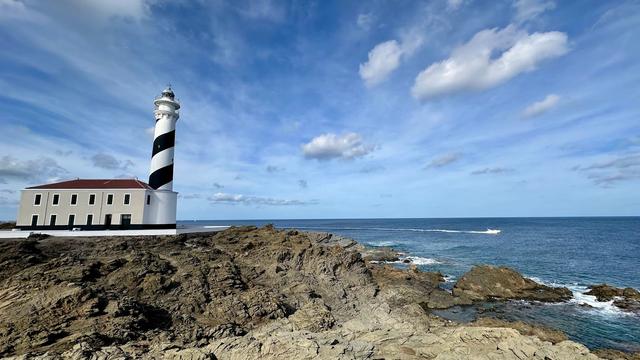
The lighthouse stands on Illa de l'Aire, an islet off the southeast coast of Menorca, in the municipality of Sant Lluís. Work began in 1856 and the light was inaugurated in 1860, to a design by Emili Pou, who also drew the Sa Farola and Cap d'Artrutx lighthouses. The banded tower stands 53 metres above sea level and the light has a range of 18 nautical miles; beside it is the white house that once held three keepers' families. The light is still active, now powered by a photovoltaic system and no longer manned, and the interior is closed to the public.
Illa de l'Aire Lighthouse
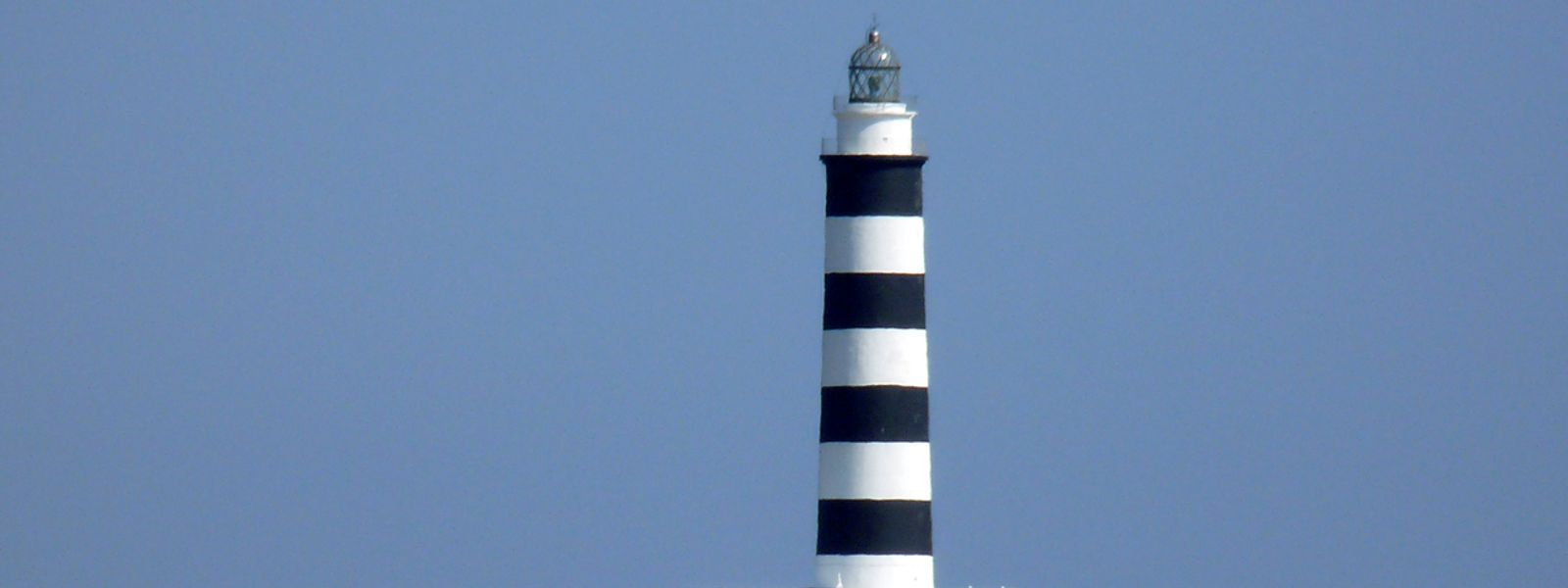
Black-and-white banded lighthouse on an islet off Menorca's southeast coast, reachable only by boat.
- Entrance
- No ticket — the lighthouse is closed to the public and the interior cannot be visited.
- Accessibility
- Not accessible: no wheelchair-accessible entrance or parking, and the islet can only be reached by boat.
- Parking
- Nearest car parks are on the Menorca shore, about 1.9 km from the islet in a straight line across the water.
- Difficulty
- No walk in and no road: access is by boat across about 1.2 km of open sea, and the lighthouse itself cannot be entered.
- Transport
- Nearest bus stops are C. des Xaloc - Platja and C. de s'Illa on the Menorca shore, about 2 km from the islet in a straight line.
- Advance booking
- Nothing to book — the lighthouse is closed to the public.
- Hours
- No visiting hours: the lighthouse is not open to the public.
- Address
- 07713 Sant Lluís, Balearic Islands, Spain
What makes it special
The tower carries horizontal black and white bands, and at sunrise, seen from the Menorca shore, it stands out sharply against the water. Until the Moscarter light went up on Ibiza in 1977 this was the tallest lighthouse in the Balearics: 53 metres above sea level, 165 steps in the spiral staircase, a beam reaching 18 nautical miles.
The islet under it is the other half of the appeal. About 1.2 km long, some 300 m across and 15 m high, bare and low, with a population of endemic black lizards that shift tone to match the rock they are sitting on — an animal that has ended up on half the souvenirs on Menorca. Birds use the islet heavily on migration and to breed, and the caves beneath its edges are dived. No road reaches any of it, which makes this the hardest lighthouse on Menorca to get near.
Good to know
- Closed to the public — the interior cannot be visited, and the islet has no official public access either.
- Boat or nothing — no road and no walking route reach the islet; the channel has to be crossed by water.
- Nothing on the islet — no toilets, no drinking water and no information point nearby. Carry what you need.
- Nobody there — the light is unmanned and runs off solar power, so there is no keeper and no help on the ground.
- The view works from the mainland — from the coast at Punta Prima the lighthouse sits about 1.2 km offshore, which is how most people see it.
Getting there
There is no way to walk or drive to this lighthouse. The islet lies about 1.2 km off Punta Prima beach, at the southeast corner of Menorca, and the channel between is open sea — a boat is the whole journey.
From the land side, the nearest car parks are about 1.9 km away in a straight line, and that line crosses the water. The closest bus stops, C. des Xaloc - Platja and C. de s'Illa, sit about 2 km out measured the same way, both on the Menorca shore. The coastal path Camí de Cavalls runs along the shore facing the islet, and it gives the view across to the light for anyone not going over.
Best time to visit
Best: early morning. The banded tower reads clearly at sunrise from the coast opposite, and dawn is the hour worth setting an alarm for here.
Avoid: windy days and any day with swell running. The crossing is open water, and rough sea either cancels it or turns getting ashore into a bad idea. In August the southeast coast fills up, so the shoreline viewpoints across to the islet are at their busiest.
Access & restrictions
The islet is not open to the public on an official basis, and the lighthouse itself is closed — no tour, and the staircase and interior cannot be visited. What is on offer is the outside of the building, from a boat or from the Menorca coast.
The ground ashore is bare and low, and it holds breeding birds and the endemic black lizards found here. Anyone who does land is walking on a small island where wildlife has nowhere else to go: keep to the rock, and leave the lizards be.
Sun & daylight
Nearby Places

Similar Places

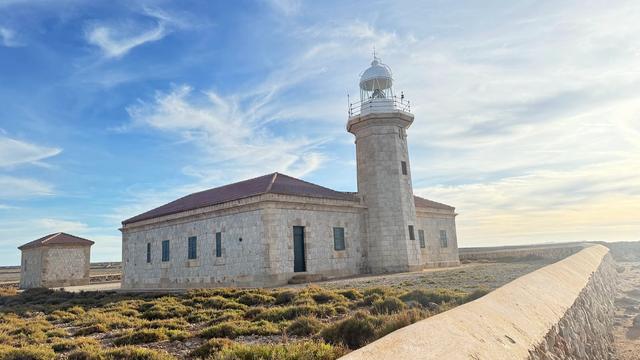
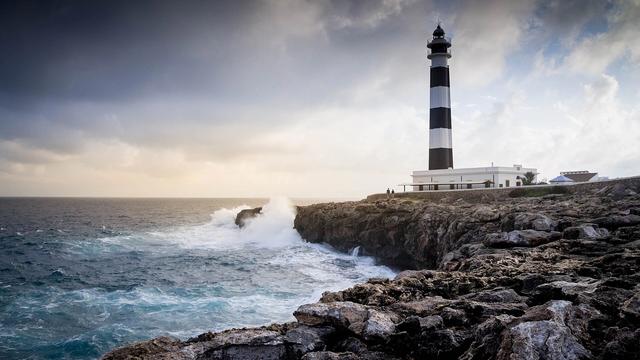
Illa de l'Aire Lighthouse on the map
The crossing is open sea, and the islet's shore takes breaking waves — do not try it in swell, and never turn your back on the water when getting ashore. There is no drinking water and nobody on the islet to help.
Get directions
Your whole travel map in one place
Get inspired by new places around the world and find the ones worth the journey
Frequently asked questions
Can you go inside the lighthouse?
No. The lighthouse is closed to the public and the interior, including the 165-step spiral staircase, cannot be visited. The islet has no official public access either, so the building is seen from a boat or from the coast.How do you reach Illa de l'Aire?
Only by boat. The islet lies about 1.2 km off Punta Prima beach on the southeast coast of Menorca, with no road and no walking route across.Is the lighthouse still working?
Yes. It is an active light with a range of 18 nautical miles, now powered by a photovoltaic system. It has not been manned for years.Where can you see it from land?
From the southeast coast of Menorca around Punta Prima, where the islet sits about 1.2 km offshore. The Camí de Cavalls coastal path runs along the shore facing it.What are the black lizards on the islet?
A population of endemic lizards that live on Illa de l'Aire and can change the tone and colour of their bodies to blend into their surroundings. The lizard has become a symbol of Menorca and turns up on local crafts and souvenirs.