Messner Mountain Museum is a six-site project set up by the climber Reinhold Messner in South Tyrol in 2006. Its centrepiece, Firmian, occupies Sigmundskron Castle (Castel Firmiano) on the edge of Bolzano: 1,100 square metres inside a Late Medieval castle, given over to what mountains do to people. The displays cover the geology of the ranges, the place mountains hold in religion, and the history of climbing and of alpine tourism. The other five sites stand at Juval, Monte Rite, Sulden, Bruneck and Kronplatz.
Messner Mountain Museum
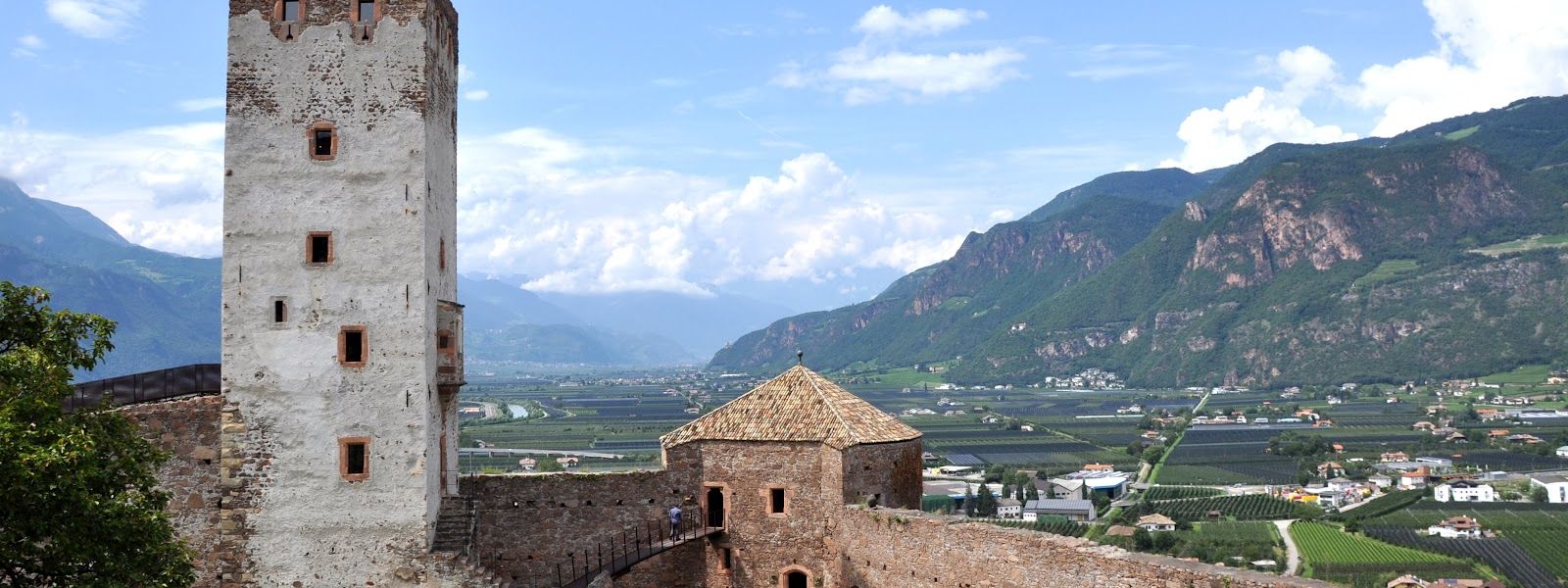
The province of South Tyrol paid for the restoration of the castle; in return, Messner is bound to keep the exhibitions running for 30 years without a subsidy.
- Accessibility
- There is a wheelchair-accessible toilet on site, but the museum route runs on stairs, wall-walks and towers, and the approach from the car park is rough.
- Parking
- Paid car park about 100 m from the entrance; gravel surface, and a rough path up to the gate.
- Difficulty
- About 100 m of uneven path from the car park, then a climb through the castle: stairs to the walls and towers, and steps throughout the exhibition route. Around three hours for the full circuit.
- Transport
- Bus stop Castel Firmiano – Schloss Sigmundskron, about 340 m from the museum.
- Hours
- 10:00–18:00 daily; closed on Thursdays.
What makes it special
The route is the castle itself. It goes up staircases, out along the walls and into the towers, and the exhibits arrive as you climb — pictures, sculpture, expedition kit, objects carried for luck rather than use.
Sigmundskron was close to a ruin before three years of work under the architect Werner Tscholl. He kept the new glass roofs, the pipes and the cabling out of sight from outside, so the stone still reads as medieval from the approach while the interior is plainly modern steel. One tower is given over to the history of the castle and the region on its own. There is also a rock theatre inside the walls, with seating for 200.
Good to know
- Steps throughout. The visit works upwards through staircases, wall-walks and towers, and there is no level way round them.
- The path from the car park is rough underfoot. It is around 100 m, on gravel and uneven ground.
- Allow around three hours for the full circuit of the castle and its exhibitions.
- There is a café on the site, and the toilets are free.
Getting there
Nearly everyone arrives by car. The car park sits about 100 m from the entrance, and that last link up to the gate is a rough, uneven path — worth knowing if you are carrying a child or pushing anything on wheels. Arriving by bus leaves roughly 340 m on foot. Either way the approach is the easy part: the climbing begins once you are through the gate, since the museum route itself runs up through the castle's stairs, wall-walks and towers.
Sun & daylight
Nearby Places



Similar Places

Your whole travel map in one place
Get inspired by new places around the world and find the ones worth the journey
Frequently asked questions
Which of the Messner museums is this one?
Firmian, at Sigmundskron Castle on the edge of Bolzano. It is the centrepiece of the six and holds the project's headquarters and administration. It opened on 11 June 2006, after three years of restoration to a castle that was virtually a ruin.How many Messner Mountain Museums are there, and where?
Six. Firmian near Bolzano; Juval, in Messner's own castle near Naturns; Dolomites, in a First World War fort on Monte Rite at 2,181 m; Ortles, underground at Sulden; Ripa, at Bruneck Castle; and Corones, on the summit plateau of Kronplatz at 2,275 m, in a building by Zaha Hadid.Does the museum only deal with mountaineering?
No. Alongside the history of climbing and of alpine tourism, the rooms take in the geology of the mountains and their religious weight in people's lives, plus the impact tourism has had on the landscape. A separate exhibition in one tower covers the castle and the surrounding region.Does it work with children?
Children are welcome, and the art scattered through the rooms holds attention. The obstacle is the stairs: the walls and towers are reached by steps, so a pushchair will spend most of the visit being carried.