Molino de Inca Botanical Garden covers about 4 ha on the outskirts of Torremolinos, in the province of Málaga, beside the municipal plant nursery and close to the motorway. It stands where the original springs of Torremolinos rise, the Inca and the Albercón del Rey, and takes its name from an old flour mill called Inca. The garden opened on 10 May 2003 as part of the Los Manantiales complex, with the mill restored as a museum of wheat milling.
Molino de Inca Botanical Garden
Local name: Jardín Botánico Molino de Inca

Botanical garden around a restored flour mill and the springs of Torremolinos, with a privet maze and aviaries.
- Entrance
- €3, payable by card only.
- Accessibility
- Wheelchair-accessible entrance, parking and toilets.
- Parking
- Paved car park about 60 m away, with wheelchair-accessible spaces.
- Difficulty
- No approach to speak of: a paved car park sits about 60 m away. On foot from town, part of the road has no pavement.
- Transport
- Bus stops Isabel Manoja, about 900 m away in a straight line, and Playamar, about 1 km.
- Hours
- Tuesday to Sunday 10:00–18:00; closed on Monday.
- Address
- Cam. de los Pinares, 29620 Torremolinos, Málaga, Spain
What makes it special
Water runs through the whole garden. A fountain built as the source of a river feeds a stream that crosses the grounds and ends in a lake, and these are the springs that once supplied Torremolinos. One of them carries a royal name: in February 1926 King Alfonso XIII climbed down to the Albercón spring and drank from it, and it has been the Albercón del Rey ever since.
The planting is thick. More than 150 palms of 50 species grow here, with about 300 trees and 400 shrubs. Some of the trees are over a century old, among them a Norfolk Island pine, river red gums and Indian laurel figs, and a wild olive is aged at about 1,000 years. At the centre a privet maze runs about 50 metres across, the length of an Olympic pool. Add a Japanese garden, aviaries of owls and other birds, and the restored Inca mill with its museum on milling, nature and insects.
Good to know
- There is no café and nothing to buy inside, so bring food. Drinking fountains refill a water bottle, and there are toilets.
- Walking in from town, part of the road has no pavement and you share it with traffic for a stretch.
- Children have plenty to do: the maze, the Japanese garden and the aviaries of owls and other birds.
- Go inside the old mill: it holds a museum on wheat milling, nature and insects.
Getting there
The garden lies on the Camino de los Pinares at the edge of Torremolinos, next to the municipal nursery, the old Molino de Batán mill and the Pinar de los Manantiales pine wood, near the water park and right against the motorway.
By car, a paved car park sits about 60 m away. Without a car, the nearest bus stops, Isabel Manoja and Playamar, are about 900 m and 1 km away in a straight line, so the last stretch is on foot. Walking from town works too, but part of the route has no pavement.
Best time to visit
Best: a morning soon after opening, or any time of day in spring and autumn.
Avoid: Mondays, when the garden is closed, and the middle of a summer day.
The Costa del Sol summer is hot, nothing is sold inside, and a walk round the maze and the stream is far easier in the cool of the morning.
Things to do nearby
All tours in Andalusia on GetYourGuide
Paid links: booking through them supports YowJourney.
Sun & daylight
Nearby Places


Similar Places
Molino de Inca Botanical Garden on the map
Get directions
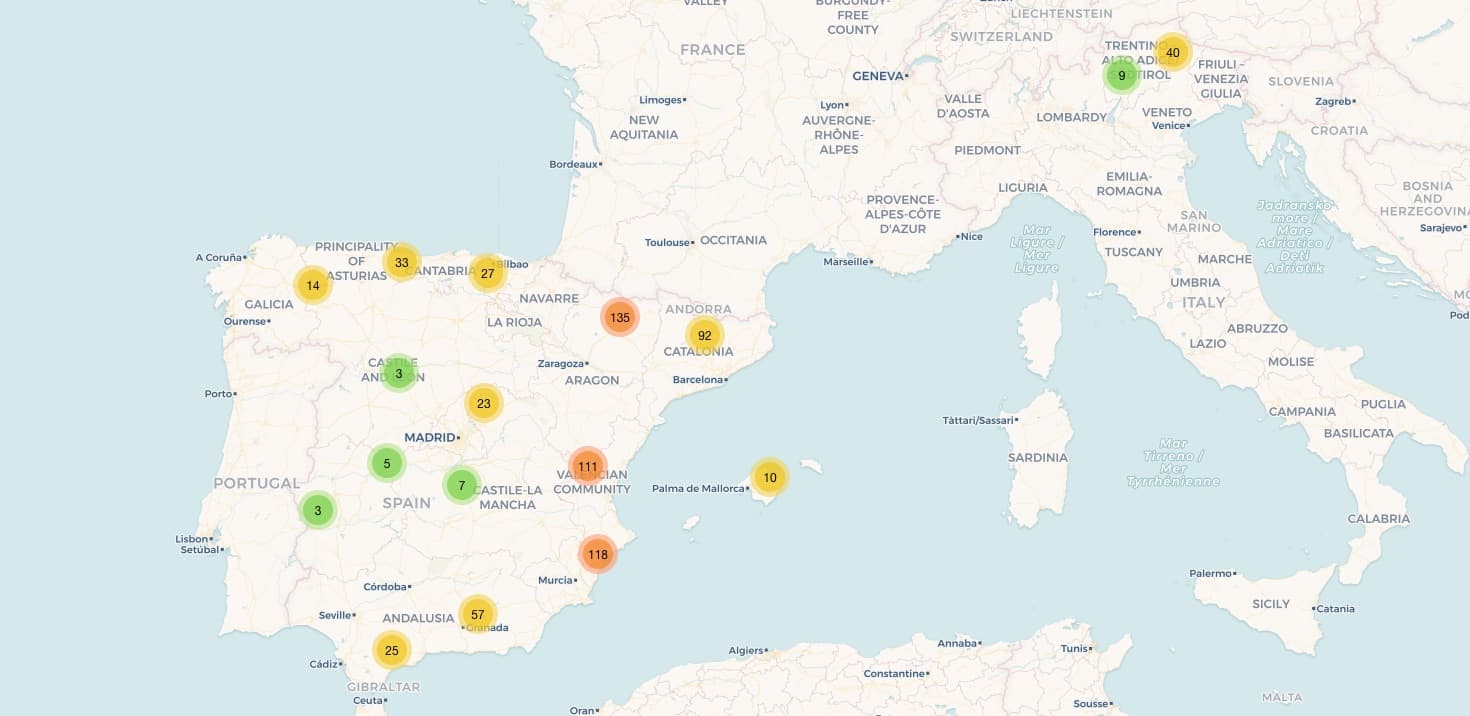
Your whole travel map in one place
Get inspired by new places around the world and find the ones worth the journey
Frequently asked questions
Is there anywhere to eat or drink at Molino de Inca Botanical Garden?
There is no café and no food or drink for sale inside. Drinking fountains let you refill a water bottle, and there are toilets.Can you walk to the garden from Torremolinos?
Yes. The garden is on the edge of town on the Camino de los Pinares, but part of the route has no pavement. The nearest bus stops, Isabel Manoja and Playamar, are about 900 m and 1 km away in a straight line.Is the garden accessible for wheelchair users?
The entrance, the parking and the toilets are wheelchair accessible.Why is one of the springs called the Albercón del Rey?
In February 1926 King Alfonso XIII visited the springs, went down to the Albercón and drank its water. The spring has carried the name Albercón del Rey, the King's Albercón, ever since.How big is the garden?
It covers about 4 ha, with more than 150 palms of 50 species, about 300 trees of 60 species and about 400 shrubs.