The Museum of Cádiz is the city's museum of archaeology and fine art, housed in a former Franciscan convent and a modern building on Plaza de Mina. Its art collection began in 1835 with paintings confiscated from monasteries, among them works by Zurbarán from the Charterhouse of Jerez de la Frontera. The archaeological museum followed in 1877, after a Phoenician sarcophagus was found in the city's shipyard, and the two merged in 1970.
Museum of Cadiz
Local name: Museo de Cádiz

Archaeology and fine art museum in a former Franciscan convent, with Phoenician sarcophagi and Zurbarán paintings.
- Entrance
- €1.50 for visitors from outside the EU; free for EU citizens.
- Accessibility
- Wheelchair-accessible entrance and toilet; no wheelchair-accessible parking.
- Parking
- Paid garage parking: two car parks at San Antonio, about 200 m away. No wheelchair-accessible parking.
- Difficulty
- None: the museum stands on a city square and you walk straight in from the street.
- Transport
- Bus stop Alameda Clara Campoamor, about 220 m away.
- Hours
- Tuesday–Saturday 9:00–21:00; Sunday 9:00–15:00; closed on Monday.
- Address
- Pl. de Mina, s/n, 11004 Cádiz, Spain
What makes it special
The Phoenician sarcophagi hold the archaeology floor: stone coffins carved in human form, dug out of the ground of a city the Phoenicians founded. The first of them turned up in the shipyard in 1877, and the archaeological museum exists because of it. Around them the galleries move in order from the Stone Age through the Roman period to the Moorish centuries, with a strong showing of coins.
Upstairs, the paintings are a serious collection in their own right. The core is the group of Zurbarán canvases taken from the Charterhouse of Jerez de la Frontera in 1835, hung alongside works by Murillo and Rubens and contemporary art from the Junta de Andalucía. The museum also owns the Tía Norica puppets, the set used at the Carnival of Cádiz.
Good to know
- Labels are in Spanish, with little or no English; a translation app on your phone fills the gap.
- Water bottles are not allowed in the galleries and go into the lockers, which also take bags.
- EU citizens get in free; everyone else pays a small fee at the desk.
- There are toilets inside, including a wheelchair-accessible one.
Getting there
The museum faces Plaza de Mina in the old town, and the last stretch is on foot through the streets around the square. The nearest bus stop, Alameda Clara Campoamor, is about 220 m away in a straight line. Drivers have two paid car parks at San Antonio, about 200 m away; there is no wheelchair-accessible parking. The entrance is on the park side of the building, facing the gardens of the square, and there is drinking water within about 50 m.
Best time to visit
Best: Tuesday to Saturday, when the doors stay open into the evening, and early in a stay in Cádiz. Avoid: Monday, when the museum is closed, and Sunday afternoon, as it shuts in mid-afternoon.
The galleries walk through the city's history in order, so a visit here gives the old town outside its back story, and on a grey or windy day, when the beaches lose their pull, it is the obvious place to spend the hours.
Things to do nearby
All tours in Cádiz on GetYourGuide
Paid links: booking through them supports YowJourney.
Sun & daylight
Nearby Places


Similar Places

Museum of Cadiz on the map
Get directions
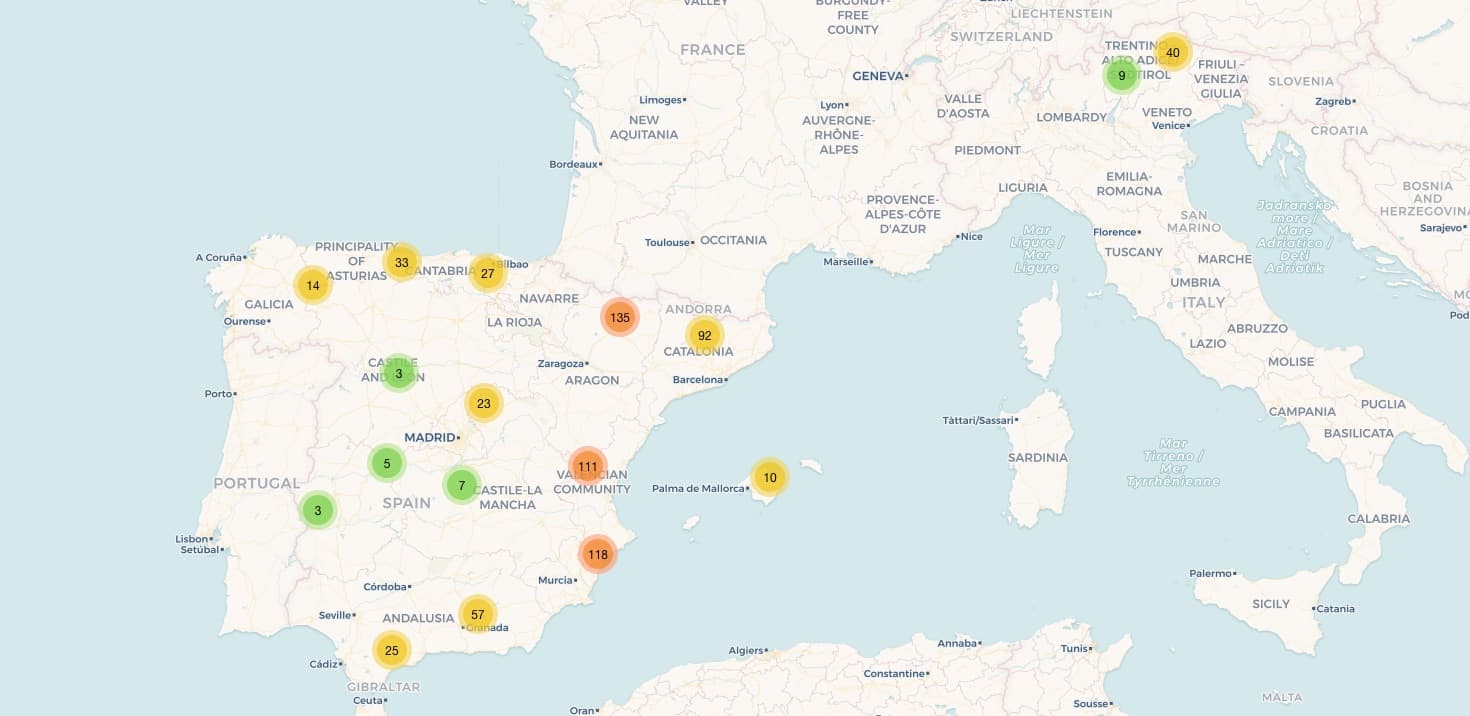
Your whole travel map in one place
Get inspired by new places around the world and find the ones worth the journey
Frequently asked questions
Is the Museum of Cádiz free?
Entry is free for citizens of the European Union. Visitors from elsewhere pay a small admission fee.When is the Museum of Cádiz closed?
It is closed on Mondays. On Sundays it opens in the morning and closes in mid-afternoon.Are the exhibits labelled in English?
Barely. Explanations are in Spanish, with little or no English, so a translation app is worth having ready.What should I not miss?
The Phoenician sarcophagi in the archaeology section, and upstairs the Zurbarán paintings from the Charterhouse of Jerez de la Frontera, with works by Murillo and Rubens nearby.Can I take a bag or a water bottle in?
Water is not allowed in the galleries and goes into a locker. The lockers take bags as well.