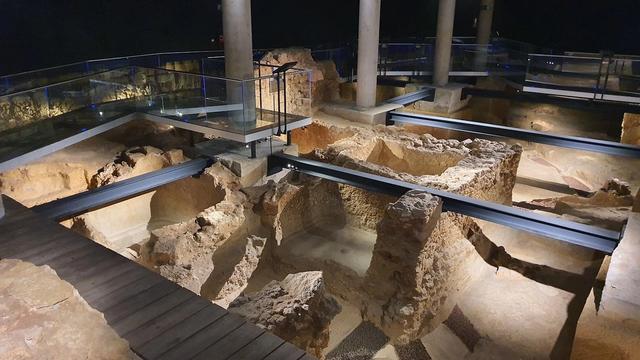
The old town of Cádiz packs narrow alleys and large plazas onto the tip of a sandy island, with the sea on three sides and remnants of the city walls on the fourth. Founded by the Phoenicians as Gadir, the city held a near monopoly on Spain's trade with the Americas until 1778, and many of its historic buildings date from that boom. Travellers come for the cathedral, the Roman theatre uncovered in 1980, the view from Torre Tavira, the beaches of La Caleta and La Victoria, fried fish and the February carnival.
Cádiz

- Currency
- Euro (EUR)
- Language
- Spanish; English in tourist areas
- Power plug
- Type C/F, 230 V
- Visa
- Schengen
- Time zone
- UTC+1 / UTC+2 (CET/CEST)
- Tap water
- Safe; mineral taste in the south
- Tipping
- Not expected; 5–10% for great service
- Emergency
- 112
Things to do
All tours in Cádiz on GetYourGuide
Paid links: booking through them supports YowJourney.
When to go
Low season
Oct – Jan
One of the mildest winters in Europe, with the coldest month averaging 12.9 °C, the sea near 16 °C and the plazas given back to locals.
High season
Feb – Feb
Carnival turns the city into an open-air theatre for two weeks, with chirigotas singing satire in the streets and the official contest at the Gran Teatro Falla.
Shoulder
Mar – May
Long sunny days for walking the old town and the sea walls, before the beach crowds arrive.
High season
Jun – Sep
Beach season, with the sea around 22 °C and the Atlantic keeping daytime heat well below that of inland Jerez, though the nights stay warm.
How long to stay
Two days cover the old town on foot: the cathedral, the Roman theatre in El Pópulo, Torre Tavira and the Mercado Central 100 m south of it, where the smell of the fish stalls reaches the street. A third day leaves time for La Victoria, about 3 km of sand on the newer side of the island, or a ferry across the bay to El Puerto de Santa María or Rota. Carnival fills two weeks of February and is reason enough to stay longer.
Getting around
The old city and the north end of the island are walkable, but the beach strip runs for 5 km, and that is where public transport earns its keep. CMTBC runs the city buses, trams and bay ferries. Bus 1 covers the length of the island from Plaza España to Cortadura; bus 7 starts near La Caleta, passes the cathedral and crosses the old town to halfway down La Victoria.
Cercanías trains and the Trambahía tram share an underground line down the island, with stops at Cortadura, Estadio, Segunda Agua and San Severiano before the main station by the port; together they run every 10 minutes. The tram continues over the causeway to San Fernando and Chiclana de la Frontera. Foot-passenger ferries cross the bay hourly to El Puerto de Santa María and every 40 minutes or so to Rota.
The catch is Jerez Airport: only three trains a day go all the way there, so check the timetable before relying on the train.
What to see








Destinations in Cádiz
Frequently asked questions
How do I get from Jerez Airport to Cádiz?
The airport lies about 40 km north of the city. Cercanías line C1 runs from the airport station to Cádiz main station in about an hour, and bus M-050 also goes direct. Few trains start at the airport itself; from Jerez city centre they run every 30 minutes and take 45 minutes.Which beach in Cádiz should I choose?
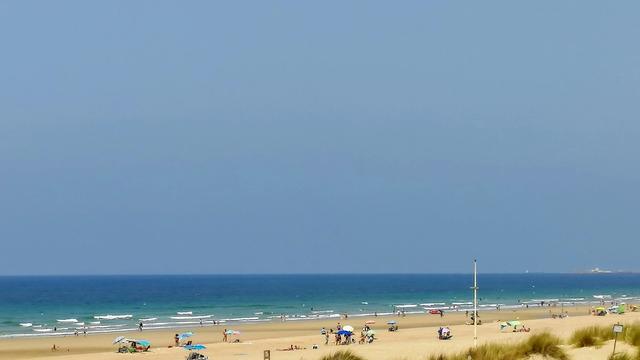
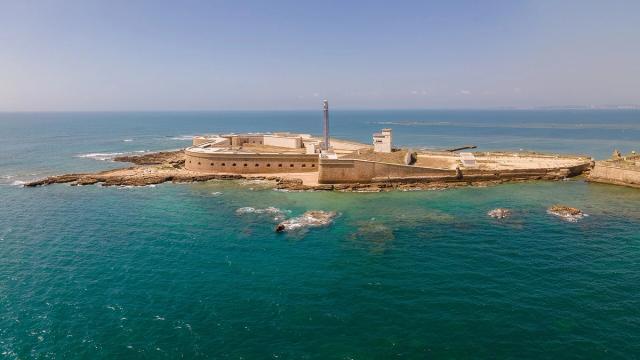
La Caleta is the old-town beach, about 400 m long and set between the castles of San Sebastián and Santa Catalina; its seafront stood in for Havana in the James Bond film Die Another Day. La Victoria, on the newer side of the island, has about 3 km of sand, a moderate swell and no rocks, with shops and restaurants across the avenue behind it. Santa María del Mar sits between the two and looks back at the old town.When is the Cádiz carnival?
It runs for two weeks in February. Its signature is the chirigota, a group of seven to twelve performers singing comic and satirical songs to guitars, kazoos and a bass drum. The climax is the official contest of carnival groups at the Gran Teatro Falla.What is there to see from Torre Tavira?
Torre Tavira is the tallest of the old merchants' watchtowers still standing on the skyline, on a high point 45 m above sea level that the Navy chose as its lookout in 1787. Since 1994 it has housed a camera obscura that projects a live panorama of the old town onto a concave disc, and there is a rooftop terrace above.Can I take a ferry from Cádiz to the Canary Islands?
Yes. Transmediterranea sails to Gran Canaria once a week all year, with a second weekly sailing from June to August, calling at Tenerife or Lanzarote on the way. The crossing takes 36 hours, the ships carry vehicles, and berths come in cabins or as reclining seats. Ferries dock at the harbour 100 m north of the bus and railway stations.