The Roman Theatre of Cádiz is a partly excavated theatre from the 1st century BC in the Barrio del Pópulo, the oldest quarter of Cádiz in Andalusia. It was built when the city was Gades, one of the wealthiest towns of Roman Hispania, and is attributed to the politician Lucius Cornelius Balbus, around 70 BC. Its seating was laid into the natural slope of the ground. Later houses covered the ruins for centuries until they were rediscovered in 1980. Estimates of its capacity run from 10,000 to 20,000 spectators.
Roman Theatre of Cadiz
Local name: Teatro Romano de Cádiz

Roman theatre from the 1st century BC, buried under the Barrio del Pópulo until its rediscovery in 1980.
- Entrance
- Free.
- Accessibility
- The entrance is wheelchair accessible; there is no wheelchair-accessible parking.
- Parking
- Two car parks about 240 m away in a straight line; no wheelchair-accessible parking.
- Difficulty
- No approach to speak of: the site is in the streets of the old town, about 50 m from the nearest bus stop.
- Transport
- Bus stop Teatro Romano – Mirandilla, about 50 m away.
- Hours
- Monday–Saturday 10:00–16:30; Sunday 10:00–14:00.
- Address
- C. Mesón, 11, 13, 11005 Cádiz, Spain
What makes it special
The lanes of the Barrio del Pópulo give no warning. Then the houses part and there below you are the curved tiers of a theatre that Gades built in the 1st century BC, with cafés and tapas bars pressed right up against its edge.
It counts among the oldest Roman theatres found on the Iberian Peninsula, and for centuries nobody knew it was there: the medieval quarter grew over it, and the ruins only came back to light in 1980. That burial is what makes it worth the stop. Only part of the structure survives, but the line of the seating, rising with the slope of the ground around the stage, is clear enough to read the whole shape.
The displays at the entrance tell the story of Gades and of the dig. Without them the stones look modest beside the cathedral and the waterfront. With them, the scale sinks in.
Good to know
- In autumn 2026 preservation works closed the theatre itself; the museum stayed open, and the ruins could only be seen from its windows.
- Go through the displays at the entrance first: there is little explanation out among the ruins.
- There are no toilets at the site. The nearest free public toilets are about 460 m away.
- A drinking-water fountain stands about 100 m away.
Getting there
The theatre sits in the narrow streets of the Barrio del Pópulo, in the heart of the old city, and it is easy to walk straight past while threading through the lanes. Keep an eye out for it.
The bus stop Teatro Romano – Mirandilla is about 50 m away. Two car parks lie about 240 m away in a straight line, and from either the last stretch is a walk through the old streets. Neither offers wheelchair-accessible parking.
Best time to visit
Best: a weekday, when the site keeps its longer hours, and any season outside high summer.
Avoid: Sunday afternoons, when it is closed, and the middle of a summer day.
The ruins are an open excavation in a southern city with little shade over the stones, and the site shuts early every day, so a late start leaves little time.
Sun & daylight
Nearby Places


Similar Places

Roman Theatre of Cadiz on the map
Get directions
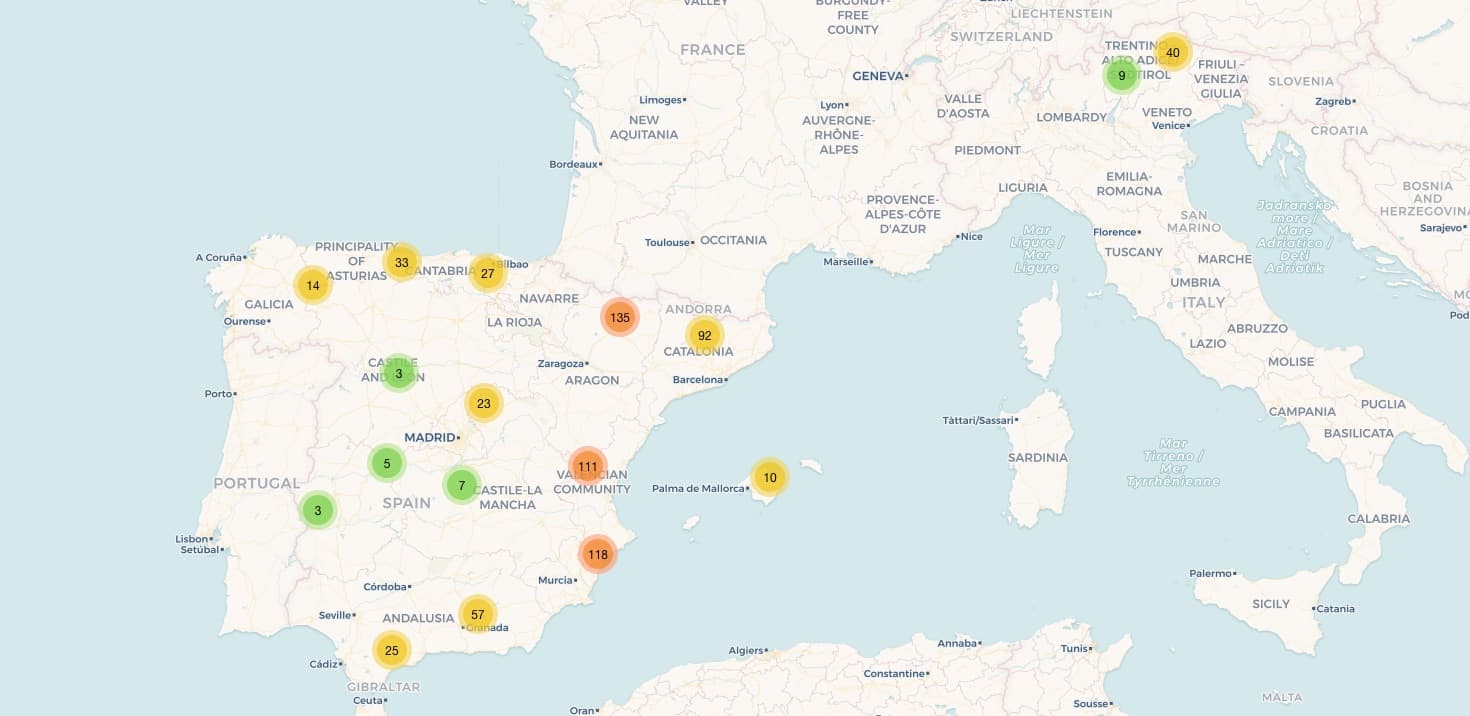
Your whole travel map in one place
Get inspired by new places around the world and find the ones worth the journey
Frequently asked questions
Do you pay to enter the Roman Theatre of Cádiz?
No. Entry is free, both to the theatre and to the museum beside it.Can you walk among the ruins?
In autumn 2026 the theatre was closed for major preservation work. The museum stayed open, and the ruins could be seen from its windows.How old is the theatre and when was it found?
It dates from the 1st century BC and is attributed to Lucius Cornelius Balbus, around 70 BC. Later buildings hid it for centuries, and it was rediscovered in 1980.Are there toilets at the theatre?
No. The nearest free public toilets are about 460 m away.