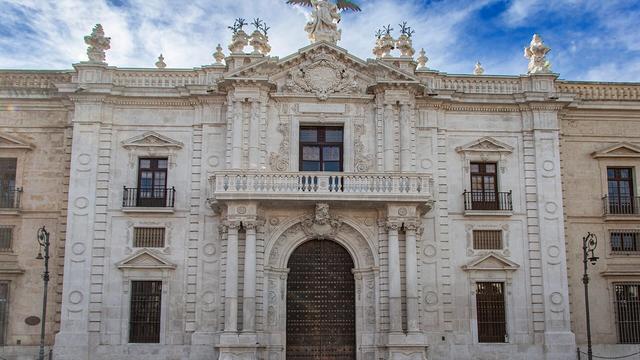
Seville is the capital and largest city of Andalusia, set on the Guadalquivir about 80 km from the Atlantic. Its compact old centre holds three UNESCO-listed buildings: the Alcázar palace, the cathedral with its Giralda bell tower, and the General Archive of the Indies. Travellers come for the tiled Plaza de España, evenings moving from one tapas bar to the next, flamenco in Triana, and the processions of Holy Week and the April Fair that follows.
Seville
Local name: Sevilla

- Currency
- Euro (EUR)
- Language
- Spanish; English in tourist areas
- Power plug
- Type C/F, 230 V
- Visa
- Schengen
- Time zone
- UTC+1 / UTC+2 (CET/CEST)
- Tap water
- Safe; mineral taste in the south
- Tipping
- Not expected; 5–10% for great service
- Emergency
- 112
Things to do
All tours in Seville on GetYourGuide
Paid links: booking through them supports YowJourney.
When to go
High season
Mar – May
Holy Week brings 54 brotherhoods carrying floats through the streets, and the April Fair fills the Los Remedios fairground about two weeks later, so the city is at its busiest.
Low season
Jun – Sep
July and August average highs around 36 °C and above 40 °C is not unusual, so sightseeing shifts to early morning and the streets come alive after dark.
Shoulder
Oct – Nov
The heat breaks and long days on foot through the old centre become comfortable again.
Shoulder
Dec – Feb
Days reach 16–18 °C in December and January, December is the wettest month, and artisan fairs set up across the city in the run-up to Christmas.
How long to stay
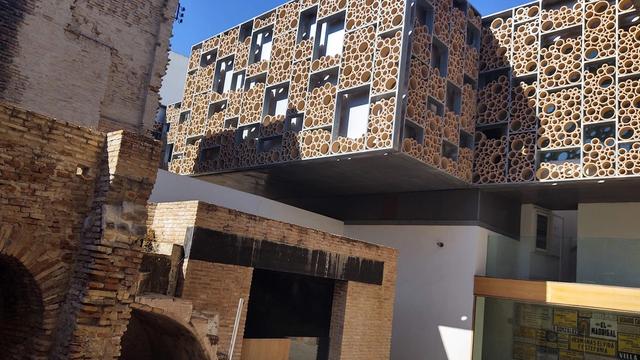
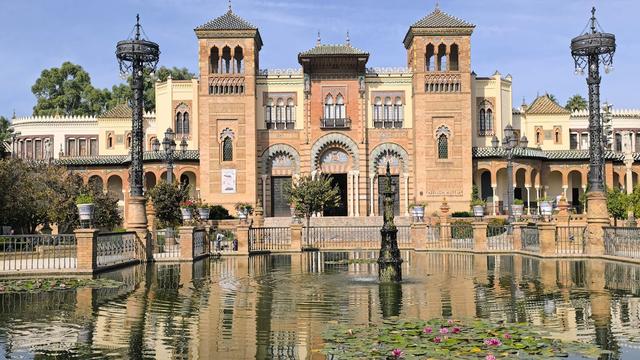
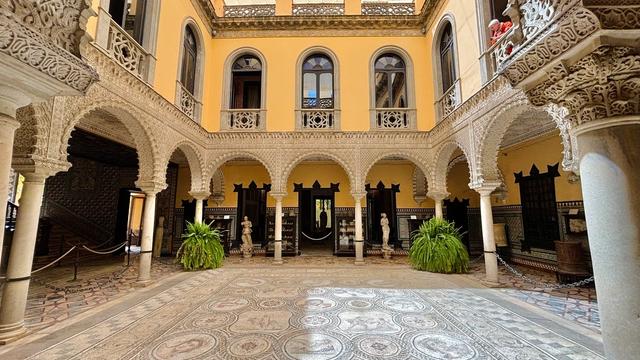
Three days covers the cathedral and the Giralda, the Alcázar and its gardens, Plaza de España in María Luisa Park and a couple of evenings of tapas in Triana. With four or five, add the Museum of Fine Arts, the rooftop viewpoint of the Metropol Parasol, the Casa de Pilatos and a trip out to the Roman ruins of Italica at Santiponce.
Getting around
Walk. The main sights lie in an old centre of about 4 square kilometres, and the tram's five stops along Avenida de la Constitución cover barely 2 km of street you would walk anyway. TUSSAM buses reach most of the city until around 23:30, then night buses run on the hour until 02:00. The single metro line skirts the south edge of the centre on its way between suburbs, so it is little use for sightseeing. Sevici bike-share bicycles are available around the city, with green kerb-raised lanes on most major streets. The green travel card sold in tobacco shops covers buses, metro, tram and Cercanías trains. Taxis are plentiful and Cabify, Uber and Bolt all operate; ordering by app sidesteps the occasional crooked cabbie. In July and August, when highs routinely pass 35 °C, do the walking in the morning and evening.
Local rules
- Leave the street oranges alone. The trees are sprayed to keep birds off, and the bitter fruit tastes awful anyway.
- Sunday shuts the shops. Most shops and supermarkets close; the open-air markets fill up instead, above all the big flea market northwest of Triana near Avenida Carlos III.
- Dinner is late. Most restaurant kitchens do not open before 20:30; until then, bars serve simpler dishes.
- Spell out vegetarian. The word is taken to mean no meat, so ask for no fish and no tuna as well.
What to see




Destinations in Seville
Frequently asked questions
How hot does Seville get in summer?
Very. July and August average highs around 36 °C, the city sees about 60 days a year above 35 °C, and 40 °C is not uncommon. Plan outdoor sights for the morning, spend midday indoors, and drink plenty of water.How do I get from the airport to the centre?
The airport lies 10 km northeast of the centre on the A-4. The EA bus leaves from outside Arrivals every 15 minutes from 05:00 to 00:30, calls at the main railway station, loops round the south edge of the centre and ends at the Plaza de Armas bus station after about 35 minutes. Tickets come from machines by the stop or on the bus. Taxi fares are officially regulated, and Cabify, Uber and Bolt pick up on the ground level of the car park beside Arrivals.Is the metro useful for sightseeing?
Hardly. Its one line runs from the southwestern suburbs past the south end of the centre and out to the southeast, missing the old town. The sights are close together, so walking is the way to see them.When are Holy Week and the April Fair?
Holy Week (Semana Santa) is the week before Easter, when 54 brotherhoods carry floats in procession through the city. The April Fair (Feria de Abril) starts about two weeks later on a permanent fairground in Los Remedios, where families and organisations set up marquees called casetas for a week of dancing and drinking.Can I go on to Portugal by train?
No: no train crosses the border from Seville. Direct buses to Lisbon leave from the Plaza de Armas bus station, and by car the A-49 runs to Huelva and on to the Algarve.