Punta Sardina Lighthouse is an active lighthouse on the rocky headland of Punta Sardina (Sardine Point), north of the town of Sardina in the municipality of Gáldar. It marks the north-western extremity of Gran Canaria. The first lighthouse on the point was completed in 1891 under the first maritime lighting plan for the Canaries and was demolished in the 1980s; the present 24-metre tower, white with four red bands, entered service in 1985. The Port Authority of Las Palmas maintains it.
Punta Sardina Lighthouse
Local name: Faro de Punta Sardina
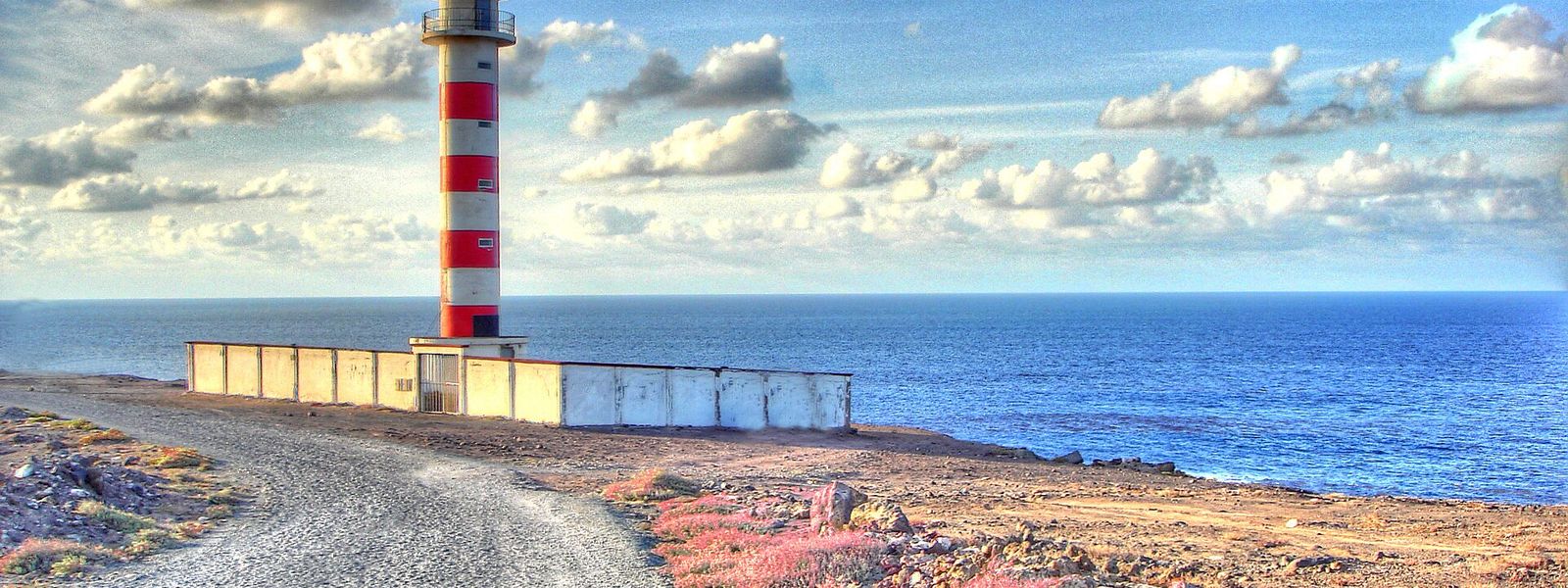
Red-and-white banded lighthouse on a rocky headland at the north-western tip of Gran Canaria, facing the open Atlantic.
- Entrance
- No ticket; the headland around the lighthouse is open ground.
- Accessibility
- Wheelchair-accessible parking beside the lighthouse; no toilets.
- Parking
- Car park beside the lighthouse, with a second parking area about 165 m away; wheelchair-accessible parking.
- Difficulty
- None to speak of: you park beside the lighthouse.
- Transport
- Bus stop Urb. Playa Canaria, 12, about 230 m away.
- Advance booking
- Not needed.
- Hours
- Open at any time.
- Address
- Urb. Sau-Playa Canaria, 10C, 35469 Gáldar, Las Palmas, Spain
What makes it special
Atlantic swell breaks on the dark rock below the lighthouse, and the headland takes the full force of the wind. Out on the north-western tip of Gran Canaria there is nothing between the tower and the ocean.
The tower is the second on the point. Its predecessor dated from 1891 and came down in the 1980s. The current one, lit in 1985, is a 24-metre cylinder, white with four red bands and about as tall as an eight-storey block, topped by twin galleries and a grey-domed lantern. After dark it sends out four white flashes every twenty seconds, visible for 20 nautical miles.
The headland faces west and north-west, so the sun goes down over open water. On a clear day the peak of Teide on Tenerife rises across the sea to the west.
Good to know
- No facilities. There are no toilets and no drinking water at the lighthouse or nearby — bring water and food with you.
- Wind. The point is exposed and windy; bring a jacket even on a sunny day.
- No shade. The headland is bare rock, with nothing to shelter under at midday.
Getting there
The lighthouse stands at the seaward edge of the Playa Canaria housing estate, north of Sardina. A car park sits right beside the tower, with a second parking area about 165 m away, so there is next to no walking once you have parked.
By bus, the nearest stop is about 230 m from the lighthouse in a straight line, and the next one along is about 400 m away.
Best time to visit
Best: late afternoon through to sunset.
Avoid: the middle of the day in high summer.
The headland faces west and north-west over open sea, so the sun sets over the water in front of you, while at midday the bare rock offers no shade at all.
Sun & daylight
Nearby Places
Similar Places
Punta Sardina Lighthouse on the map
A sign by the lighthouse marks the surrounding cliffs as a danger zone, and Atlantic waves break hard on the rocks below. Keep back from the edge, stay off the low rocks and never turn your back on the sea.
Get directions

Your whole travel map in one place
Get inspired by new places around the world and find the ones worth the journey
Frequently asked questions
Is there parking at Punta Sardina Lighthouse?
Yes. A car park sits beside the lighthouse, with a second parking area about 165 m away. Wheelchair-accessible parking is available.Are there toilets or a café at the lighthouse?
No. There are no toilets, no drinking water and no other amenities at the lighthouse or nearby, so bring what you need.Can you get to Punta Sardina Lighthouse by bus?
The nearest bus stop, Urb. Playa Canaria, 12, is about 230 m from the lighthouse.Is Punta Sardina a good place to watch the sunset?
Yes. The headland faces west and north-west over the open Atlantic, and the sun sets over the water. Bring a jacket: the point is windy.How old is the lighthouse?
The first lighthouse on the point was completed in 1891 and demolished in the 1980s. The present tower entered service in 1985.