So na Caçana is a Talayotic archaeological site on Menorca, beside the local road between Alaior and Cala en Porter, about 6 km from Alaior and 2 km from Cala en Porter. Around ten buildings survive, among them two taula sanctuaries with concave façades, several probable houses and a hypogeum dated to around 1500 BC. Excavated by the Museum of Menorca between 1982 and 1987, it is thought to have been a religious centre for this part of the island, and it belongs to the UNESCO Talayotic Menorca World Heritage Site.
So na Caçana
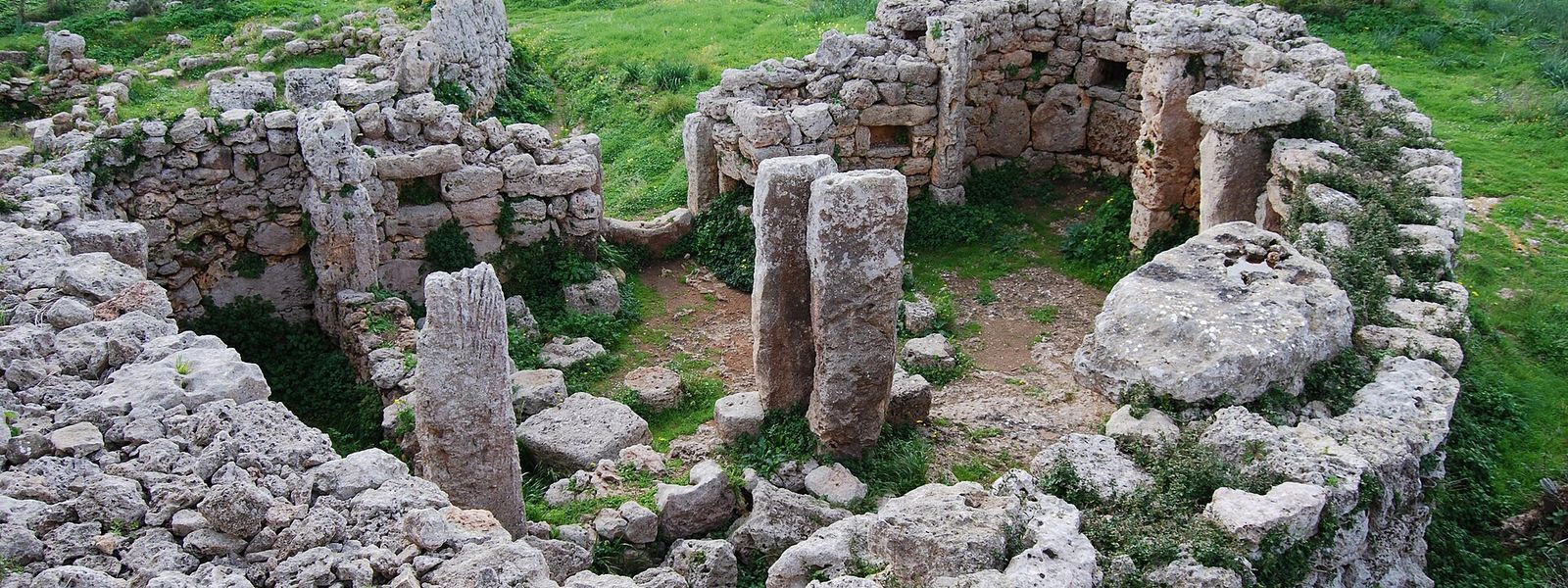
Talayotic sanctuary complex with two taula enclosures, a hypogeum and around ten prehistoric buildings
- Entrance
- Free, or a low fee.
- Accessibility
- The entrance is not wheelchair accessible; the paths through the ruins are relatively flat.
- Parking
- Car park at the site, beside the road.
- Difficulty
- Easy: relatively flat paths through the ruins, 30–45 minutes to walk round, very little shade.
- Transport
- Nearest bus stop: Son Vitamina, about 840 m away in a straight line.
- Hours
- Daily from 10:00; closing at 18:00 or 20:00.
- Address
- Alaior, 07730, Balearic Islands, Spain
What makes it special
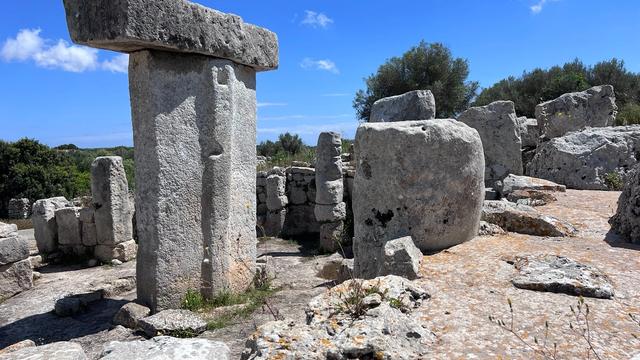
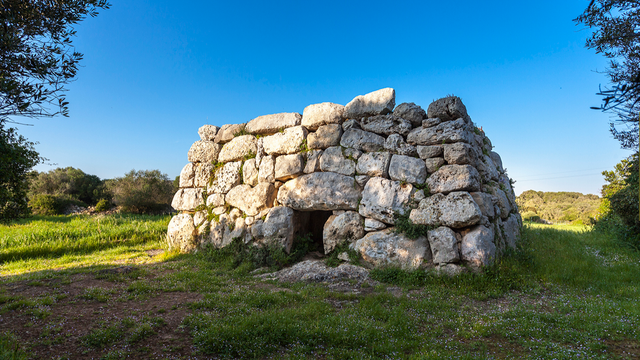
Two horseshoe-shaped sanctuaries stand among the ruins, both facing south, and they are the reason to stop. Most Talayotic sites on Menorca were villages; So na Caçana is read as a religious centre for the settlements around it. The taulas inside the enclosures have lost their top stones. On the façade of the western enclosure, a vertical triangular slab is capped by a horizontal stone and a rounded block, a stacked figure some researchers take for an early image of the Punic goddess Tanit.
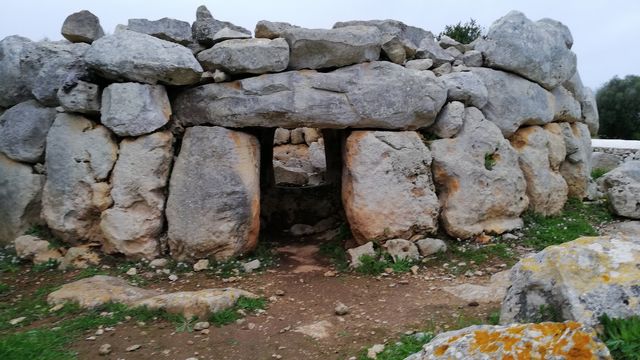
The site covers a long stretch of time. A hypogeum beneath one building goes back to around 1500 BC. The sanctuary lost its religious role around 200 BC, and people went on living here until the 4th century; a small building by the talaiot carries burn marks and was probably a workshop in Roman times. Parts of the site are overgrown and unexcavated, and the place is quiet.
Good to know
- No toilets, drinking water, kiosk or staff on site, and none nearby. Bring water.
- There is very little shade over the ruins; in summer a hat matters.
- Translated information panels explain each zone, from the Middle Bronze Age to Roman and early Islamic reuse.
- Allow 30 to 45 minutes. The paths are relatively flat, but the entrance is not wheelchair accessible.
- Some structures, including underground burial caves, are closed off or overgrown.
Getting there
So na Caçana sits just off the road from Alaior to Cala en Porter, around the 6 km mark from Alaior and 2 km from Cala en Porter, close to the Talayotic settlement of Torralba d'en Salort. A car is the straightforward way in: the site has its own car park beside the road, and from there relatively flat paths loop through the ruins. The nearest bus stop, Son Vitamina, is about 840 m away in a straight line. Torralba d'en Salort and the beach at Cala en Porter both sit on the same stretch of road, so the three fit into one outing.
Best time to visit
Best: soon after opening, or later in the afternoon. Avoid: the middle of a summer day.
There is very little shade anywhere on the site, and at midday the sun stands high over bare stone; in the morning and late afternoon the light comes in low across the south-facing enclosures and picks out the masonry.
Access & restrictions
So na Caçana is a protected archaeological monument and part of the UNESCO Talayotic Menorca World Heritage Site. Keep to the paths, and do not climb on the walls, the taulas or the talaiot, or move any stone. Structures that are closed off, such as the underground burial caves, stay closed to visitors.
Sun & daylight
Nearby Places
Similar Places
Your whole travel map in one place
Get inspired by new places around the world and find the ones worth the journey
Frequently asked questions
How long does a visit to So na Caçana take?
Walking round the ruins takes 30 to 45 minutes.Are there toilets or drinking water at So na Caçana?
There are no toilets, drinking water or vending machines on site, and none nearby. Bring your own water, especially in summer, as the ruins have very little shade.What sets So na Caçana apart from other Talayotic sites?
It has two taula sanctuaries. Lluís Plantalamor, who directed the excavations in the 1980s, proposed that it was a religious centre linked to the other settlements on this part of the island.How old is So na Caçana?
The hypogeum dates to around 1500 BC, in the Pre-Talayotic period, and radiocarbon dates from the buildings point to the 9th century BC. Religious use ended around 200 BC, the site was lived in until the 4th century, and a small Islamic cemetery was found near the car park in 2013.Can wheelchair users visit So na Caçana?
The entrance is not wheelchair accessible, though the paths through the ruins are relatively flat.