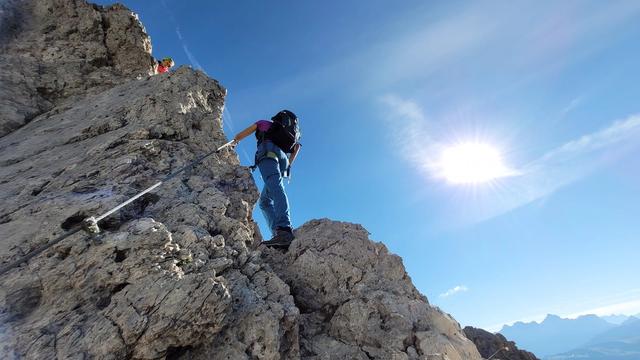
Via Ferrata Marino Bianchi is a cable-protected climbing route on the Cristallo massif in the Dolomites, in the province of Belluno. It is reached on foot: the nearest car parks and the Passo Tre Croci bus stop are both roughly 2.8–2.9 km away, and the approach climbs through the steep Grava Staunies cirque before the cables begin. The climbing above is mid-range in difficulty and finishes on a summit with wide views. Since the cable car stopped running the route is quiet, and there are no toilets, water or information points nearby.
Via Ferrata Marino Bianchi
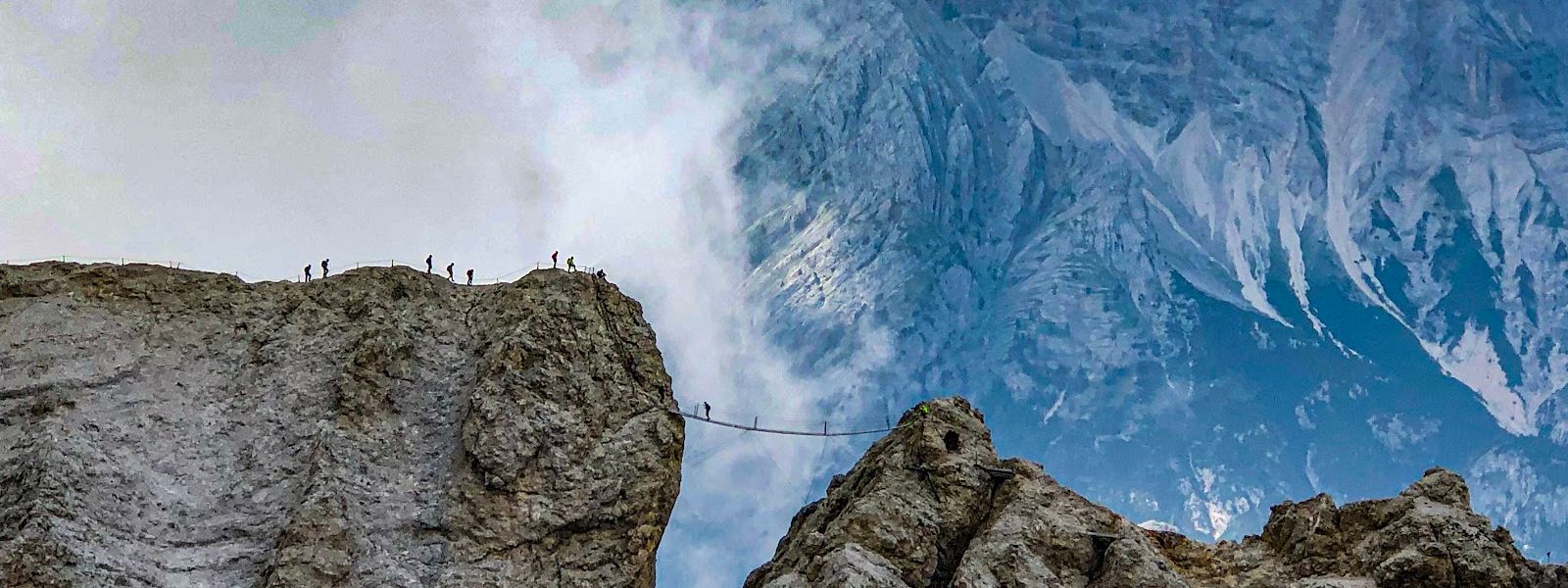
The crowds left with the lift: since the cable car stopped running, the route is quiet.
- Accessibility
- No wheelchair access. Not suitable for children.
- Parking
- Nearest car parks about 2.9 km from the route; the closest is free of charge but signed for customers.
- Difficulty
- Steep ascent through the Grava Staunies cirque, then cable-protected climbing rated by one climber as neither too easy nor too difficult; about half a day round trip from the Son Forca hut.
- Transport
- Bus stop Passo Tre Croci, about 2.8 km from the route.
What makes it special
The Grava Staunies cirque does most of the day's work before a single cable is clipped. It is steep, and one climber who came up from the Son Forca hut called that ascent masochistic, then described what follows as the complete opposite — a pure delight. That is a fair summary of the Marino Bianchi: a punishing approach, then cable-protected climbing on the Cristallo massif that sits squarely mid-range, not too easy and not too difficult. The summit view is what the route is climbed for, and one climber called it superb.
Good to know
- Nothing at the start. No toilets, no drinking water and no information point anywhere near the route — carry what you need for the day.
- Parking is 2.9 km off. The nearest car parks are about 2.9 km from the route; the closer one is free but signed for customers.
- Kit is not optional. Fixed cables mean a via ferrata set — harness, lanyard, helmet — and a head for exposure.
- Weather decides the day. The peak can be clouded in; check the forecast before you commit to the cables.
- Not a route for children.
Getting there
Almost everyone drives. The nearest car parks sit about 2.9 km from the route, and the bus stop at Passo Tre Croci is roughly 2.8 km away, so the last stretch is walked whichever way you arrive: the approach climbs through the steep Grava Staunies cirque to where the cables begin. One climber treated the whole thing as a half-day round trip from the Son Forca hut.
Best time to visit
Better: a day with a settled forecast. The summit view is what the climb is for, and cloud takes it away.
Avoid: starting up with the peak already covered. The one warning a climber left about this route was about the weather and nothing else — the peak clouds in, and on cabled terrain that turns a good day into a careful retreat.
Sun & daylight
Nearby Places

Similar Places


Via Ferrata Marino Bianchi on the map
The peak can be clouded in. Watch the weather before you start and be ready to turn round — this is exposed, cable-protected climbing, and it is not suitable for children.
Get directions
Your whole travel map in one place
Get inspired by new places around the world and find the ones worth the journey
Frequently asked questions
Is there a lift to the start of the via ferrata?
No. The cable car that used to serve the route stopped running, so the approach is walked. One climber logged it as a half-day round trip from the Son Forca hut.How hard is the climbing?
Mid-range for a via ferrata — one climber called it not too easy, not too difficult. The steep pull through the Grava Staunies cirque is the demanding part; the cabled section above it is the enjoyable one.Is it suitable for children?
No. It is exposed, cable-protected climbing on a summit route, and the site is not suitable for children.Are there toilets or drinking water near the route?
None. No toilets, no water tap and no information point in the area around the route, so bring water with you.Where is the nearest parking and public transport?
The nearest car parks are about 2.9 km away; the closest is free of charge but signed for customers. The bus stop at Passo Tre Croci is about 2.8 km from the route.