Ferrata Brigata Alpina Tridentina, filed in route guides as the Pisciadù ferrata, climbs the rock of the Sella group in the Dolomites above Corvara in Badia. The cable is well set and the moves are straightforward, but the route is long, and the length is what people underestimate on it. It tops out at a mountain refuge, and the way back down to the road is steep, with loose rock underfoot. Anyone taking it on as a first via ferrata should go with a guide.
Ferrata Brigata Alpina Tridentina
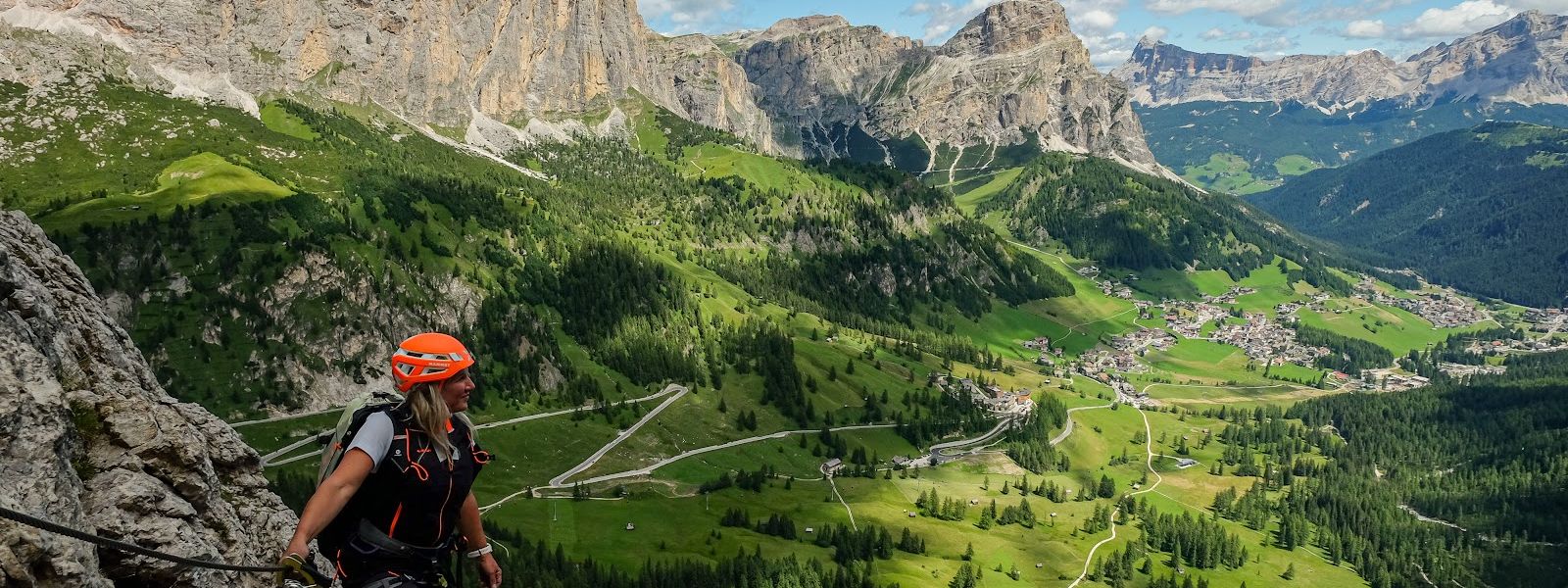
The route carries the name of the Tridentina Alpine brigade; on German-language climbing sites it is filed as the Pisciadù Klettersteig.
- Accessibility
- No wheelchair-accessible parking and no wheelchair-accessible entrance; the route is a cabled climb on rock.
- Parking
- Free parking about 390 m from the start; the nearer car park has a gravel surface.
- Difficulty
- Well equipped and without especially hard sections, but long: six hours car to car for one party carrying 15 kg packs. Steep, loose descent from the refuge. Not a route for a first via ferrata without climbing experience.
- Transport
- Bus stop Plaza dai Auti Pisciadú (Parkplatz Pisciadú) about 420 m from the start; no route number in the sources.
What makes it special
Length is what defines this route. The cable is well set, the moves are straightforward, and hours of the day are spent on rock high in the Sella group with the valley open below. But it keeps going. One party carrying 15 kg packs reached the halfway point with three hours still ahead of them and finished in six; they came off saying it is the wrong choice for anyone with a full rucksack and no climbing behind them. Someone else did it as their first via ferrata and came away hooked. Fitness and the weight on your back decide which of those two days you get. The finish is a refuge, and from there the walk down to the car is long and steep.
Good to know
- Not a first via ferrata. With no climbing experience and a full rucksack it becomes a very hard day; a guide or prior ferrata mileage helps.
- Travel light. One party carried 15 kg and called it the hardest thing they had done — the weight tells over the length of the route.
- Helmet and a full ferrata set. Loose rock is a real hazard here, and worst on the descent.
- Toilets and water. Both are free and sit by the car park at the start; carry what you need for the climb itself.
Getting there
Almost everyone drives. The car park is a gravel one beside the road, and from it a walk of a few hundred metres leads to the foot of the rock, past information boards set close to the start. A bus stop carries the name of the same car park, so the route can be reached without a car. The day ends the same way it began: down from the refuge and back to the car park, and that stretch is long and steep.
Best time to visit
Better: a full day set aside, and an early start.
Avoid: an afternoon departure, and any plan that has you descending on empty legs.
The climb runs for hours and the steep drop back from the refuge comes at the end of it. One party that set off at 13:00 found the route quiet, but spent the whole afternoon and evening on the cable.
Sun & daylight
Nearby Places


Similar Places


Ferrata Brigata Alpina Tridentina on the map
The descent is the dangerous half: below the refuge the rock is loose and the ground slippery, and it comes after hours on the cable. Keep legs and daylight in reserve for it — the way down is where it goes wrong.
Get directions
Your whole travel map in one place
Get inspired by new places around the world and find the ones worth the journey
Frequently asked questions
Is this a good first via ferrata?
It splits opinion. One visitor did it as their first and came away hooked; another, with no climbing experience and a 15 kg pack, called it one of the hardest things they had done and advised against it without a guide or prior experience.How long does it take?
One party carrying heavy packs needed six hours car to car, and were still three hours from the top at the halfway mark. Treat it as a full day rather than a morning out.How hard is the climbing itself?
The route is well equipped and holds no especially difficult sections. The difficulty is the length — the same moves, hour after hour, and more so with weight on your back.Where is the risky part?
On the way down. Below the refuge the ground is loose and slippery, and the descent back to the car is long and steep after a full day on the cable.