Zona Histórica do Funchal is the old town of Funchal, the capital of Madeira, Portugal. It is a set of narrow cobbled streets lined with old merchant houses, restaurants, cafés and bars. Its best-known street is Rua de Santa Maria, where artists have painted the doorways of the houses. The yellow São Tiago Fort stands at one end of it, and the Corpo Santo Chapel nearby. People come to walk the lanes, look at the doors and eat.
Zona Histórica do Funchal
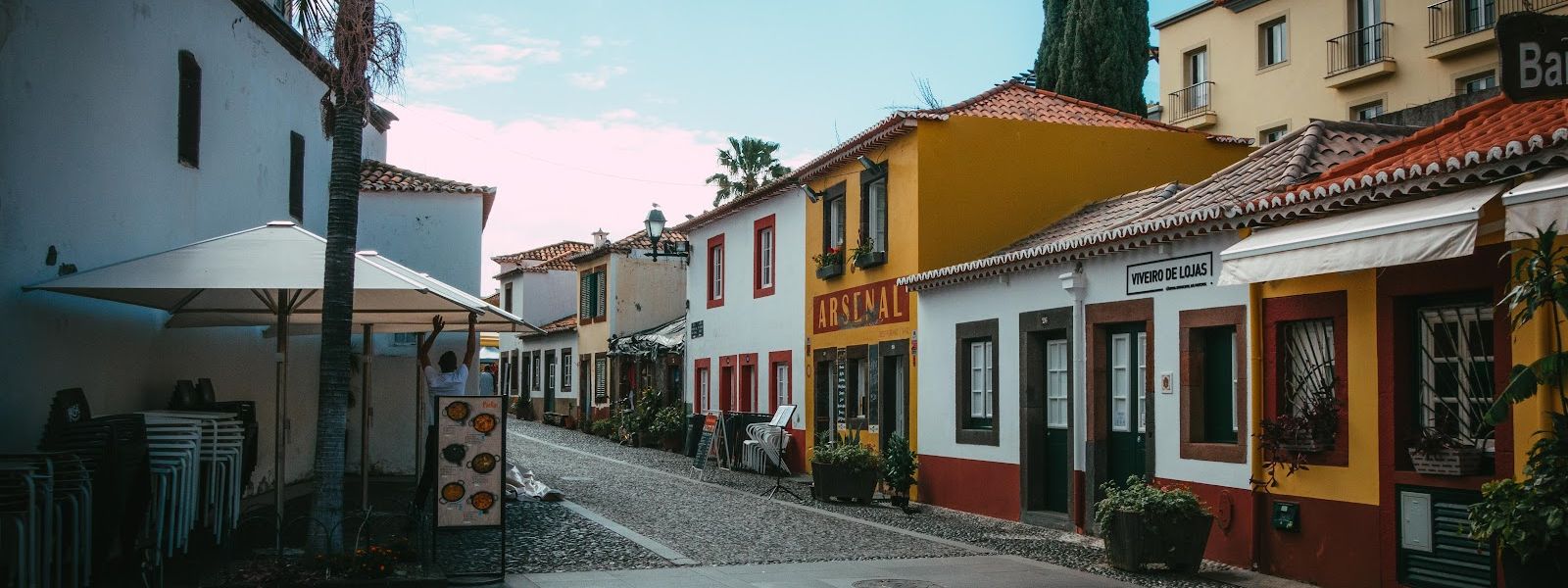
Under the Art of Open Doors project (Arte de Portas Abertas), artists painted the doorways along Rua de Santa Maria — here the doors are the exhibition.
- Entrance
- Free. The old town is a public district of streets; you pay only in the restaurants, bars and shops.
- Accessibility
- Wheelchair-accessible entrance and accessible parking spaces. The streets themselves are cobbled.
- Parking
- Car park about 50 m from Rua de Santa Maria, free of charge; a second one about 80 m away.
- Transport
- Bus stops Museu and Pinga, both about 80 m from the old town.
- Hours
- Open 24 hours, every day. Most restaurants take last orders around 10–11 pm.
What makes it special
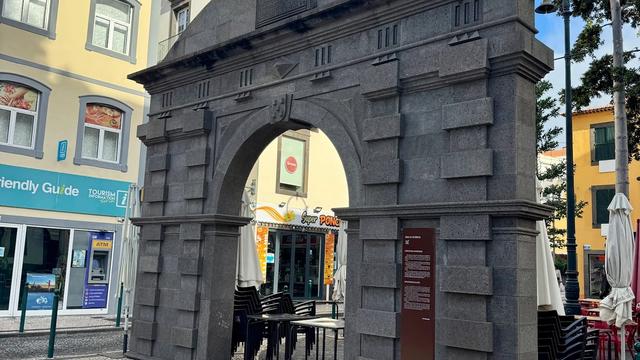
Rua de Santa Maria is the street most people come for. Artists have painted its doorways one after another, so the doors carry the art rather than the walls. The lanes around it are narrow and cobbled, built up with old merchant houses; parts of the fabric go back to the 15th century. The yellow São Tiago Fort closes the far end of the street, and the Corpo Santo Chapel stands close by. Everything else is restaurants, cafés with tables outside and bars. The district is busy by day and busier after dark.
Good to know
- Touting. Restaurant hosts work the pavement and invite passers-by in; a firm no is sometimes needed.
- Cobbles. The lanes are paved in stone setts throughout. Flat shoes with grip are easier than heels or smooth soles.
- Toilets. The nearest public toilets charge a fee; a free one is about 150 m away.
- Water. Public drinking-water points stand within about 70 m of Rua de Santa Maria.
- Eating. The restaurants here are aimed at visitors; for plainer local cooking, look beyond the old town.
Getting there
Whatever you arrive in, the last stretch is on foot. The nearest car park is about 50 m from Rua de Santa Maria, and a second one about 80 m out; both are surfaced in stone setts. The closest bus stops are also about 80 m from the street. From any of them the walk in is under 100 m, and it ends on cobbles.
Best time to visit
Better: the evening, when the tables come out, the bars fill and the street is at its liveliest.
Avoid: expecting quiet at any hour of the day.
The old town is busy by day and busier at night, and the narrow lanes make it feel busier still. The painted doors are outdoors and the street never closes, so seeing them does not depend on restaurant hours.
Sun & daylight
Nearby Places



Similar Places
Your whole travel map in one place
Get inspired by new places around the world and find the ones worth the journey
Frequently asked questions
What is the Art of Open Doors?
A street-art project on Rua de Santa Maria. Artists painted the doorways of the old houses, and the doors can be seen from the street at any hour.Is there anything to see besides the restaurants?
Yes: the painted doors, the old merchant houses, the Corpo Santo Chapel and the yellow São Tiago Fort at the end of the street. An information board on the ruins of the São Filipe Fortress stands about 100 m away.Can you go in the evening?
Yes. The district is a public street with no closing time, and the evening is when it is busiest.What is worth ordering here?
Poncha, the local sugar-cane spirit, is what the bars are known for, and scabbard fish (espada) is on most menus.