Talayotic Menorca: seven prehistoric sites to see
5 min read7 destinations
Balearic Islands · Spain
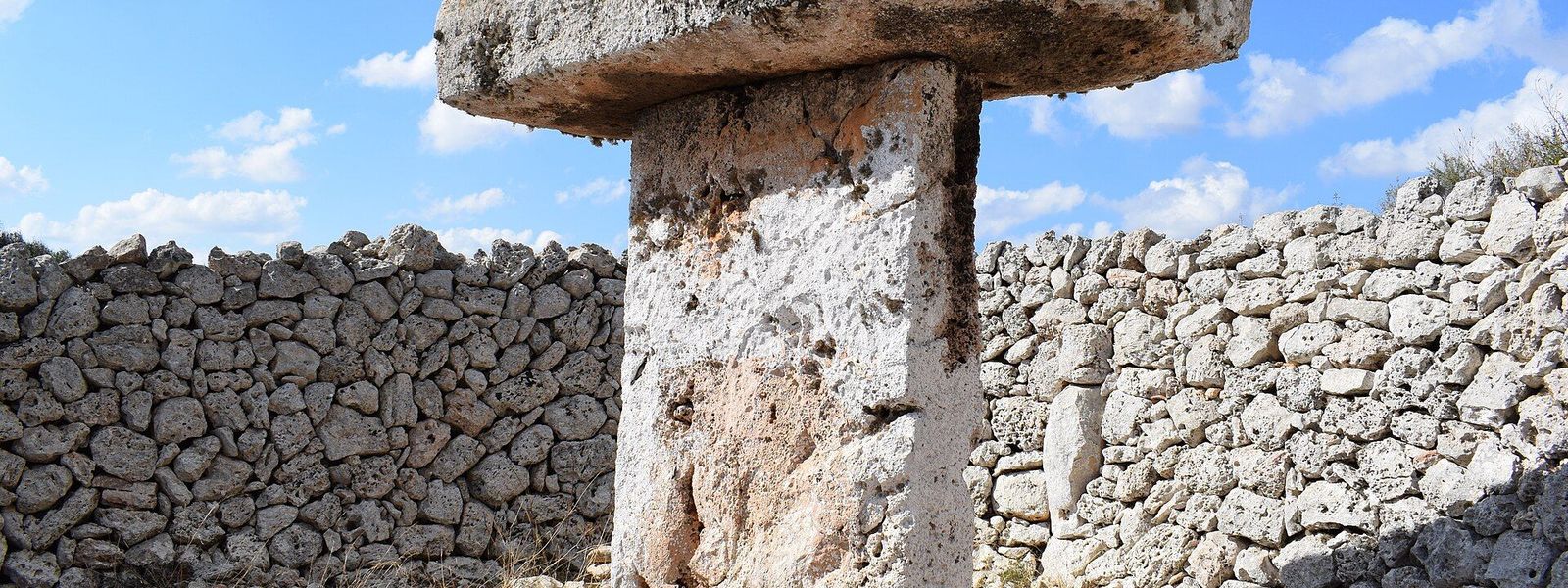
No other place in Europe is as rich in prehistoric settlements as Menorca. Most of what you can visit dates from the Talayotic period, roughly 2000–1000 BC, and three kinds of monument keep turning up: the talayot, a massive stone tower; the taula, a T-shaped monument of two great slabs inside a horseshoe-shaped enclosure; and the naveta, a collective tomb shaped like an upturned boat. Most of it is built of dry stone, without mortar, and much of it still stands. You can see all three at the seven sites below.
Towers and taulas
Torre d'en Galmés
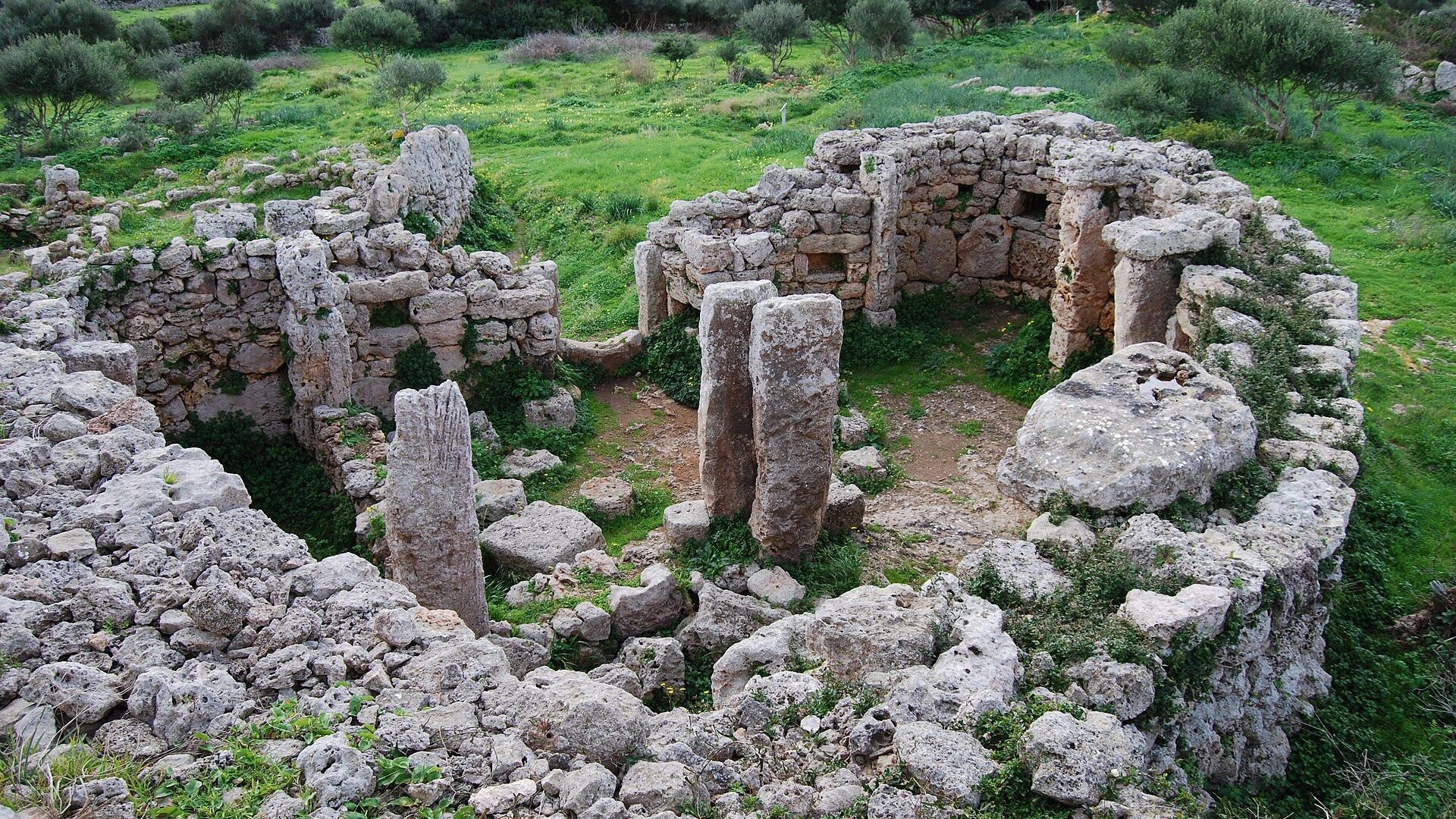
One of the largest prehistoric towns in the Balearic Islands, on a hill between Alaior and the south coast at Son Bou. Step into the hypostyle hall at the south end and the roof is still overhead: heavy stone slabs laid across columns that widen towards the top. From the top of the talayots you can see along Menorca's south coast and, on a clear day, as far as the mountains of Mallorca. Look out for the water system too, underground cisterns linked by channels. There's little shade and no drinking water, so bring water and a hat. A visit can take anything from an hour to a few hours.
Poblado Talatí de Dalt
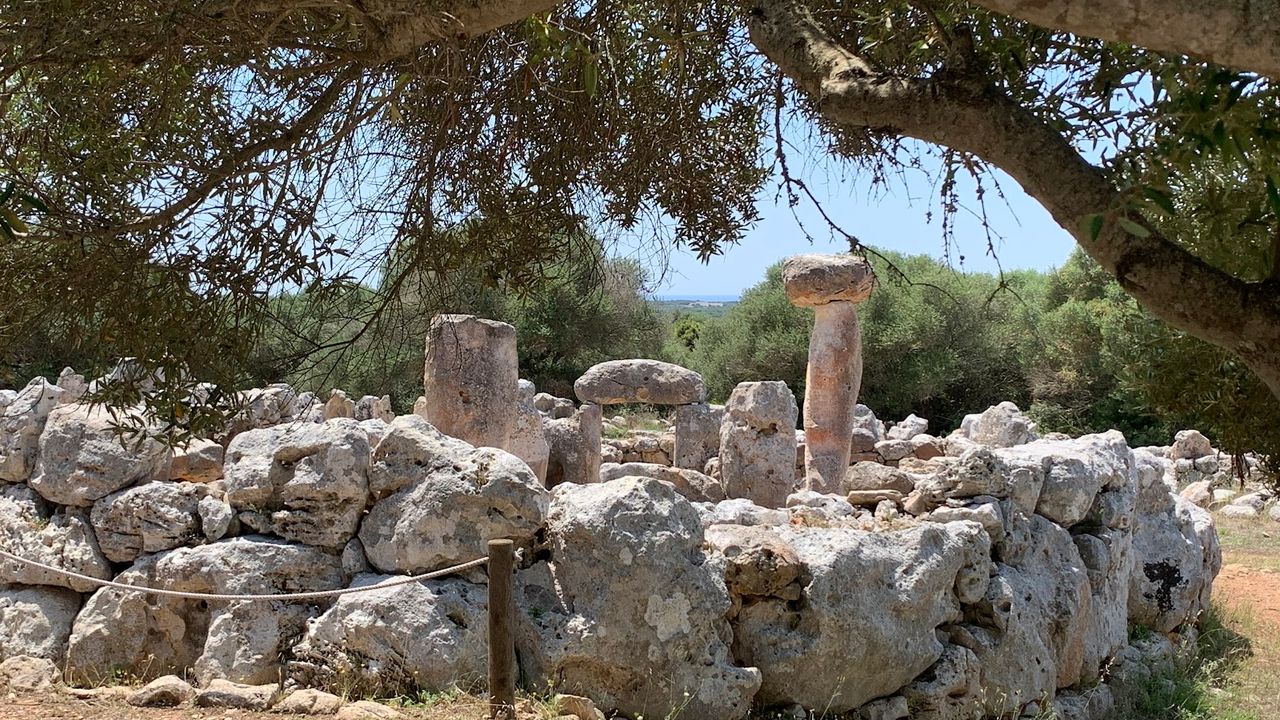
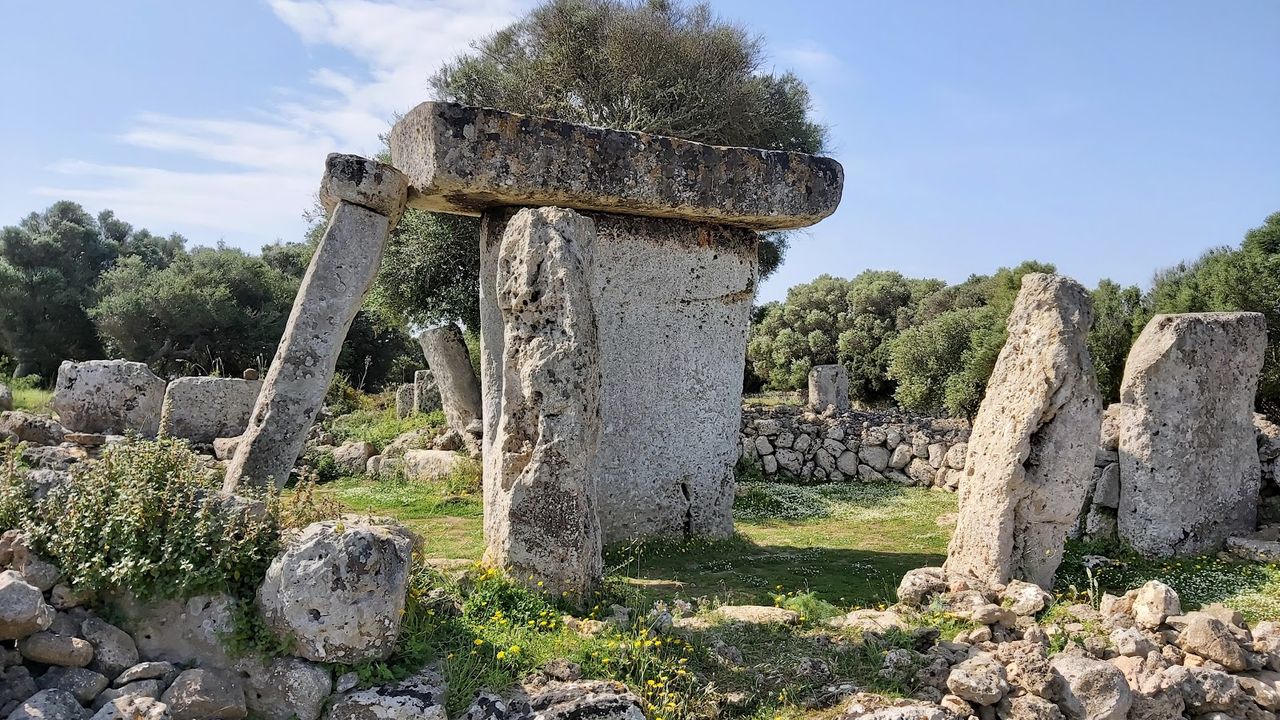
Talatí de Dalt sits just outside Maó, close to the airport. The first stretch looks like a field of scattered stones and wild olives, then the village opens up: the round bulk of the talayot, the footings of houses, and passages under slabs of rock into dim chambers you can walk through. In the enclosure stands the taula, with a second pillar leaning against its top. Climb the talayot for a view over the site and the countryside. You pay at a kiosk by the free car park, and the circuit takes about half an hour. The ground is uneven rock, so wear shoes with grip.
Poblat Talaiòtic de Trepucó
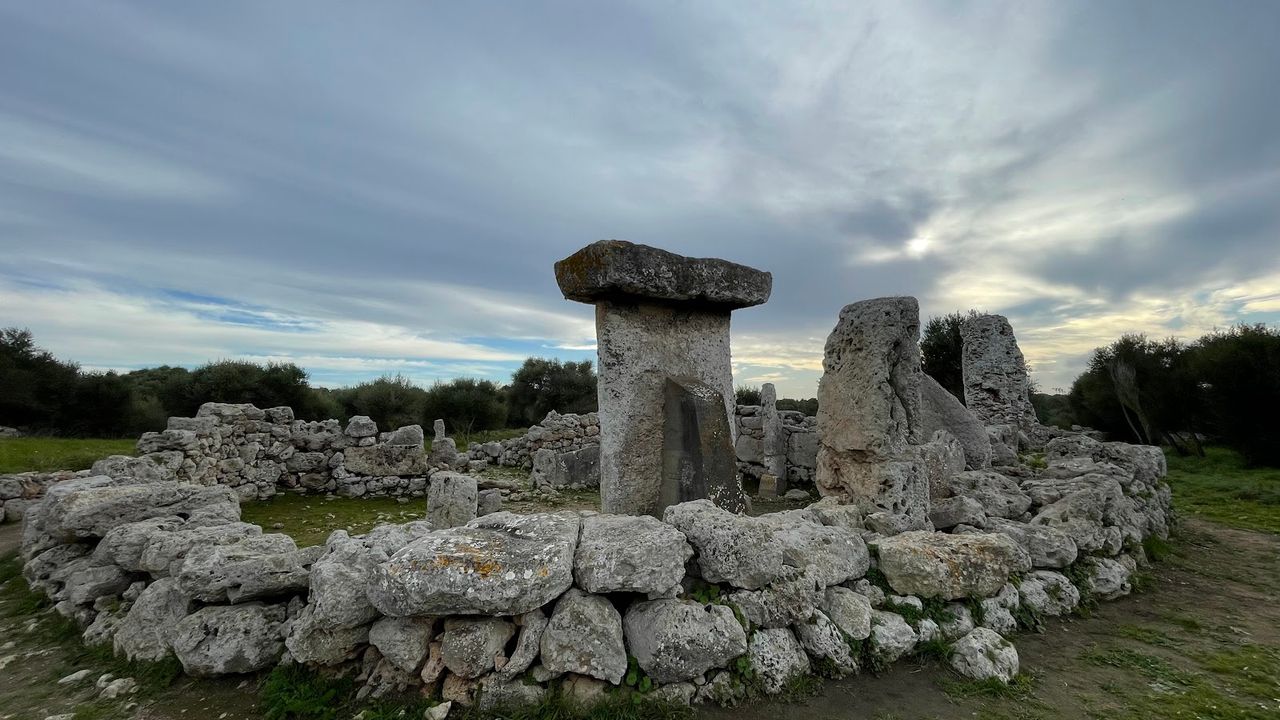
On the edge of Maó, an easy walk of 1.5–2 km from the centre. The talayot is a huge cone of tightly wedged stones, and inside a horseshoe-shaped enclosure nearby stands one of the largest and best-preserved taulas on Menorca. Taula is Catalan for table, and up close the name makes sense. Entry is free, plaques in English explain each structure, and most visits take 30–45 minutes. You can walk right up to the talayot but not climb it. The fields have almost no shade, and there's no water.
Torralba d'en Salort
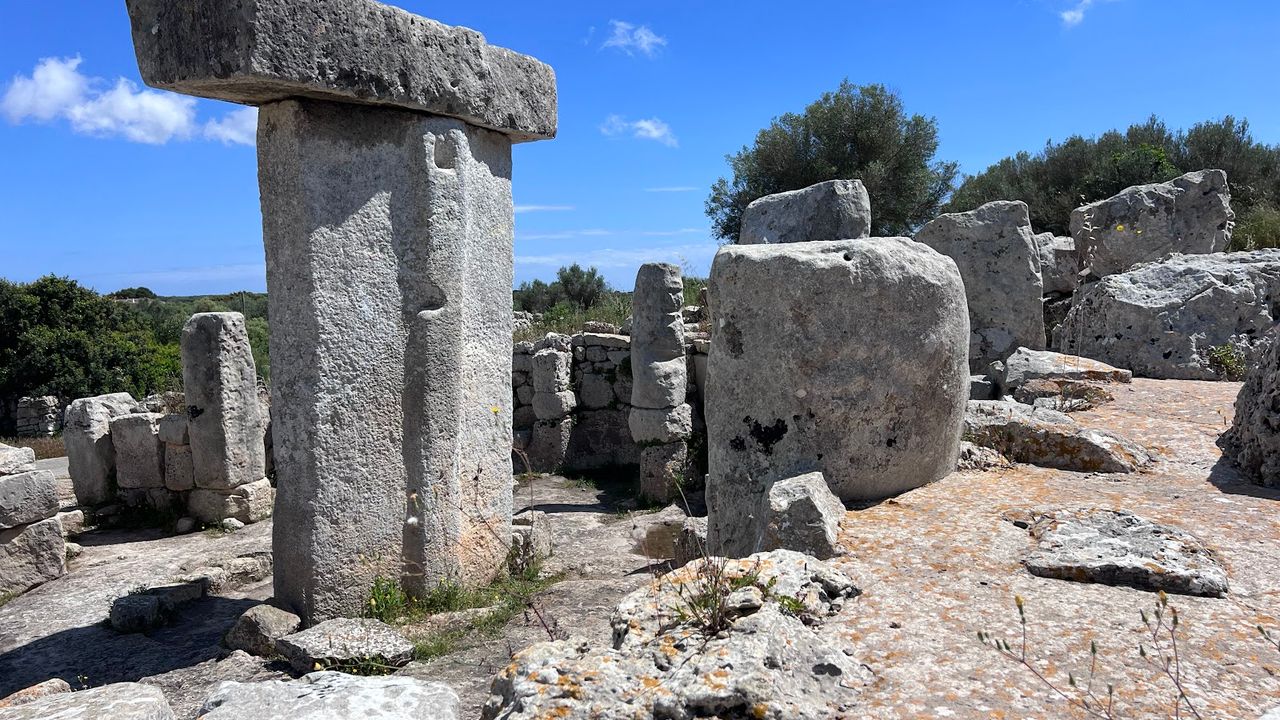
Here you'll find a taula in its enclosure and burial caves you can walk into if you duck your head. Bring a proper torch: the caves are too dark for a phone light, and children head straight for them. Shaded benches along the paths help in the heat, and there are toilets. The kiosk sells tickets with a site map, as well as drinks and snacks. The site is just off the road from Alaior to Cala en Porter, with a free car park beside it. Allow 45 minutes to an hour.
Things to do in Menorca
Paid links: booking through them supports YowJourney.
A walled town
Poblat de Son Catlar
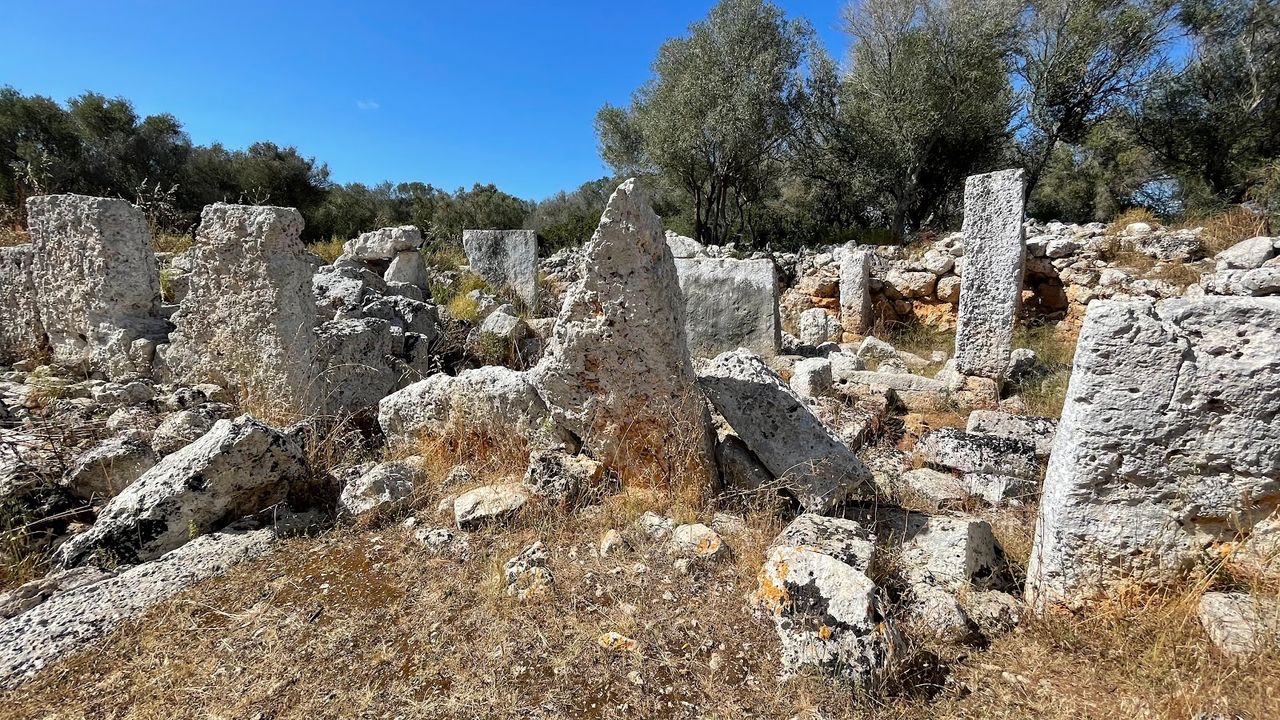
Near Ciutadella, Son Catlar is ringed by a wall of huge stone blocks set without mortar. The wall still stands well enough for you to walk its full circuit. Until the Romans conquered Menorca, the people who built the town were the island's dominant culture. Inside are house walls, talayots and the enclosure of a taula sanctuary. Parts of the site are overgrown, and signboards mark the route. Entry is free, there are no staff, and on a quiet day you may have the place to yourself. Allow about an hour, wear closed shoes and long trousers, and bring water.
Built for the dead
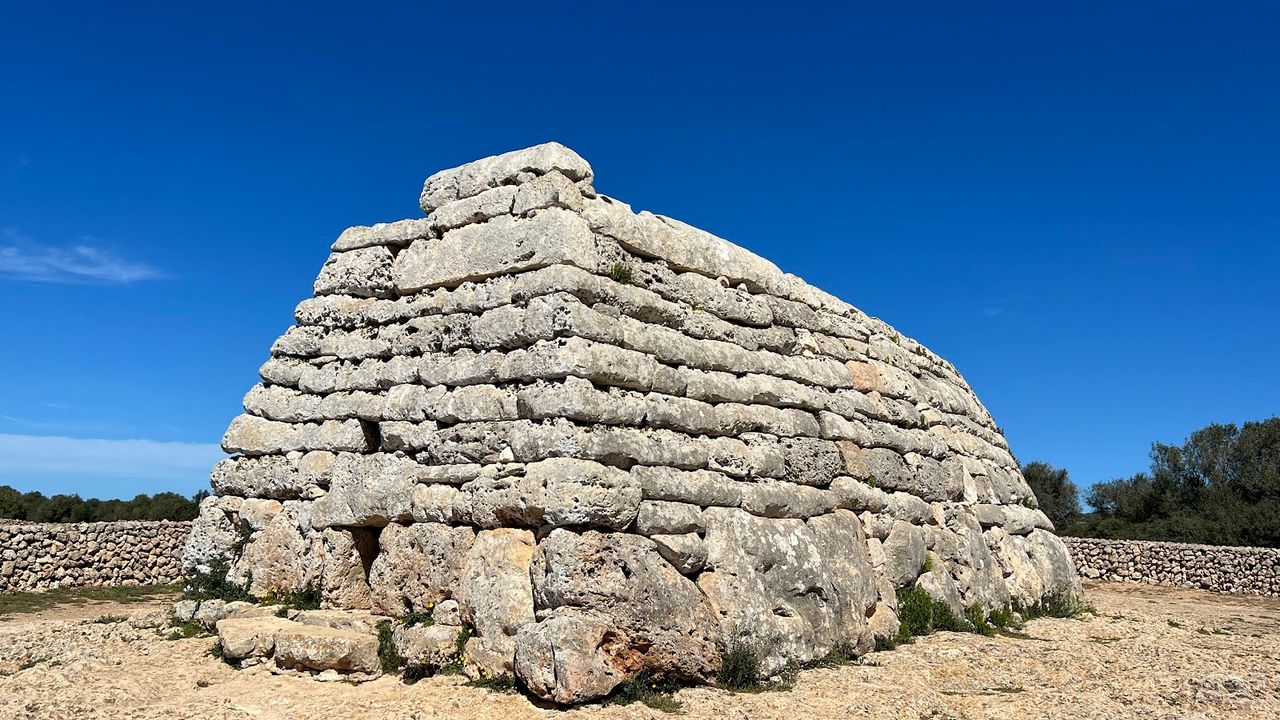
Naveta d'Es Tudons
Seen from the path, the naveta really does look like a boat turned upside down: a flat façade at one end, a rounded apse at the other, and squared limestone blocks set without mortar. Inside are two chambers, one above the other. Excavations in 1959–1960 found at least 100 skeletons, and the tomb served as an ossuary between 1200 and 750 BC. The interior is sealed, so you walk round the outside. It's a five-minute walk from the car park off the Ciutadella–Maó road. Come first thing, before the coach parties, and check the opening hours, as they vary through the week.
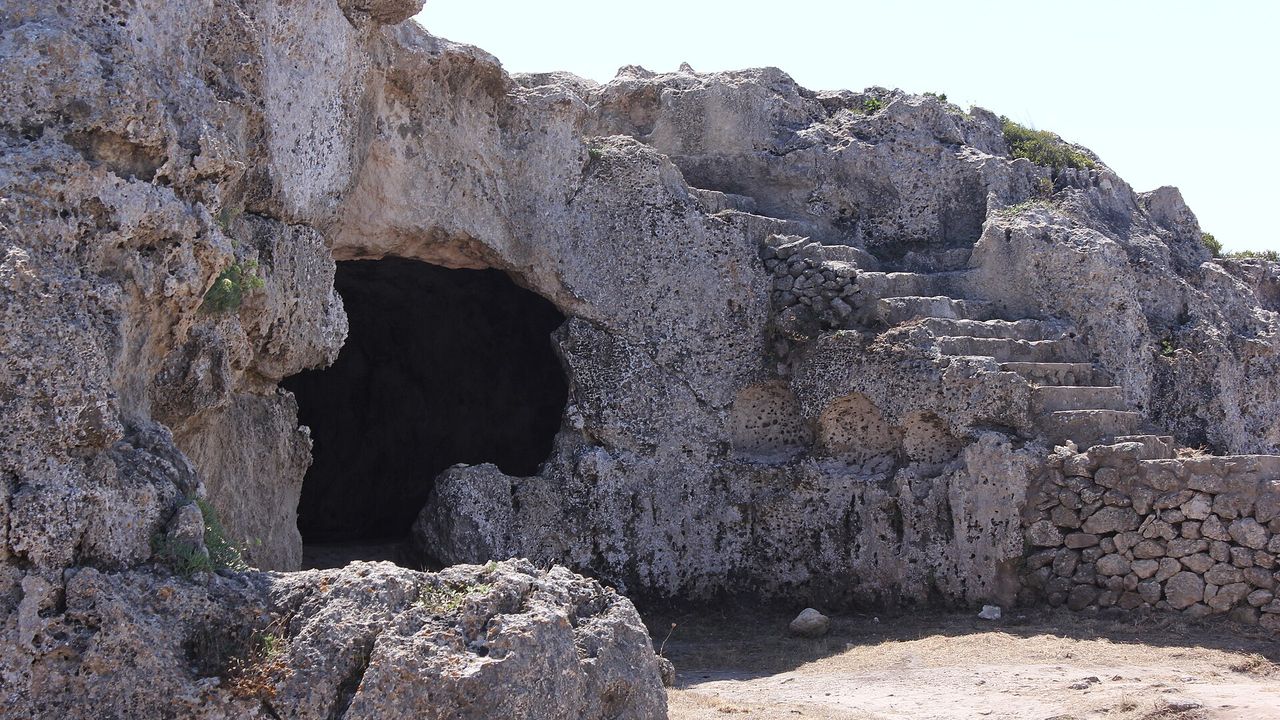
Necròpolis de Son Morell Nou
These burial chambers are cut into the cliff above the cove of Cala Morell, on the north coast, and you can step inside them. Speak and the rock throws your voice back. The air inside stays as cool as a cellar, so on a July morning you end up slipping in and out of the glare. Boards at the entrance and beside some of the caves explain who cut them and how they were used. Entry is free, and the site is always open. The ground is rough and rocky, and outside the chambers there's no shade at all.
Before you go
Most of these sites have no drinking water and very little shade, so in summer go early or late in the day and carry water. Trepucó, Son Catlar and the Son Morell Nou necropolis are free; at Talatí de Dalt and Torralba d'en Salort you pay at a kiosk. A car is the practical way to get round, as most sites are a long walk from the nearest bus stop.