Talatí de Dalt is the site of a prehistoric village of Menorca's Talayotic culture, in the countryside outside Maó, close to the island's airport. Its remains include a talayot, the stone tower typical of the period, a taula enclosure with its T-shaped stone monument, the ruins of houses, caves, and chambers roofed with slabs of rock. All of it is built of dry stone, without mortar. Information boards on the site explain the structures.
Poblado Talatí de Dalt
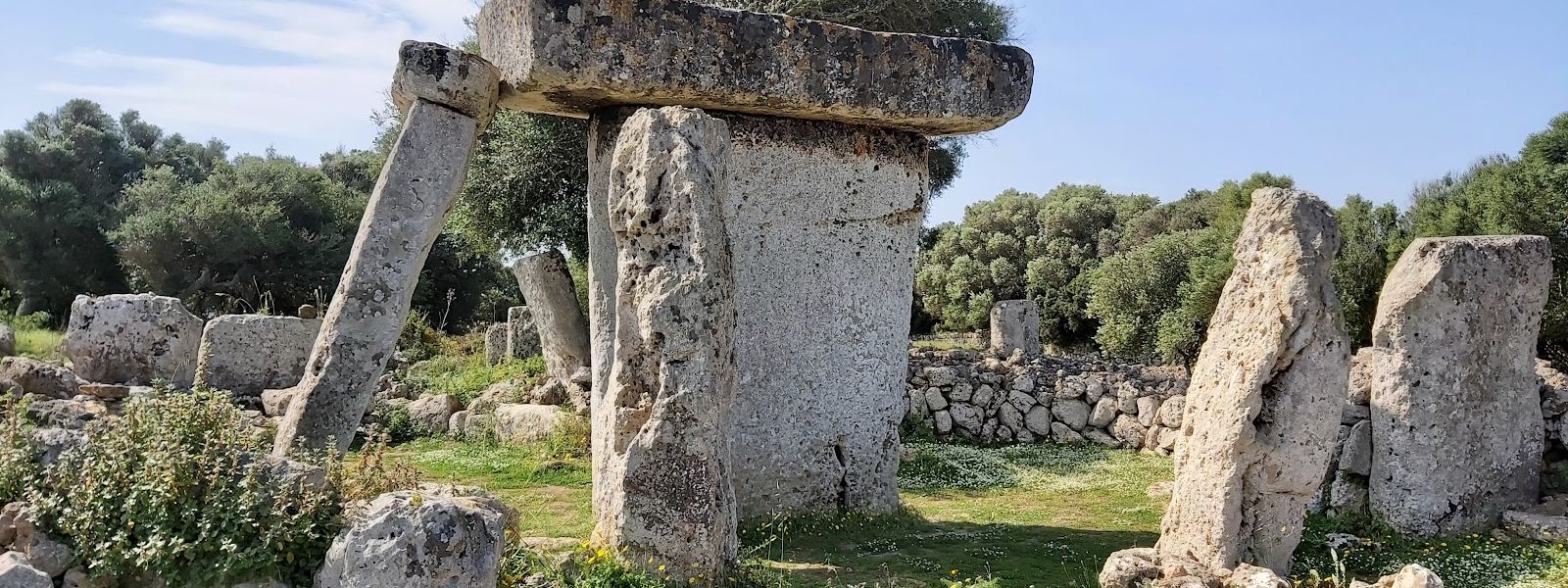
Talayotic village of dry-stone houses, a taula enclosure and low chambers under stone slabs, near Maó
- Entrance
- Paid; pay at the kiosk by the entrance.
- Parking
- Free asphalt car park beside the entrance, with room for a few cars and bikes.
- Difficulty
- No walk in: the car park is at the entrance. The site itself is uneven rock with low chambers, and a circuit takes about half an hour.
- Transport
- No stop at the site; the nearest bus stops (C. Corniola) are about 2 km away in a straight line.
- Advance booking
- Not needed; entry is paid at the kiosk on arrival.
- Hours
- Daily 9:30–20:00; Wednesdays until 21:30.
- Address
- Camino Talati, Camí Torelló, 07712 Maó, Illes Balears, Spain
What makes it special
The first stretch looks like a field of scattered stones and wild olives. Keep going and the village opens up: the round bulk of the talayot, the footings of houses, and passages that run under slabs of rock into dim chambers you can walk through.
At the centre of the taula enclosure stands the taula itself, a T-shaped monument of two stones, with a second pillar leaning against its top. Every wall is dry stone, fitted without cement, and much of it still stands intact.
Climb the talayot for the view over the site and the surrounding countryside. Information boards explain what each structure was, and the whole circuit takes about half an hour.
Good to know
- Entry is paid at the kiosk by the entrance, which also sells small souvenirs.
- There is no drinking water on site and none nearby, so bring your own, especially in summer.
- The first stretch looks like a bare field; the talayot, the taula and the chambers lie further in.
- Allow about half an hour to walk round the whole site.
- The ground is uneven rock and the chambers are low, so wear shoes with grip.
Getting there
Talatí de Dalt lies in open countryside outside Maó, close to the island's airport, and most visitors arrive by car or bike. The free car park sits right beside the entrance, with room for a few cars and bikes, so there is no walk in: you step out of the car, pay at the kiosk and start on the site.
No bus stops at the site. The nearest stops are about 2 km away in a straight line.
Best time to visit
Best: early morning or late afternoon in summer, when the sun is low across the stone and the day's heat is off.
Avoid: the middle of the day in July and August.
The whole visit is outdoors on bare rock, and the summer sun at midday makes a slow walk round the ruins hard work.
Sun & daylight
Nearby Places

Similar Places


Poblado Talatí de Dalt on the map
The ground is uneven rock, and the chambers under the stone slabs have low ceilings. Watch your footing, and your head when you duck inside.
Get directions
Your whole travel map in one place
Get inspired by new places around the world and find the ones worth the journey
Frequently asked questions
How long does a visit to Talatí de Dalt take?
About half an hour to walk round the whole site, longer if you stop to read the information boards.Is there parking at Talatí de Dalt?
Yes. A free car park sits right beside the entrance, with room for a few cars and bikes.Do you have to pay to enter?
Yes. Entry is paid at the kiosk by the entrance.Is Talatí de Dalt good for children?
Yes. The site is open ground to wander, with chambers under stone slabs to duck into and a talayot to climb for the view. Keep an eye on small children on the uneven rock.Can you get to Talatí de Dalt by bus?
No bus stops at the site. The nearest stops are about 2 km away in a straight line, so a car or bike is the practical way in.