Caletón Blanco is a beach on the north coast of Lanzarote in the Canary Islands, close to the village of Órzola in the municipality of Haría. Its pale sand stands out against the dark lava of the surrounding shore. The beach is a string of small sandy coves and lagoons separated by volcanic rock, with shallow, clear water that stays calm when the open sea is rough. It is known as a family swimming spot, and nude bathing is also practised here.
Caleton Blanco Beach
Local name: Caletón Blanco
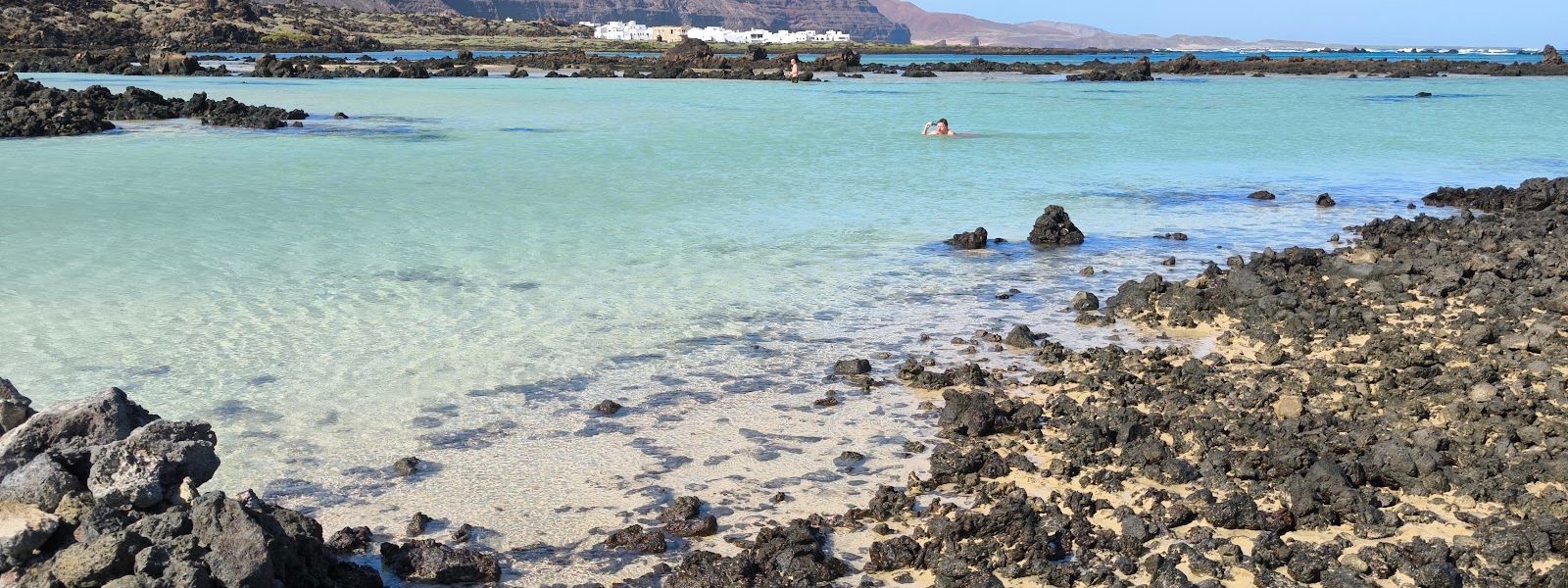
White-sand cove on the north coast of Lanzarote, with shallow lagoons held between black lava reefs.
- Entrance
- Free; there is no ticket.
- Accessibility
- No wheelchair-accessible entrance or parking; the beach is broken up by uneven volcanic rock.
- Parking
- Free car park at the beach, which fills up quickly. Free roadside parking nearby, and a second free car park about 1.1 km away.
- Difficulty
- Next to none: the car park is at the beach. The rock between the coves is uneven and sharp, and water shoes help in the lagoons.
- Transport
- Nearest bus stop: El Callao, about 930 m away in a straight line.
- Advance booking
- Not needed.
- Hours
- Open at all hours.
- Address
- C. el Lajiar, 47, 35541 Orzola, Las Palmas, Spain
What makes it special
The colour hits first: pale sand and turquoise water set into a coast of black lava. The rocks break the shore into small coves and lagoons, so each patch of sand feels like its own sheltered corner, and there are plenty of spots to settle away from the next group.
The lagoons are what people come for. The reefs hold back the swell, so the water inside stays still and clear even on stormy days, and in the shallows it runs warmer than the open sea. Small fish move between the rocks. For children it is an easy place to paddle, float and watch them.
Good to know
- No toilets, showers or drinking water at the beach, and none nearby — bring water with you.
- The rock and the lagoon floor are volcanic and uneven; water shoes make getting in far easier.
- The car park is a decent size but fills up quickly, so arrive early for a space.
- The sand has no shade. Bring a hat and sun cream.
- Nude bathing is practised here.
Getting there
Most people come by car. The free car park named after the beach sits right at the shore, so once you have parked the coves are in front of you. It fills up quickly; when it does, there is free roadside parking, and a second free car park lies about 1.1 km away.
Without a car, the nearest bus stop is El Callao, about 930 m away in a straight line, and the rest is on foot. Carry water from the start: there is none at the beach.
Best time to visit
Best: mornings, and days when the sea is rough along the rest of the coast. Avoid: the hours around midday in high summer.
The car park fills quickly, and on stormy days the lagoons stay still and warm while the open shore does not; at midday there is no shade on the sand, and the white sand throws the sun straight back at you.
Sun & daylight
Nearby Places
Similar Places

Featured in our guides
Caleton Blanco Beach on the map
Beyond the lava reefs lies open Atlantic with breaking waves and currents — stay inside the sheltered lagoons and never turn your back on the sea. The volcanic rock is sharp, so wear water shoes.
Get directions

Your whole travel map in one place
Get inspired by new places around the world and find the ones worth the journey
Frequently asked questions
Is Caletón Blanco good for children?
Yes. The lagoons are shallow, calm and clear, with small fish among the rocks. Put water shoes on them: the volcanic rock is sharp underfoot.Are there toilets or showers at Caletón Blanco?
No. There are no toilets, showers or drinking water at the beach, and none nearby, so bring what you need.Is it easy to find a parking space?
The car park at the beach fills up quickly, so come early. If it is full, there is roadside parking, and another car park about 1.1 km away.Can you swim at Caletón Blanco when the sea is rough?
The lagoons are sheltered by lava reefs and stay still on stormy days. Swim inside them; the open sea beyond the rocks takes breaking waves and currents.