Castillo de la Luz, also called the Fortaleza de las Isletas, was the first fortification built on Gran Canaria. Governor Alonso Fajardo ordered it in 1494 on the site of a wooden fort raised by Juan Rejón in 1478, on a reef that the high tide cut off from land; the growing city has since left it more than 150 metres from the sea. It guarded the port until the 19th century, was declared a monument in 1941 and since 2015 has housed the Fundación Martín Chirino de Arte y Pensamiento.
Castillo de la Luz
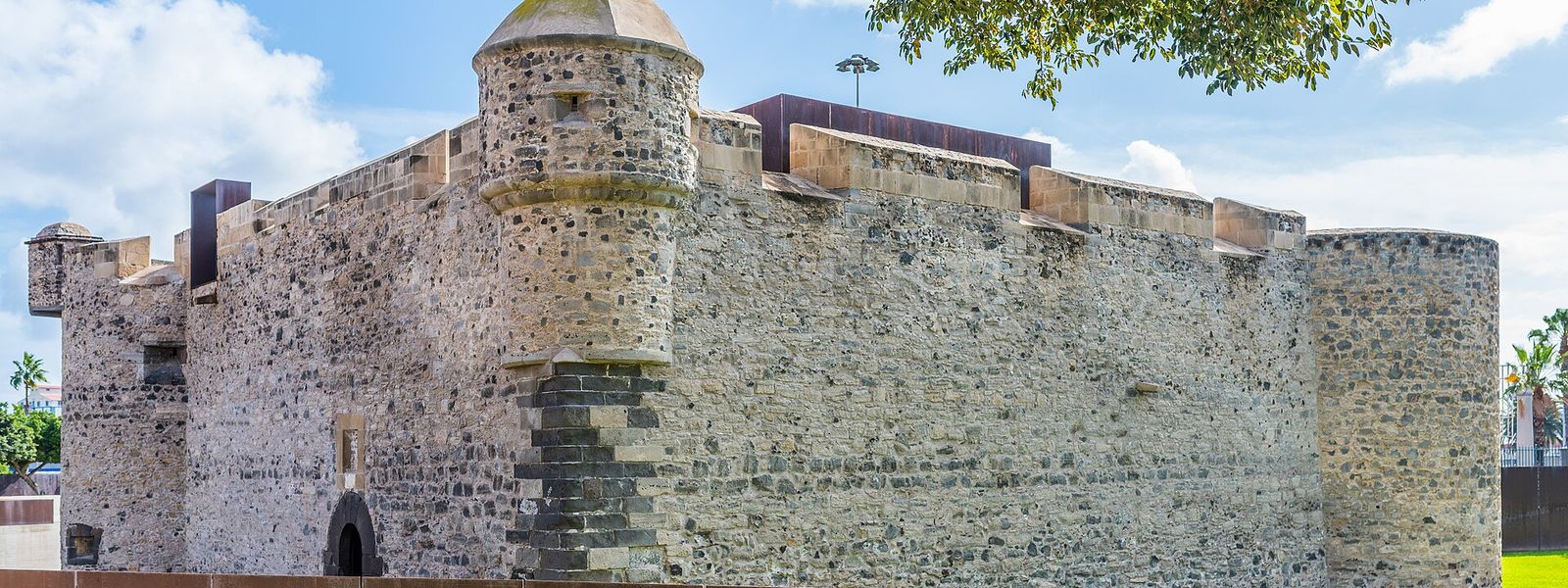
Fifteenth-century stone fortress by the port of Las Palmas, now home to the iron sculpture of Martín Chirino.
- Entrance
- €4; free on Wednesday afternoons.
- Accessibility
- Wheelchair-accessible entrance, toilets and parking; a lift serves the upper floors.
- Parking
- Street parking around the castle, both free and paid; the nearest mapped parking is about 70 m away. Wheelchair-accessible parking is available.
- Difficulty
- None: a city street to the drawbridge, and a lift inside for the upper floors.
- Transport
- Bus stops Juan Rejón (Castillo de la Luz), about 70 m away, and Castillo de la Luz, about 110 m away.
- Advance booking
- Tickets are sold on arrival at the ticket desk and gift shop.
- Hours
- Tuesday to Saturday 10:00–19:00; Sunday 10:00–14:00; closed on Mondays.
- Address
- C. Juan Rejón, s/n, 35008 Palmas De Gran Canaria ( Las ), Las Palmas, Spain
What makes it special
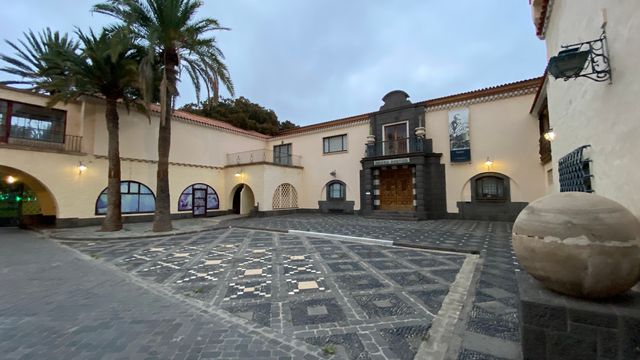
The way in is a drawbridge over the moat and an arched gate in walls of dressed stone. Inside, the restoration by the architects Nieto Sobejano turned the fortress into light, plain rooms on three levels, and the castle's own story runs along the walls as you move through them.
The rooms belong to Martín Chirino, the Canarian sculptor who worked mostly in iron: spirals, forged forms, and in one of the round towers a piece hung from the ceiling while a soundscape plays around it. It is a hard, heavy room, and it sits well in a defensive tower.
The building is a record of the threats it faced. First came the square medieval tower of Alonso Fajardo, then a bastion around 1515, additions in 1553, rebuilding after a Dutch fleet under Pieter van der Does burned it in 1599, and finally the outer shell of the late 17th century that stands today.
Good to know
- Inside, the castle is a gallery of modern iron sculpture, with the fortress history on panels between the works.
- The rooftop is closed to visitors, so there is no view from the top of the walls.
- Toilets and a gift shop are inside, and the staff at the ticket desk speak English.
- Cards, including contactless, are accepted.
Getting there
The castle stands in the La Isleta district near the port (Puerto de la Luz), in the north of Las Palmas de Gran Canaria. It was built on a reef at the water's edge, but the city has grown out around it, and it now sits among streets more than 150 metres from the sea, so do not look for it on the shoreline.
Two bus stops lie within about 110 m of the castle. Drivers will find street parking around it, some free and some paid, with mapped parking about 70 m away. From the street, the last few steps are across the drawbridge to the gate. The Las Canteras tourist information office is about 560 m away.
Best time to visit
Best: the middle of a hot or windy day, when an hour indoors suits better than the beach.
Avoid: Mondays, when the castle is closed, and Sunday afternoons, when it has already shut.
The collection is all under a roof, so the weather barely touches the visit.
Access & restrictions
Inside, the castle runs as an art gallery and its rules are a gallery's: no flash photography, no water bottles on show, and no touching the sculptures, however solid the iron looks. Attendants stay in the rooms and keep an eye on the works.
Things to do nearby
All tours in Las Palmas de Gran Canaria on GetYourGuide
Paid links: booking through them supports YowJourney.
Sun & daylight
Nearby Places
Similar Places

Your whole travel map in one place
Get inspired by new places around the world and find the ones worth the journey
Frequently asked questions
Is Castillo de la Luz worth visiting for the castle itself?
The fortress was the first built on Gran Canaria, begun in 1494, and its moat, drawbridge, round towers and stone walls still stand. The rooms inside hold Martín Chirino's sculpture, with the history of the castle told on panels between the works.Can you go up on the roof?
No. The rooftop is closed to visitors.Is the castle accessible by wheelchair?
Yes. The entrance, toilets and parking are wheelchair accessible, and a lift reaches the upper floors.Why is the castle so far from the sea?
It was built on a reef that the high tide cut off from land. The city has since grown around it, and it now stands more than 150 metres from the water.What is in the collection?
A permanent collection of 25 works by the Canarian sculptor Martín Chirino, most of them in iron. The castle has been the seat of the Fundación Martín Chirino de Arte y Pensamiento since 2015.