Pollentia was a Roman city on Mallorca, traditionally founded by the consul Quintus Caecilius Metellus Balearicus in 123 BC, although the earliest documented remains date from the first half of the 1st century BC. It prospered, came through a devastating fire in the 3rd century AD and was fortified in the 5th, then emptied; the medieval town grew a little further north, where Alcúdia stands today. Excavation continues across a conserved area of around 16 hectares.
Ciutat romana de Pol·lèntia
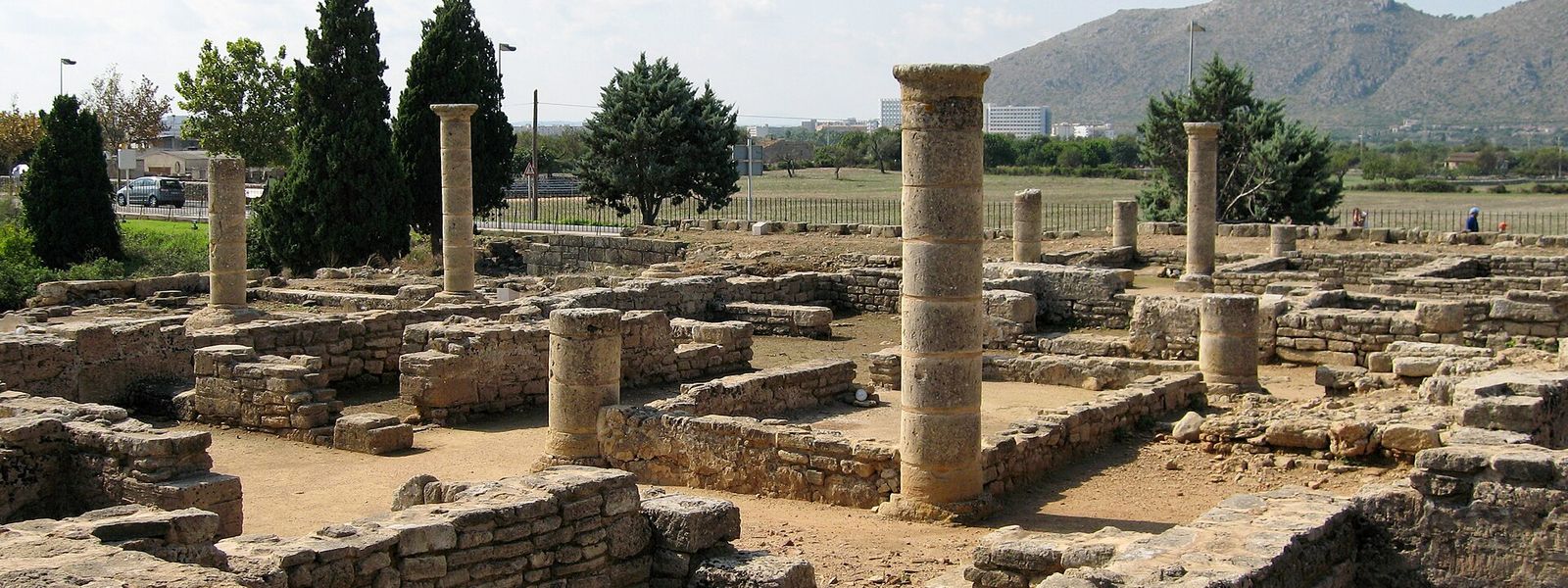
Excavated Roman city beside Alcúdia's old town, with a forum, a residential quarter and a theatre.
- Entrance
- Paid entry; a ticket costs €2.50–€4.
- Accessibility
- The entrance and parking are wheelchair accessible, but the ruins themselves are not wheelchair friendly.
- Parking
- Free: the Pere Ventanyol car park about 140 m away, a second car park about 150 m away, and free street parking. Wheelchair-accessible parking available.
- Difficulty
- No real approach: the car parks are about 140–150 m away. Inside, a walkway runs down through the ruins to the theatre, on open ground with no shade.
- Transport
- Bus 324 from Alcúdia; nearest stop Pol·lèntia (Alcúdia), about 220 m away.
- Hours
- Tuesday 9:00–12:00; Wednesday to Saturday 9:00–19:00; Sunday 9:00–14:00; closed Monday. The site has closed at 13:00 and earlier than these posted hours, so confirm before a special trip.
- Address
- Av. Prínceps d'Espanya, s/n, 07400 Alcúdia, Illes Balears, Spain
What makes it special
The walkway through Pollentia ends at the theatre, its rows of seats cut into the bedrock, and that is the part people miss. Keep going to the bottom.
On the way down the path crosses the forum, where the city was rebuilt in stone around 70 BC and walled again in the 5th century AD, the tabernae that lined it with shops, and the houses of the Sa Portella district. Everything lies open to the sky. At the theatre a QR code plays an audio commentary on the story of the city, which is the best way to make sense of the stones.
The ruins also have a place in Catalan poetry: Miquel Costa i Llobera wrote about them, most notably in his Ode to Horace and in a poem on the Roman theatre. Opposite the site, inside the town, the Pollentia museum (Museo Monográfico de Pollentia) holds finds from the excavations, among them inscriptions.
Good to know
- Posted opening hours have not always held: the site has been found shut and has closed early. Check before making a special trip.
- There is no shade anywhere on the site. In hot weather bring water and a hat.
- Follow the walkway all the way to the bottom, or you will miss the theatre.
- The entrance is wheelchair accessible, but the ground among the ruins is not wheelchair friendly.
- Free toilets and a drinking-water point are about 320 m away.
Getting there
Pollentia lies just outside Alcúdia's old town, and the museum stands opposite it inside the town, so from the centre you arrive on foot. The Pol·lèntia (Alcúdia) bus stop is about 220 m away and the Centre històric (Alcúdia) stop about 260 m away.
Drivers have the Pere Ventanyol car park about 140 m away, a second car park about 150 m away, and spaces along the street. Past the ticket office a walkway leads down through the ruins, with the theatre at its far end.
Best time to visit
Best: a morning, soon after opening.
Avoid: Mondays, when the site is closed, and summer afternoons.
The ruins have no shade, the heat builds through the day, and the site has closed early on afternoons when the posted hours said it would be open.
Sun & daylight
Nearby Places

Similar Places


Ciutat romana de Pol·lèntia on the map
The site has no shade, and the open ground gets very hot in summer. Carry water, cover your head and visit in the morning.
Get directions
Your whole travel map in one place
Get inspired by new places around the world and find the ones worth the journey
Frequently asked questions
How long should I allow for Pollentia?
Taking in all the details takes a few hours. The walkway runs down to the theatre at the far end, so leave time to reach it.Is there an audio guide?
Yes. A QR code at the theatre plays an audio commentary on the story of Pollentia on your phone.Can I park near the ruins?
Yes. There is free parking in the Pere Ventanyol car park about 140 m away, in a second car park about 150 m away, and on the street.Is Pollentia accessible by wheelchair?
The entrance and the parking are wheelchair accessible, but the ruins themselves are not wheelchair friendly.Where can I see the finds from the excavations?
In the Museo Monográfico de Pollentia, opposite the site inside the town of Alcúdia. It holds finds from the excavations, including inscriptions.