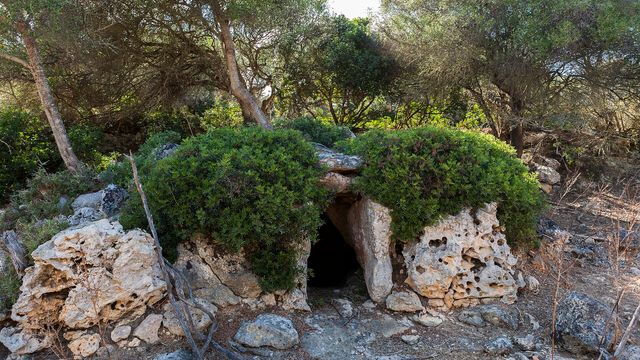
Es Castellàs des Caparrot de Forma is an archaeological site on a headland just outside the residential area of Es Canutells, in the municipality of Maó on Menorca. A cyclopean wall of large stone blocks laid without mortar runs across the narrowest part of the headland, cutting it off from the land as a defended outpost. In the cliff faces below are 23 artificial burial caves, or hypogea, from the Iron Age, where the dead were laid with lime and ornaments such as bronze bracelets.
Conjunt arqueològic d'es Castellàs d'es Caparrot de Forma
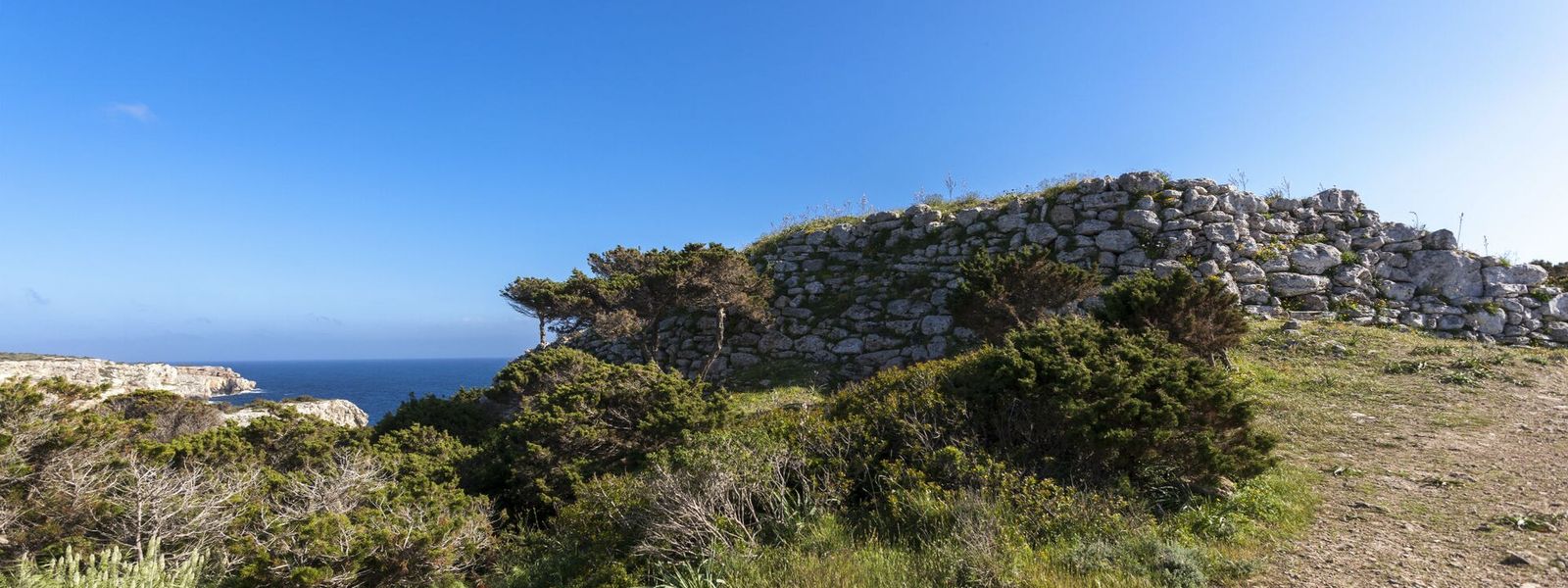
Iron Age burial caves cut into sea cliffs, behind a cyclopean wall across a headland near Es Canutells.
- Entrance
- Free; the site is unattended and there is no ticket.
- Accessibility
- Not wheelchair accessible: no accessible parking or entrance, and the ground on the headland and cliff paths is rough and uneven.
- Parking
- No car park at the site. Park in the residential streets of Es Canutells or in the free Es Canutells car park, about 970 m away in a straight line.
- Difficulty
- A 10 to 15 minute walk from Es Canutells over rough ground. The cliff paths to the caves need sure footing, and the western path is hazardous after a rockfall.
- Transport
- Nearest bus stop: Canutells, about 790 m away in a straight line.
- Advance booking
- No booking needed.
- Hours
- Open at all times.
- Address
- 07712 Maó, Balearic Islands, Spain
What makes it special
The wall comes first: a line of huge stone blocks wedged together without mortar, running across the neck of the headland so that everything beyond it was sealed off from the land. Past it the ground ends in cliffs, and cut into those cliff faces above the sea are 23 burial caves from the Iron Age. The dead were laid inside with lime, some of them with ornaments such as bronze bracelets.
Nothing here has been tidied up for visitors. Information panels explain the site, and the rest takes some imagination to piece together. What it gives back is quiet and a wide view from the cliff top over the sea. More remains stand on the hilltop close by.
Good to know
- No toilets, no drinking water and no staff at the site, and none nearby. Bring water.
- A rockfall near the start of the western path has made the western group of caves hazardous.
- With young children or a fear of heights, skip the lower cliff paths and stay on the flat top of the headland.
- Wear sturdy shoes: the paths to the caves need sure footing, and flip-flops are a hazard here.
- Information panels are the only interpretation on site; there is no guide or visitor centre.
Getting there
There is no car park at the site itself. Drivers leave the car in the residential streets of Es Canutells or in the Es Canutells car park, about 970 m away in a straight line, and walk out to the headland. From the village the walk takes 10 to 15 minutes. The Canutells bus stop is about 790 m away in a straight line.
On foot along the coast, section 17 of the Camí de Cavalls, the long-distance path around Menorca, reaches the site. The last stretch is rough ground; keep to the flat top of the headland unless you are sure-footed.
Best time to visit
Best: a dry, calm day, in the early morning or late afternoon.
Avoid: midday in high summer, and days after rain or with a heavy sea running.
The headland is open ground with no shade and no water, and wet rock makes the cliff paths down to the caves far harder to trust.
Sun & daylight
Nearby Places
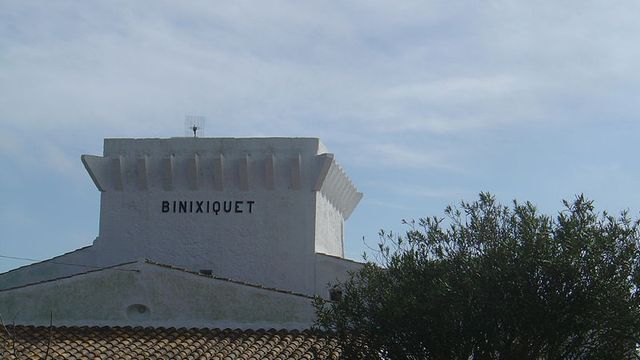
Similar Places


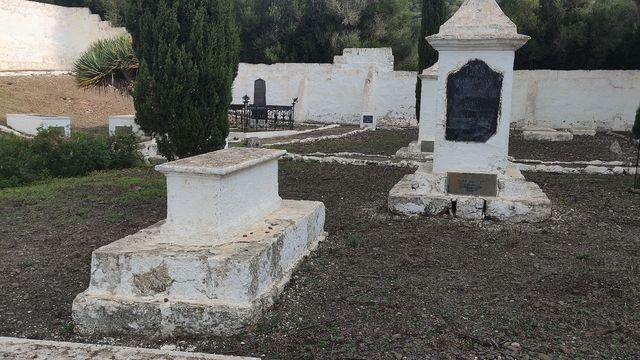
Conjunt arqueològic d'es Castellàs d'es Caparrot de Forma on the map
The cliff edges are unfenced, and a rockfall near the start of the western path has made the western caves hazardous. Stay on the flat headland unless you are sure-footed, and keep children close.
Get directions
Your whole travel map in one place
Get inspired by new places around the world and find the ones worth the journey
Frequently asked questions
How long is the walk from Es Canutells?
From the streets of Es Canutells out to the headland takes 10 to 15 minutes on foot.Can you get down to the burial caves?
The caves are cut into the cliff faces above the sea, and reaching them takes sure footing. A rockfall near the start of the western path has made the western group hazardous. With young children or a fear of heights, stay on the flat top of the headland.Are there toilets or drinking water?
No. There are no toilets, no water and no staff at the site, and none nearby. Bring what you need.What is there to see?
A cyclopean defensive wall across the neck of the headland, 23 Iron Age burial caves in the cliffs, and more remains on the hilltop close by. Information panels explain the site.Can you reach it on the Camí de Cavalls?
Yes. Section 17 of the Camí de Cavalls reaches the site on foot.