Es Baluard is Palma's museum of modern and contemporary art, opened on 30 January 2004 on the western edge of the old town. It joins 16th-century fortifications to a building designed in 2003 by Lluís García-Ruiz, Jaume García-Ruiz, Vicente Tomás and Ángel Sánchez Cantalejo. The collection of more than 700 works runs from the late 19th century to the present, from Sorolla and Anglada-Camarasa to Miró, Picasso and Miquel Barceló, alongside a programme of temporary exhibitions.
Es Baluard Museu d'Art Contemporani de Palma
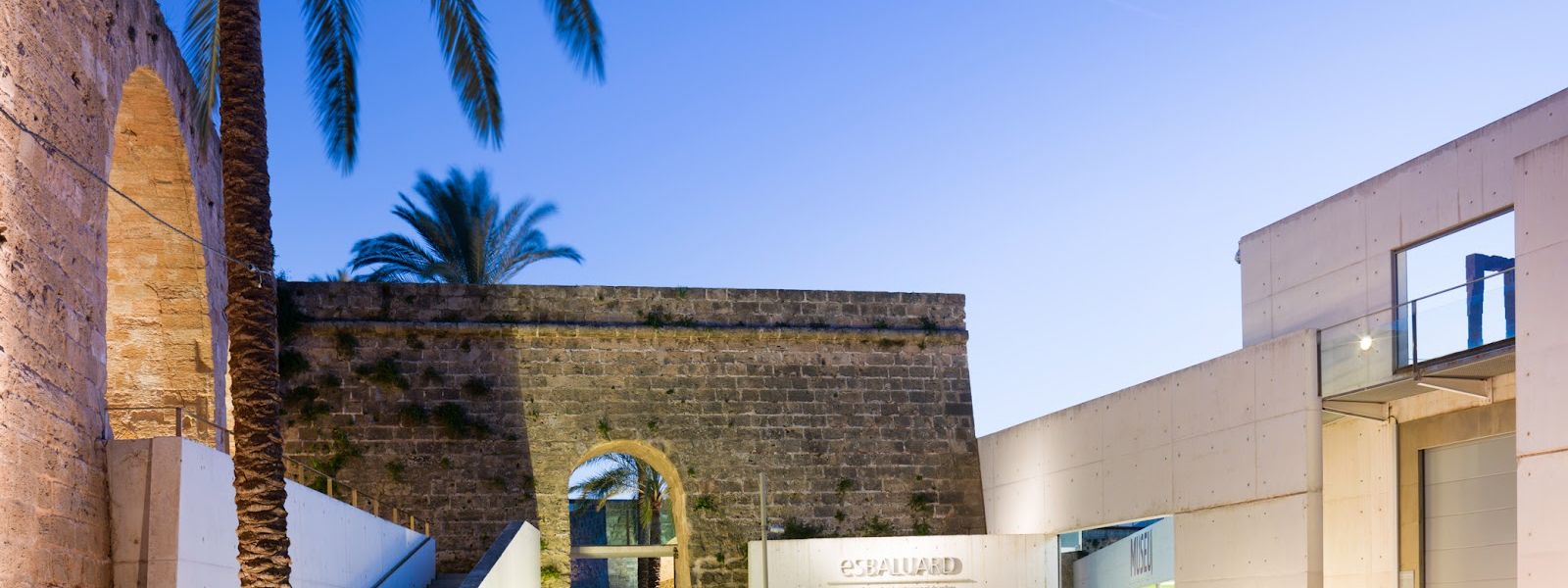
Modern and contemporary art museum set into Palma's 16th-century city walls, with a rooftop view over the bay
- Entrance
- Paid entry, priced low; on Fridays visitors pay what they wish.
- Accessibility
- Wheelchair-accessible entrance, toilets and parking; ramps connect the three floors.
- Parking
- Two paid car parks nearby, about 150 m (Passeig de Mallorca) and 230 m away in a straight line; wheelchair-accessible parking available.
- Difficulty
- None: the entrance opens onto a square in central Palma, and ramps link the floors inside.
- Transport
- Bus stop Argentina – Sa Feixina, about 130 m away.
- Hours
- Tuesday to Saturday 10:00–20:00; Sunday 10:00–15:00; closed on Mondays.
- Address
- Plaça de la Porta de Santa Catalina, 10, Centre, 07012 Palma, Illes Balears, Spain
What makes it special
The top of Es Baluard sits on the old city walls, with the harbour, the cathedral and the bay laid out below. Stay for the sunset if you can.
The building is the other half of the visit. A 16th-century bastion and a building from 2003 are tied together by ramps, skylights and wide interior balconies, so the three floors work as one indoor street that runs out onto the walls.
Inside, the collection follows art in and around the Balearic Islands from the late 19th century on. It opens with Mallorca landscapes by Sorolla, Rusiñol and Anglada-Camarasa, moves through Miró, Picasso and Tàpies, and reaches Miquel Barceló and Marina Abramović. A small group of works by Miró is a highlight, and temporary exhibitions fill the rest of the space.
Good to know
- The exhibition floors are smaller than the size of the building suggests: three floors of galleries in all.
- Wall texts come with English translations.
- On wet days umbrellas are left at the entrance, and the open-air terrace is out of reach without getting soaked.
- There are toilets inside the museum.
Getting there
Es Baluard stands on the western edge of Palma's old town, where the city walls meet the Sa Feixina park and Passeig de Mallorca. From the old town streets you walk out to the square in front of the entrance.
By bus, the stop Argentina – Sa Feixina is about 130 m away in a straight line. Drivers have two paid car parks about 150 m and 230 m away, one of them on Passeig de Mallorca.
Best time to visit
Best: late afternoon into sunset, ending the visit at the top of the walls.
Avoid: Mondays, when the museum is closed, and rainy days.
The view over the bay is at its best in the evening light, while rain brings the crowds indoors and makes the open-air terrace unusable.
Sun & daylight
Nearby Places
Similar Places

Your whole travel map in one place
Get inspired by new places around the world and find the ones worth the journey
Frequently asked questions
What is in the Es Baluard collection?
More than 700 works by artists linked to the Balearic Islands or of international standing, from the late 19th century to today: Sorolla, Rusiñol and Anglada-Camarasa, then Miró, Picasso and Tàpies, then Miquel Barceló and Marina Abramović. Temporary exhibitions run alongside.Is the view from the top of Es Baluard worth it?
Yes. The top floor and terraces sit on the old city walls and look out over the harbour and the bay, and the view is at its best at sunset.Is Es Baluard wheelchair accessible?
Yes. The entrance, the toilets and the nearby parking are wheelchair accessible, and ramps connect the three floors.Are the exhibition texts in English?
Yes, wall texts carry English translations.