Palau March is a former residence of the March family, built in the 1940s in the old town of Palma, Mallorca, directly beside the cathedral. It is now a museum run by the Bartolomé March Servera foundation. The collection takes in sculpture by Rodin, Henry Moore and Barbara Hepworth set out in the courtyard, a series of prints by Salvador Dalí, an 18th-century Neapolitan nativity scene, old maps, and period rooms kept with their original furniture, carpets and paintings.
Palau March
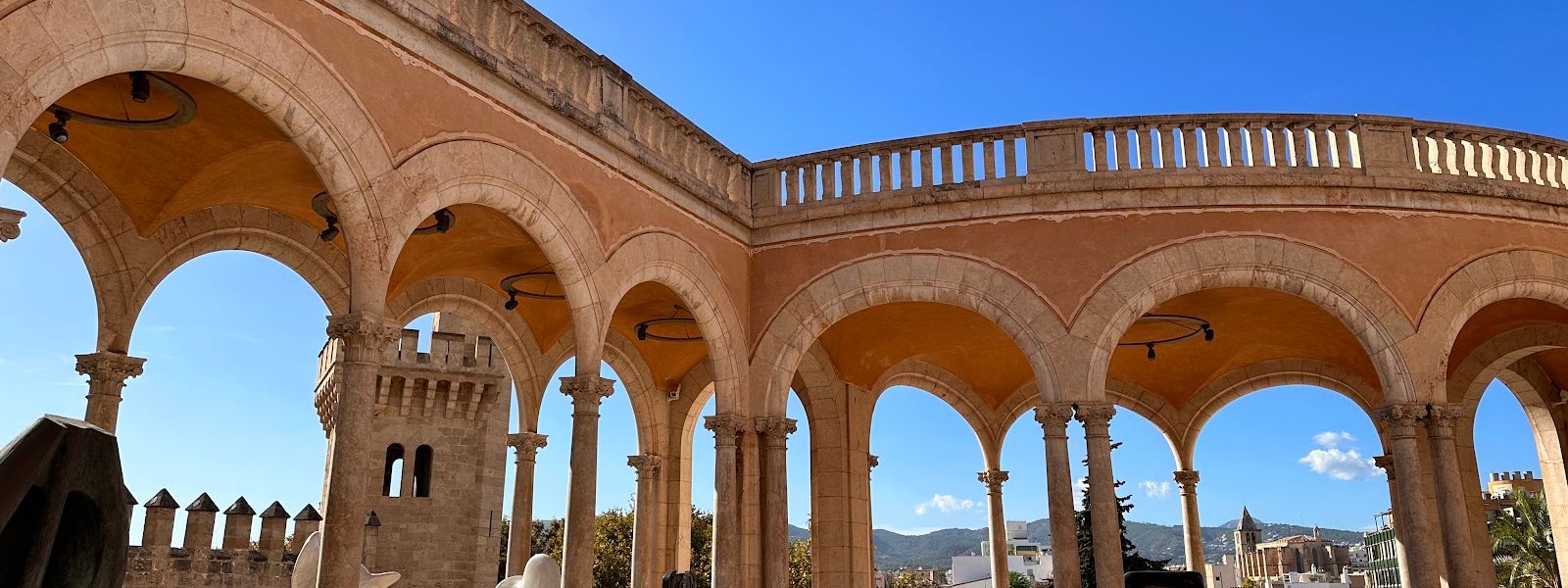
Stately former residence beside Palma Cathedral, with Rodin and Henry Moore sculptures in its courtyard
- Entrance
- €10 for adults; children pay a reduced price.
- Accessibility
- The entrance and the toilets are not wheelchair accessible; the period rooms are upstairs.
- Parking
- Paid car park about 200 m away; a disabled parking space about 300 m away.
- Difficulty
- None: a museum in Palma's old town, with a bus stop about 110 m away.
- Transport
- Bus to Plaça de la Reina (Catedral), about 110 m away, or Plaça de la Reina, about 140 m away.
- Hours
- Monday to Saturday 10:00–17:30; closed on Sundays.
- Address
- Carrer del Palau Reial, 18, Centre, 07001 Palma, Illes Balears, Spain
What makes it special
Walk out into the courtyard and Palma Cathedral is right there, its sandstone flank filling the view behind sculptures by Rodin, Henry Moore and Barbara Hepworth.
Inside, the ground floor holds an 18th-century Neapolitan nativity scene that spreads far beyond the manger into a crowd of small figures at work in their trades. The same floor has a series of Dalí prints made for Freud's Moses and Monotheism, the book that argues Moses was an Egyptian. Upstairs, the rooms of the house keep their original furniture, carpets, paintings and old maps. The building is as much a part of the visit as anything hung on its walls.
Good to know
- Closed on Sundays, so plan it for Monday to Saturday.
- The entrance has no wheelchair access, and the period rooms are upstairs.
- Allow about an hour for the rooms, the nativity scene and the courtyard.
- There are toilets inside; free public toilets stand about 140 m away.
- The courtyard sculptures are outdoors, so rain cuts that part of the visit short.
Getting there
Palau March stands in Palma's old town, right beside the cathedral, and the last stretch is on foot through the old streets. The nearest bus stops are Plaça de la Reina (Catedral), about 110 m away, and Plaça de la Reina, about 140 m away. Drivers have a paid car park about 200 m away in a straight line, and a disabled parking space about 300 m away.
Best time to visit
Best: a dry day from Monday to Saturday, soon after opening or in the late afternoon.
Avoid: Sundays, when the museum is closed.
The courtyard sculptures and the cathedral view are out in the open, and the streets around the cathedral are at their busiest in the middle of a summer day.
Sun & daylight
Nearby Places

Similar Places


Your whole travel map in one place
Get inspired by new places around the world and find the ones worth the journey
Frequently asked questions
What is in the Palau March collection?
Sculpture by Rodin, Henry Moore and Barbara Hepworth in the courtyard, a series of Dalí prints, an 18th-century Neapolitan nativity scene, old maps and period rooms with their original furniture, carpets and paintings.Is Palau March open on Sundays?
No. The museum opens Monday to Saturday and is closed on Sundays.Can you see the cathedral from Palau March?
Yes. The cathedral stands next door, and the courtyard with the sculptures looks straight onto it.Is Palau March wheelchair accessible?
No. The entrance and the toilets are not wheelchair accessible, and the period rooms are on the upper floor.How long does a visit take?
About an hour covers the rooms, the nativity scene and the courtyard.