María Luisa Park is a public park and historic garden along the Guadalquivir in Seville. Most of its grounds were once the gardens of the Palace of San Telmo, donated to the city in 1893 by the Infanta Luisa Fernanda, Duchess of Montpensier. Jean-Claude Nicolas Forestier redesigned them from 1911, and the park became the centrepiece of the district built for the 1929 Ibero-American Exposition, which was held partly within it and left the Plaza de España, museum pavilions and a run of tiled fountains and monuments.
Maria Luisa Park
Local name: Parque de María Luisa

Historic city park of tiled fountains, palms and 1929 exposition pavilions beside the Guadalquivir
- Entrance
- Free; it is a public park with no ticket.
- Accessibility
- Wheelchair-accessible entrance and wheelchair-accessible parking.
- Parking
- Free car park; the public Parking Puerto de Sevilla is about 380 m away in a straight line.
- Difficulty
- None: the park opens off the city streets and you walk straight in; wandering the gardens takes one to two hours.
- Transport
- Bus stop Avenida La Borbolla (Montevideo), about 160 m away in a straight line.
- Advance booking
- Not needed.
- Hours
- Daily 8:00–00:00.
What makes it special
Tiled benches, tiled fountains, tiled walls: the ceramic work runs for half a mile through the shade of palms, orange trees and Mediterranean pines, broken up by ponds and vine-hung bowers. At the Fountain of the Lions (Fuente de los Leones) four stone lions, each holding a shield, spit water into an octagonal basin. Ducks and swans keep to the Water-lily Pool (Estanque de los Lotos) and the lakes, parakeets live in the centre of the park, and the doves gather so thickly on Plaza de América that part of it is called the Parque de las Palomas.
The buildings do the rest. The Plaza de España curves round its moat on the park's edge, with a tiled alcove for each Spanish province. The Queen's Sewing Box (Costurero de la Reina), a hexagonal building with turrets at the corners like a toy fort, dates from 1893 and is the oldest Neo-Mudéjar building in Seville.
Good to know
- The gardens are well shaded under the trees; the Plaza de España is open to the sun, so bring water and comfortable shoes.
- Allow one to two hours to wander the gardens, and more if you add the Plaza de España or the museums.
- Drinking fountains stand in the park, and there are public toilets around it: one free, another charging a fee.
- Dogs are allowed, and the park suits children.
- The Plaza de España buildings are mainly government offices; the big exposition mansions near the south end house museums, including the Archaeological Museum of Seville.
Getting there
The park lies in the south of central Seville along the Guadalquivir and opens straight off the city streets. The nearest bus stop, Avenida La Borbolla (Montevideo), is about 160 m away in a straight line, and from there you walk into the gardens and on towards the Plaza de España. Drivers have a free car park, and the public Parking Puerto de Sevilla is about 380 m away in a straight line. Once inside, everything is on foot, by horse-drawn carriage or in a hired pedal car.
Best time to visit
Best: early morning, or late afternoon into sunset. Avoid: the middle of the day in summer. The gardens hold plenty of shade, but Seville's summer heat is fierce and the Plaza de España is open to the sun, while the low evening light on the tiles makes sunset the finest hour for the plaza.
Sun & daylight
Nearby Places
Similar Places
Maria Luisa Park on the map
Get directions
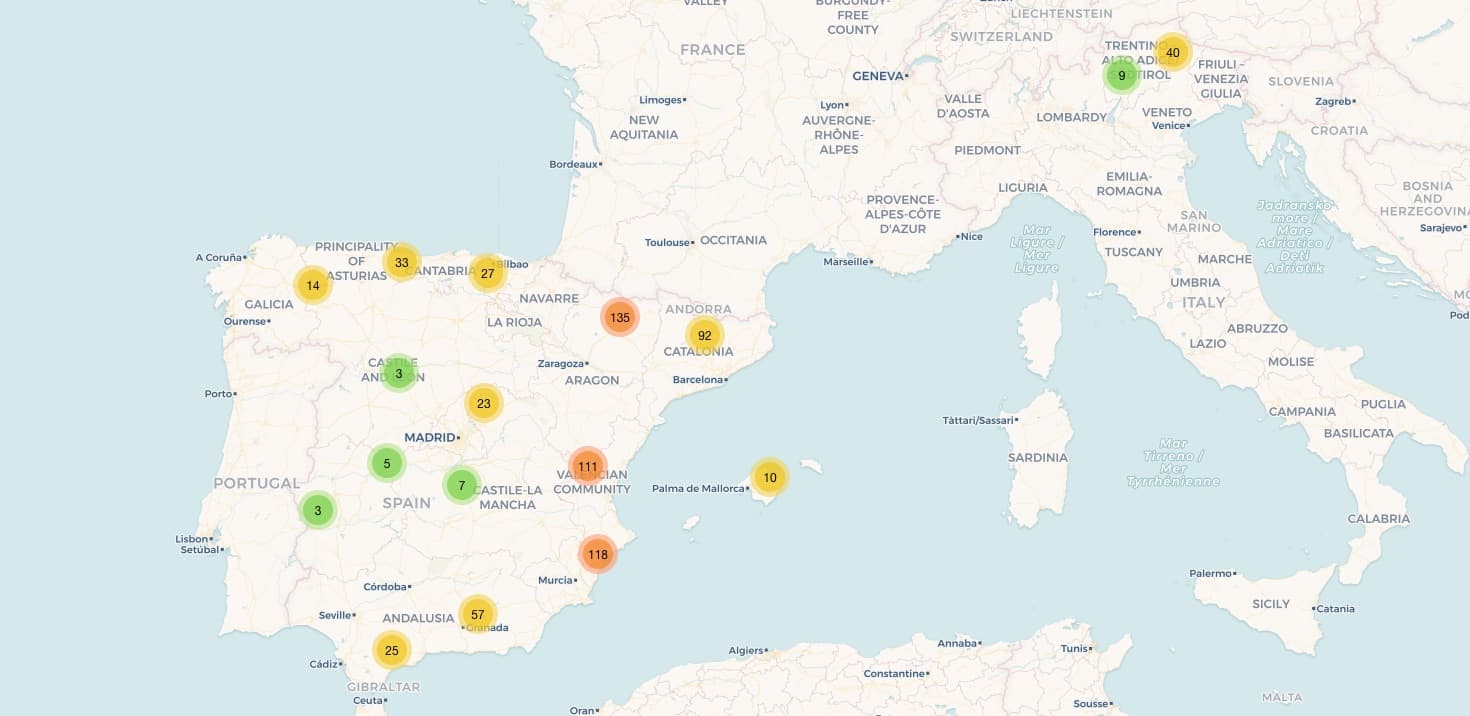
Your whole travel map in one place
Get inspired by new places around the world and find the ones worth the journey
Frequently asked questions
Do you pay to enter María Luisa Park?
No. It is a public park and there is no ticket.How long do you need in María Luisa Park?
One to two hours to wander the gardens, fountains and monuments. Add time for the Plaza de España and the museums near the south end.Is the Plaza de España part of María Luisa Park?
It stands on the park's edge and was built for the same 1929 Ibero-American Exposition. Its buildings are now mainly government offices, and the plaza appears in Lawrence of Arabia (1962).Can you bring a dog to María Luisa Park?
Yes, dogs are allowed in the park.What birds live in María Luisa Park?
Doves crowd part of Plaza de América, known as the Parque de las Palomas, parakeets live in the centre of the park, and ducks and swans swim in the fountains and lakes.