Metropol Parasol, officially Setas de Sevilla and known locally as Las Setas, is a large, mostly wooden structure over Plaza de la Encarnación in the old quarter of Seville. Designed by German architect Jürgen Mayer and completed in April 2011, its six mushroom-shaped parasols cover roughly 150 by 70 metres and rise to about 26 metres. It holds an archaeological museum, a market, a public plaza and rooftop terraces with a panoramic view of the old city.
Metropol Parasol

Six mushroom-shaped timber parasols over a Seville square, with a rooftop walkway and Roman remains beneath.
- Entrance
- The plaza and the view from below are free. The rooftop walkway takes a ticket: around €16 for adults, with discounts for children and students.
- Accessibility
- Wheelchair-accessible entrance and seating.
- Parking
- Parking Imagen, a paid public car park about 176 m away. The Hotel Cervantes car park, about 295 m away, is for hotel customers only.
- Difficulty
- None: the structure stands over a city square in the old quarter, and you walk in from the street.
- Transport
- Laraña (Plaza Encarnación) stop, about 60 m away.
- Advance booking
- Recommended. Buying tickets online beforehand avoids long queues, and sunset and after-dark slots go quickly.
- Hours
- Daily, 09:30–23:45.
- Address
- Pl. de la Encarnación, s/n, Casco Antiguo, 41003 Sevilla, Spain
What makes it special
The walkway runs across the top of the canopy, about 26 m up, roughly the height of an eight-storey building, and the old city of Seville opens out on every side: rooftops, towers and the bulk of the cathedral. Come at sunset and stay on, because after dark the parasols are lit in changing colours.
The six parasols are built from 3,500 cubic metres of micro-laminated Finnish pine, and the design takes its cue from the vaults of Seville Cathedral and the ficus trees of nearby Plaza de Cristo de Burgos. Under the lattice the plaza sits in shade.
The structure goes down as well as up. In the Antiquarium below street level, Roman and Moorish remains found during construction are displayed on the site where they were uncovered, and the market works at street level above them.
Good to know
- The plaza under the parasols is public, and the structure costs nothing to see from below; the ticket pays for the rooftop walkway and its view.
- The Antiquarium on the lowest level displays the Roman and Moorish remains found on the site.
- Map apps list it as Setas de Sevilla, and locals call it Las Setas.
- A drinking fountain stands about 26 m away, worth knowing on a hot afternoon.
Getting there
The parasols stand over Plaza de la Encarnación in the old quarter, central enough that most people arrive on foot through the streets of the centre; the timber canopy shows above the surrounding buildings as you approach. The nearest stop, Laraña (Plaza Encarnación), is about 60 m away. Drivers have a paid public car park, Parking Imagen, about 176 m away in a straight line.
Best time to visit
Best: late afternoon into the evening.
Sunset light spreads across the old city from the walkway, and after dark the structure is lit in changing colours.
Avoid: the middle of a summer day.
The upper walkway is open to the sky with no shade, and Seville's summer heat is fierce; the plaza beneath stays shaded by the parasols.
Things to do nearby
All tours in Seville on GetYourGuide
Paid links: booking through them supports YowJourney.
Sun & daylight
Nearby Places


Similar Places


Metropol Parasol on the map
Get directions
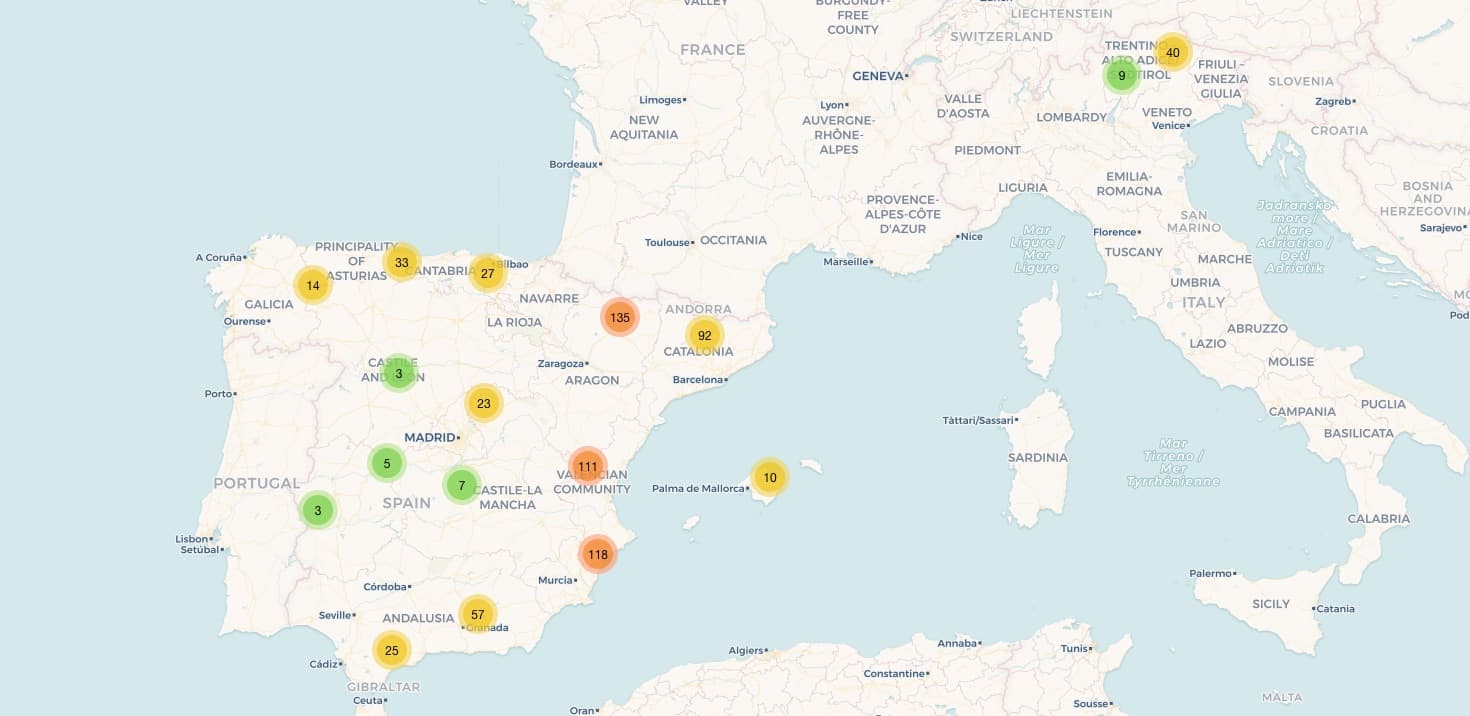
Your whole travel map in one place
Get inspired by new places around the world and find the ones worth the journey
Frequently asked questions
Can you see Metropol Parasol without a ticket?
Yes. The plaza under the parasols is a public space, and the structure can be seen from below for free. The ticket is for the rooftop walkway, with discounts for children and students.When is the best time to go up?
Sunset, for the light over the old city, followed by the evening, when the structure is lit in changing colours. Sunset and after-dark tickets go quickly, so buy them online ahead.What is underneath the parasols?
The Antiquarium, below street level, displays Roman and Moorish remains discovered on the site. The market occupies street level, and its roof forms the open-air plaza used for public events.Why is it called Las Setas?
The parasols loosely resemble giant mushrooms, setas in Spanish, and locals adopted the nickname during construction. Seville made Setas de Sevilla the official name after learning the architect had trademarked Metropol Parasol.Is Metropol Parasol wheelchair accessible?
The entrance and seating are wheelchair accessible.