Cabrera National Park, formally the Cabrera Archipelago Maritime-Terrestrial National Park, takes in the whole Cabrera Archipelago in the Balearic Islands. Created by law on 29 April 1991, it covers 908 km², of which 895 km² is sea, making it the largest national park in Spain. The islands have no permanent population and belong administratively to Palma. Its coast is considered among the best preserved in the Mediterranean, and the park is known for seabird colonies, endemic species and marine life.
Parc Nacional de Cabrera

Uninhabited archipelago off Mallorca, protected as a land-and-sea national park, with a 14th-century castle and seabird colonies.
- Parking
- None; the park is reached by boat.
- Difficulty
- Walking on island trails: the castle is uphill from the harbour, and the lighthouse on the west side is a 7-mile (about 11 km) round trip with little shade.
- Transport
- Boat from Mallorca, about an hour's crossing, landing in the island's natural harbour.
- Advance booking
- Private boats must book a mooring in advance. Diving requires a licence, valid for a one-day visit.
- Hours
- Open 24 hours; your time ashore depends on the boat.
- Address
- Isla Cabrera, Illes Balears, Spain
What makes it special
The lizards come to you. Cabrera is crawling with them, including a black lizard that is rare elsewhere in the Balearics, and they are curious enough to walk right up to a camera lens. Centuries of isolation have left the coast barely touched: pale rock, low scrub and a turquoise bay with no town around it.
Seabirds nest in large colonies across the archipelago. The surrounding sea carries dolphins, pilot, sperm and fin whales and loggerhead turtles, with humpbacks and orcas turning up on occasion. Visitor numbers are limited, so the beach stays quiet. A 14th-century castle stands over the harbour, and day trips pair the island with a swim in the Blue Cave (Sa Cova Blava).
Good to know
- Walking is mostly guided. Hikes generally run as organised tours; the castle and the lighthouse are the two you can reach on your own.
- The lighthouse walk is long. It is a 7-mile (about 11 km) round trip to the west side of the island — plan it against your boat's return.
- Facilities are few. There is a bar by the beach, a gift shop, a small visitors centre and a museum.
- Jellyfish drift in from open water now and then; look before you swim.
- Own boat? Anchoring is banned. Book a mooring in advance and come ashore by dinghy.
Getting there
Cabrera is reached by sea. Day trips run from Mallorca, and the crossing takes about an hour before the boat pulls into the island's natural harbour. Sailors cannot drop anchor there: a mooring has to be booked in advance, and you go ashore by dinghy.
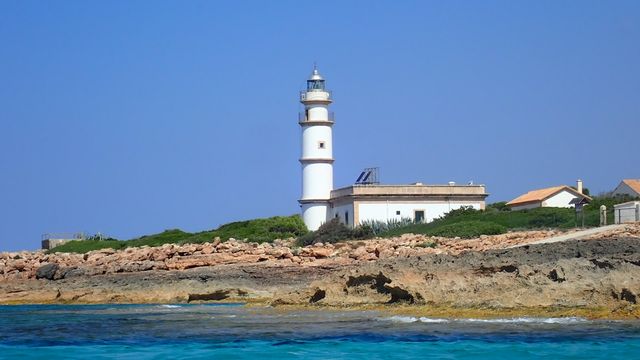
From the harbour everything is on foot. The castle is an uphill walk above the bay. The lighthouse on the west side of the island is a 7-mile (about 11 km) round trip, which takes a good part of a day trip's time ashore.
Best time to visit
Best: a calm day in the warm months. The crossing is an hour on open water, and the swimming in the bay and the Blue Cave is at its best when the sea is warm.
Avoid: the lighthouse trail in the middle of a hot summer day. The walk is long and runs through low scrub with little shade.
Access & restrictions
Cabrera is a national park that protects both land and sea, and it is also a Special Protection Area for birds and part of the Natura 2000 network. Private boats may not anchor in the natural harbour: they tie up to laid moorings, which must be booked in advance. Diving is strictly limited, and a diving licence covers a one-day visit only. Hiking is generally done on organised tours; the castle and the lighthouse are the two sites you may visit unsupervised. Limited military use of the islands continues.
Sun & daylight
Nearby Places

Similar Places

Parc Nacional de Cabrera on the map
The trails cross open scrub with little shade, and the lighthouse walk is long. Carry plenty of water and cover up from the sun, above all in summer.
Get directions
Your whole travel map in one place
Get inspired by new places around the world and find the ones worth the journey
Frequently asked questions
How do you get to Cabrera National Park?
By boat. Day trips run from Mallorca and the crossing takes about an hour. Private boats must book a mooring in advance.Can you explore Cabrera on your own?
Partly. The castle and the lighthouse can be visited unsupervised; other hikes are generally done on organised tours.Can you anchor a private boat at Cabrera?
No. Anchoring in the natural harbour is not allowed. Boats use laid moorings booked in advance, and you come ashore by dinghy.Is diving allowed in Cabrera National Park?
Diving is strictly limited. It needs a licence, and a licence allows a one-day visit only.Is there anywhere to eat or drink on Cabrera?
There is a bar by the beach and a gift shop, along with a small visitors centre and a museum.