The Santa Cruz Museum of Fine Arts is the municipal art museum of Santa Cruz de Tenerife, housed at the rear of the Church of St Francis of Assisi (Iglesia de San Francisco de Asís) on the Plaza del Príncipe de Asturias. Its origins go back to 1840; the present classical building, by the architect Eladio Laredo, dates from 1929. Fourteen rooms hold paintings from sixteenth-century Flemish work to the twentieth century, with sculpture and crafts, and the museum has served as a repository for works from the Prado in Madrid.
Santa Cruz Museum of Fine Arts
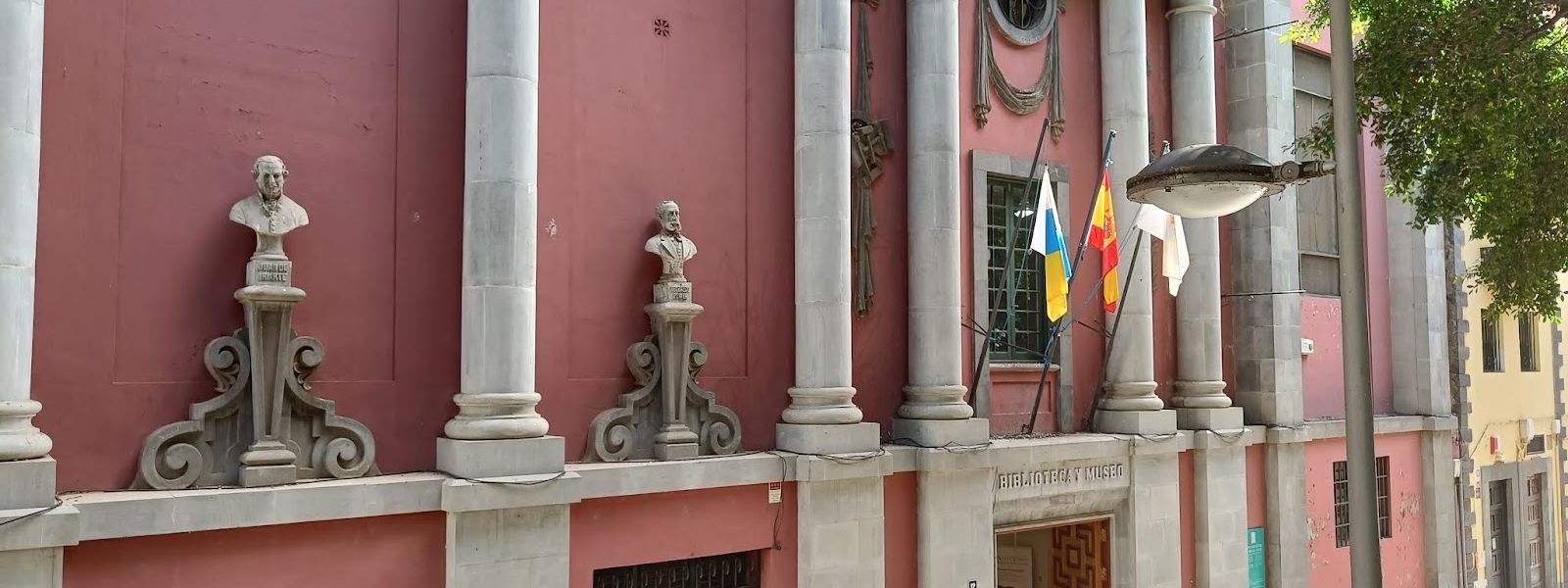
Municipal fine arts museum in Santa Cruz de Tenerife, with a Flemish triptych by Pieter Coecke and ten busts on its facade.
- Entrance
- Free.
- Accessibility
- Wheelchair-accessible entrance and toilet; Braille signs beside the artworks.
- Parking
- A car park about 80 m away; the paid Parking Plaza de España about 280 m away.
- Difficulty
- None: the museum stands on a city-centre square, with the nearest stops about 120–145 m away, and the collection spreads over several floors.
- Transport
- Stops Plaza del Príncipe (about 120 m) and Villalba Hervás (about 145 m).
- Hours
- Tuesday–Friday 10:00–20:00; Saturday and Sunday 10:00–14:00; closed on Mondays.
- Address
- C. José Murphy, 12, 38002 Santa Cruz de Tenerife, Spain
What makes it special
In some of the halls the paintings cover whole walls, and the rooms are bright and spacious, with benches for sitting and looking. The halls are quiet. You can stand in front of a picture for as long as you like.
The best-known piece is the Tríptico de Nava y Grimón, a Flemish Nativity triptych painted by Pieter Coecke in 1546. Around it runs a collection that leans on the islands' own artists, among them Juan de Miranda and Cristóbal Hernández de Quintana, which makes the museum a good first look at Tenerife's artistic history.
The building earns a look before you go in: ten busts of notable tinerfeños line the facade, including the composer Teobaldo Power and the playwright Ángel Guimerá.
Good to know
- Drinks go into a locker before you enter the galleries.
- Labelling is uneven: many works on the third floor carry QR codes for more detail, while much of the art on the second floor has no label.
- The ground floor holds temporary exhibitions, and one has shown nude photography; check what is on if you are bringing children.
- Free Wi-Fi needs no password, but you sign in with a phone number.
- Braille signs accompany the artworks.
Getting there
The museum stands in the centre of Santa Cruz de Tenerife, on the Plaza del Príncipe de Asturias, in the building at the rear of the Church of St Francis of Assisi. The nearest stops, Plaza del Príncipe and Villalba Hervás, are about 120 m and 145 m away in a straight line. Drivers have a car park about 80 m away and the paid Parking Plaza de España about 280 m off. A tourist office sits about 170 m from the museum.
Best time to visit
Best: a weekday afternoon, Tuesday to Friday, when the museum stays open into the evening.
Avoid: Mondays, when it is closed, and weekend afternoons, when it has already shut for the day.
The galleries are indoors, so the visit works just as well on a wet day or through the midday heat.
Sun & daylight
Nearby Places
Similar Places

Your whole travel map in one place
Get inspired by new places around the world and find the ones worth the journey
Frequently asked questions
What is the most famous work in the Santa Cruz Museum of Fine Arts?
The Tríptico de Nava y Grimón, a Flemish triptych of the Nativity painted by Pieter Coecke in 1546.Which artists are in the collection?
Mostly Canarian painters and sculptors, among them Juan de Miranda and Cristóbal Hernández de Quintana, alongside sixteenth-century Flemish work and painting up to the twentieth century.Is the museum wheelchair accessible?
The entrance and a toilet are wheelchair accessible, and Braille signs accompany the artworks.Is the museum suitable for children?
The permanent collection is paintings and sculpture. The ground floor holds temporary exhibitions, and one has shown nude photography, so check what is on before bringing children.