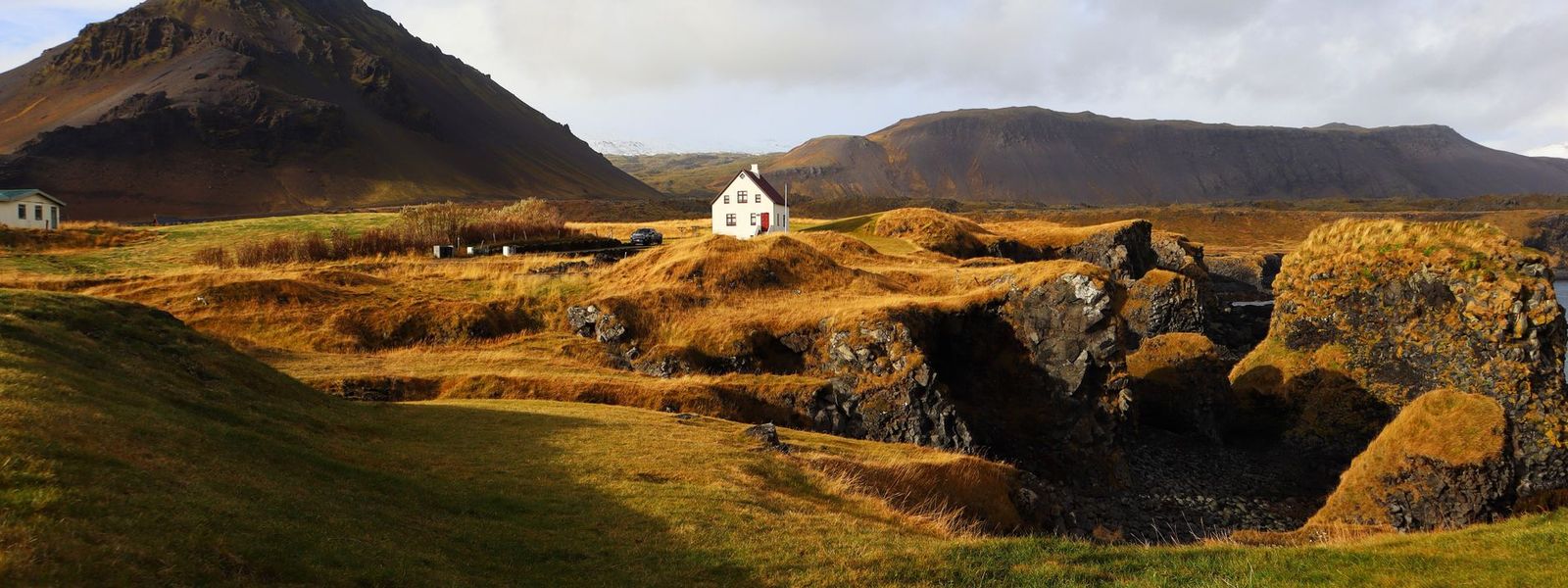
Arnarstapi stands at the foot of Stapafell on the southern side of the Snæfellsnes Peninsula, close to Snæfellsjökull National Park. It grew around a sheltered landing place and became the commercial centre of the west coast under the Danish trade monopoly. The draw now is the shoreline: dark basalt eroded into columns, ravines, caves and the arch Gatklettur, with seabirds nesting on the cliffs. A footpath crosses the lava to Hellnar in about an hour.
Arnarstapi
- Currency
- Icelandic króna (ISK)
- Language
- Icelandic; nearly all speak English
- Power plug
- Europlug and Schuko sockets, 230 V
- Visa
- Schengen; outside the EU
- Time zone
- UTC±00:00 (Atlantic/Reykjavik)
- Tap water
- Safe; hot water smells of sulphur
- Tipping
- Not customary
- Emergency
- 112
Things to do
All tours in Arnarstapi on GetYourGuide
Paid links: booking through them supports YowJourney.
When to go
High season
Jun – Aug
The village is busiest from June to August. Restaurants, tours and accommodation are open, and the car parks by the viewpoints fill in the afternoon. Kittiwakes, fulmars and Arctic terns are nesting around the cliffs.
Shoulder
Sep – Oct
Traffic drops away after August and the coastal path is quiet. Restaurants and tours cut their hours or close, so confirm services before driving out.
Low season
Nov – Mar
Trails ice over and the cliff paths turn dangerous. Strong wind, blowing snow and ice make the roads around Snæfellsnes hazardous; check conditions and SafeTravel warnings before setting out.
Shoulder
Apr – May
Businesses reopen for the season through the spring. Trails are muddy after rain and the weather turns quickly, so carry windproof and waterproof clothing even on a clear morning.
How long to stay
Half a day covers the village: the shore path, Gatklettur and the harbour. The walk to Hellnar takes about an hour each way, so budget three hours to do it in both directions with stops. Stay a night if you also want Rauðfeldsgjá, Búðir and Snæfellsjökull National Park.
Getting around
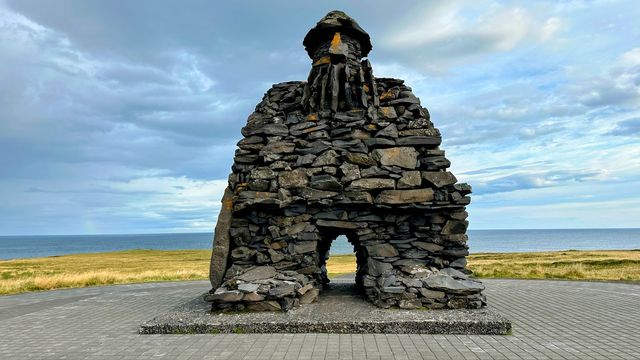
Arnarstapi is small enough to cross on foot. The harbour, the Bárður sculpture, Gatklettur, the restaurants and the main accommodation all sit within walking distance of each other.
Several car parks serve the viewpoints, and they fill up on summer afternoons. Park in them and nowhere else: not on vegetation, not on roadside verges, not in front of private homes. There is no local bus. A car is needed for Rauðfeldsgjá, Búðir and the further parts of Snæfellsjökull National Park.
Public transport across rural Snæfellsnes is thin, and some services need a connection or an advance booking. Check the Strætó journey planner for your date rather than assuming a daily direct run. Day visitors without a car can take a Snæfellsnes tour from Reykjavík, though these often allow little time for the coastal walk.
Local rules
Alcohol. Supermarkets in Iceland do not sell alcohol to take away. Buy it at a state-run Vínbúðin shop before you arrive, unless your accommodation has a bar.
Parking. Use the marked areas. Vegetation, roadside verges and the ground in front of private homes are off limits.
Protected coast. The shoreline between Arnarstapi and Hellnar has been a nature reserve since 1979. Stay on the established paths.
Nesting birds. Arctic terns defend their nesting areas in summer and dive at anyone who comes too close. Give the colonies a wide berth and never touch chicks or eggs.
What to see
Destinations in Arnarstapi
Frequently asked questions
How long is the walk to Hellnar?
About an hour each way. The path follows an old horse trail across the Hellnahraun lava field and along the shore. There are no services between the two villages, so carry water.How do you drive there from Reykjavík?
Route 1 north through the Hvalfjörður Tunnel to Borgarnes, then Route 54 west across Snæfellsnes, then Route 574 around the southern coast and onto Arnarstapavegur. Two and a half to three hours without long stops. Weather and sightseeing add more.Is there a shop in Arnarstapi?
No general shop. Restaurants and visitor businesses sell a few souvenirs, snacks and basic travel items. Buy groceries, medicines and outdoor supplies beforehand. Ólafsvík is the nearest substantial service town and Borgarnes has the larger supermarkets.Are the cliff edges fenced?
Not all of them. Stay on the established paths, keep children close and stand well back in high wind. Waves sweep across the rocks without warning, so never climb down to an exposed ledge for a photograph.Is it worth coming in winter?
The coast is there all year, but restaurants, tours and some accommodation run reduced hours or close. Paths ice over and roads across the peninsula can become hazardous. Confirm services and check road conditions before the journey.