Grindavík is a fishing town on the south-western corner of the Reykjanes Peninsula, built on a lava field from the Sundhnúkur crater row. Its harbour, Hópið, is one of the few on this coast, and most work in the town is in fishing. The Blue Lagoon (Bláa Lónið) lies 5 km to the north. The Icelandic Saltfish Museum and the Leif the Lucky Bridge over the Álfagjá rift are the other draws. Eruptions on the fissure have emptied the town repeatedly since November 2023.
Grindavík

- Currency
- Icelandic króna (ISK)
- Language
- Icelandic; nearly all speak English
- Power plug
- Europlug and Schuko sockets, 230 V
- Visa
- Schengen; outside the EU
- Time zone
- UTC±00:00 (Atlantic/Reykjavik)
- Tap water
- Safe; hot water smells of sulphur
- Tipping
- Not customary
- Emergency
- 112
Things to do
All tours in Grindavík on GetYourGuide
Paid links: booking through them supports YowJourney.
When to go
High season
Jun – Aug
At almost 64°N the light barely goes at midsummer, and the coast is at its mildest. This is the workable window for the harbour, the lighthouse and the lava field on foot.
Shoulder
Sep – Oct
Daylight falls away fast and the nights turn dark enough for the aurora when the sky is clear. Wind and rain come straight off the Atlantic.
Low season
Nov – Mar
Only a few hours of usable light a day, and storms hit an unsheltered south-west-facing coast. The Icelandic Saltfish Museum is the one thing here that works in bad weather.
Shoulder
Apr – May
Days lengthen quickly and the light holds into the evening. The coast is still cold and windy.
How long to stay
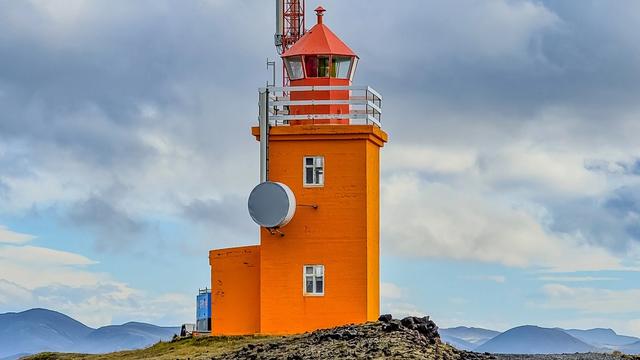
Half a day is enough for the town itself: the harbour, the Icelandic Saltfish Museum and the lighthouse at the end of Hópsnes. With the Blue Lagoon 5 km north it becomes a full day. Do not build a trip around a night here. Access has been cut without warning several times since 2023, so treat Grindavík as a stop that may not happen.
Getting around
Grindavík has no airport and no railway. Everything arrives by road across the Reykjanes Peninsula. The town counted 1,246 residents before the evacuations and is small enough to cover on foot. A car is needed for anything beyond it. The Blue Lagoon is 5 km north, and the harbour peninsula of Hópsnes and Þórkötlustaðanes runs 2 km out to the lighthouse of 1928 on its southern tip. Road access is not dependable. Fault movement damaged roads across the town in November 2023, and in January 2024 lava crossed the defensive barriers and reached the streets.
Local rules
Evacuation orders are binding. The Icelandic Civil Protection Agency controls access to the town. Grindavík was cleared on 10 November 2023, let back in on 20 February 2024, cleared again on 2 March, and evacuated once more on 1 April 2025 and 16 July 2025. When an order comes, leave.
Keep off closed roads and away from the defensive barriers. Fault movement broke up roads and the golf course in November 2023. On 14 January 2024 a fissure opened 450 metres from the town, lava breached the barriers and three houses were destroyed.
What to see

Destinations in Grindavík
Frequently asked questions
Is the Blue Lagoon in Grindavík?
It is 5 km north of the town. The spa uses hot mineralised water from the Svartsengi power station next to it.What is there to see in the town?
The harbour, Hópið, and the Icelandic Saltfish Museum, which opened in 2002 in a purpose-built hall of 650 square metres and covers salt fish production and its place in the Icelandic economy. A lighthouse of 1928 stands on the southern tip of the harbour peninsula.Where do the two tectonic plates meet here?
At the Álfagjá rift valley, which marks the boundary of the Eurasian and North American plates. The Leif the Lucky Bridge spans it. The bridge was built in 2002 and named after Leif Erikson.Why does the ground keep erupting at Grindavík?
The town stands on a lava field laid down by the Sundhnúkur crater row just to the north, and it is one of six communities on the Reykjanes Peninsula sitting on or near an eruptive fissure. An earthquake swarm began on 25 October 2023 and passed 22,000 tremors within a fortnight.Do people still live in Grindavík?
The town has been under repeated evacuation since November 2023. In February 2024 the government published a bill to buy residential property from individual owners in the town and take over the housing loans on it.