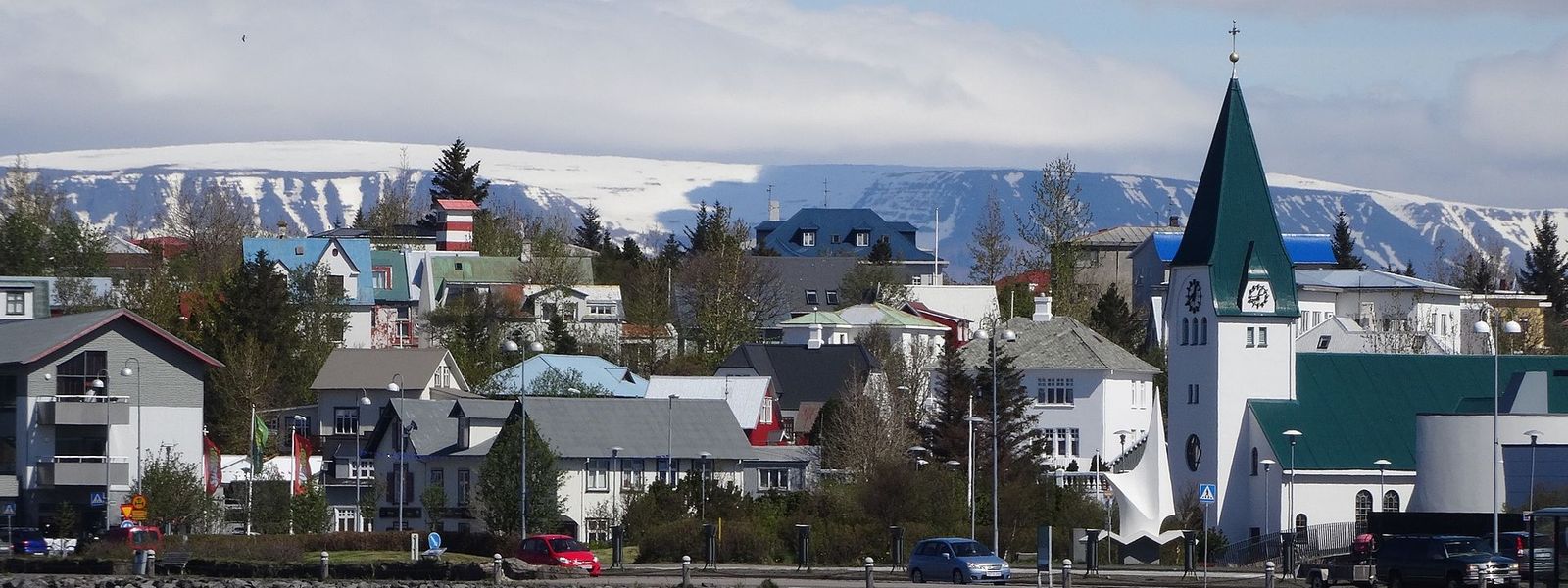
Hafnarfjörður is a port town on the southwest coast of Iceland, about 10 km south of Reykjavík and part of the capital's continuous urban area. About 31,500 people live here, which makes it the third-largest town in the country. It stands on lava fields from the Krýsuvík volcanic system, and the rock has been left in place between the streets. The old centre holds small wooden buildings and narrow winding streets, the Museum of Navigation and a harbour still used for freight and fishing.
Hafnarfjörður
- Currency
- Icelandic króna (ISK), written kr. Cards work almost everywhere, including taxis, petrol stations, souvenir stands and remote guesthouses, so large amounts of cash are unnecessary. Exchange rates are better inside Iceland, and banks in Reykjavík give the best of them.
- Language
- Icelandic. English is widely spoken, and apart from the elderly and young children almost everyone is fluent.
- Power plug
- Europlug and Schuko sockets, 230 V
- Visa
- Schengen area, with no immigration checks on arrivals from other Schengen countries. Iceland is outside the EU, so every traveller, including those from EU countries, goes through customs on entry.
- Time zone
- UTC±00:00 (Atlantic/Reykjavik)
- Tap water
- Safe everywhere and among the cleanest in the world. Hot tap water smells of sulphur because geothermal energy heats it; it is still safe to drink.
- Tipping
- Not practised. An attempt to tip can occasionally be taken as an insult, so praise the service instead. Tip jars by the till are generally ignored.
- Emergency
- 112
When to go
High season
May – Aug
The busiest months in the old town. Bright Days runs in May, the Viking festival falls on the summer solstice, and cruise ships tie up close to the centre. At this latitude the nights barely darken.
Shoulder
Sep – Nov
The festivals are over and daylight shrinks quickly. Museums, the lava park and the swimming pools stay open, and the centre is quiet.
Low season
Dec – Feb
Darkest and coldest. A market with free live entertainment runs in the centre at weekends in December; after that little is on, and the harbour works rather than entertains.
Shoulder
Mar – Apr
Days lengthen fast, but the festival calendar has not started. Good weeks for the old streets and the museums without company.
How long to stay
Half a day covers the old town: the wooden houses on Strandgata and Fjarðargata, the harbour, Sívertsenshús and Hellisgerði. A full day allows Hafnarborg, one of the smaller museums and a swimming pool as well. Most travellers come as a day trip from Reykjavík, 10 km to the north, rather than sleeping here. During the Viking festival at the summer solstice, allow the whole day.
Getting around
The centre is small, and walking covers the old town, the harbour and Hellisgerði. Strætó route 1 links Hafnarfjörður with the rest of the capital area every 15–20 minutes, and the fare inside that area is 400 kr. The main interchange is Fjörður.
By car, road 41 runs from Keflavík Airport in about 35 minutes. From elsewhere in Iceland, take road 1 to Reykjavík, then road 49 and road 41. Flybus serves the airport and stops in Hafnarfjörður on request: 45 minutes, 2,800 kr. Strætó route 55 does the same run in 76 minutes for 1,600 kr, but only every two hours.
Two honest limits. Long-distance buses to the rest of the country do not start here — they leave from Mjódd in Reykjavík. No ferry serves the town; cruise ships call in summer, close to the centre.
Destinations in Hafnarfjörður
Frequently asked questions
How far is Hafnarfjörður from Reykjavík?
About 10 km south. The two are part of one continuous urban area, and Strætó route 1 runs between them every 15–20 minutes for 400 kr. By car, road 49 connects to road 41.How do you get there from Keflavík Airport?
The airport is 39 km away. Road 41 takes about 35 minutes by car. Flybus covers it in 45 minutes for 2,800 kr and stops in the town on request. Strætó route 55 runs every two hours, takes 76 minutes and costs 1,600 kr.What is there to see in the old town?
Sívertsenshús of 1803, the oldest building in town and a museum since 1974. Pakkhúsið, an 1865 store house holding the Museum of Navigation (Sjóminjasafn Íslands). Hafnarfjarðarkirkja, consecrated in 1914. Strandgata and Fjarðargata keep rows of preserved wooden buildings.Why is the town associated with elves?
It was built in a lava field, and the lava formations were left untouched between the streets, which earned it the nickname "the town in the lava". Many Icelanders believe elves and trolls live in such rock. Hellisgerði, a small lava park in the centre, is visited for that reason; the world's northernmost bonsai trees grow there too.Is Hafnarfjörður safe?
Concerns are much the same as in other Icelandic towns, with one exception. The Hells Angels have their Icelandic base in an industrial area in the southwest of town. Nothing is likely to happen to an ordinary visitor, but stay away from it.