The bell tower of the Mezquita rises over whitewashed lanes and courtyards that run down to the Guadalquivir. Córdoba was the capital of Roman Baetica and then of the Umayyad caliphate, and by the 10th century it was the second-largest city in Europe. It holds four UNESCO inscriptions, among them the Mezquita and the historic centre around it, the palace-city of Medina Azahara and the Courtyards Festival in May. Travellers come for the Islamic architecture, the Jewish Quarter and the Roman Bridge.
Córdoba

- Currency
- Euro (EUR)
- Language
- Spanish; English in tourist areas
- Power plug
- Type C/F, 230 V
- Visa
- Schengen
- Time zone
- UTC+1 / UTC+2 (CET/CEST)
- Tap water
- Safe; mineral taste in the south
- Tipping
- Not expected; 5–10% for great service
- Emergency
- 112
Things to do
All tours in Córdoba on GetYourGuide
Paid links: booking through them supports YowJourney.
When to go
Shoulder
Mar – Apr
Mild days after the winter rains and thinner crowds than in May, good weather for walking the Old City.
High season
May – May
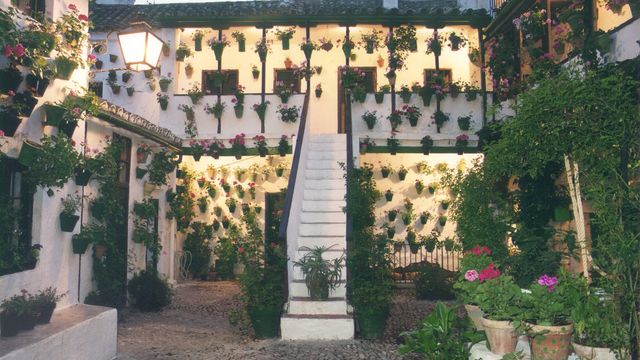
The May Crosses open the month, the Courtyards Festival fills the second and third weeks and the Feria closes it; rooms during the Courtyards Festival are hard to find and expensive, so book early.
Low season
Jun – Sep
The Guadalquivir valley has the hottest summers in Europe, with July and August highs averaging 37 °C and days over 40 °C common, so sightseeing shifts to early morning and late evening.
Shoulder
Oct – Feb
The heat breaks in autumn, and winters stay mild but cooler than on the coast, with Atlantic storms bringing most of the year's rain between December and February.
How long to stay
Two days covers the Old City on foot: the Mezquita, the Jewish Quarter with its synagogue of 1315, the Alcázar de los Reyes Cristianos, and the Roman Bridge with the Calahorra Tower at its southern end. Medina Azahara lies on the outskirts, out of walking range, and needs a separate half day. In the second and third weeks of May, add a day for the Courtyards Festival, when private patios across the historic centre open to visitors.
Getting around
Córdoba is a city for walking. Almost everything worth seeing sits inside the Old City, a tangle of medieval lanes bounded by the Guadalquivir to the south, Plaza de las Tendillas to the north and the tree-lined Paseo de la Victoria to the west. The train and bus stations stand side by side in the newer town to the north. Medina Azahara is the one major sight beyond walking range.
A rechargeable green travel card, sold in tobacco shops, covers city and regional buses and regional trains at a lower fare. The city bus operator issues its own card, valid on city buses only. Tourist offices hand out a city map: one on the east side of the Mezquita, one between the Alcázar and the city walls, one at the train station.
In July and August, afternoon highs average 37 °C. Walk in the morning and evening, and keep the middle of the day for indoor sights.
What to see

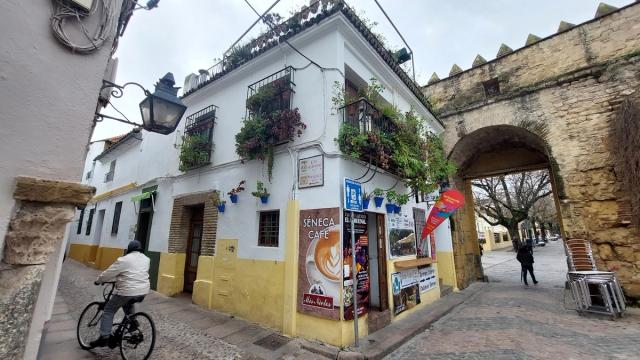


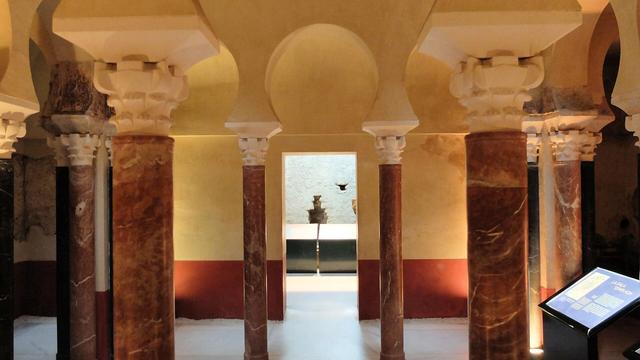
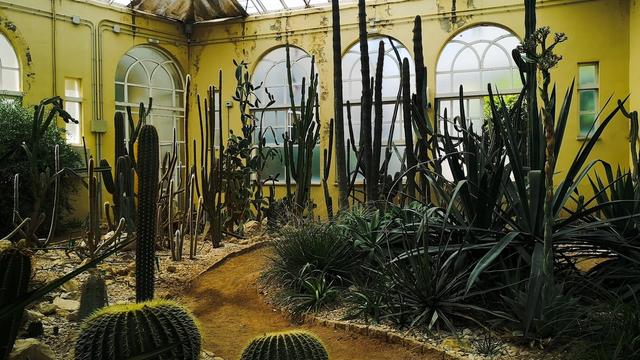
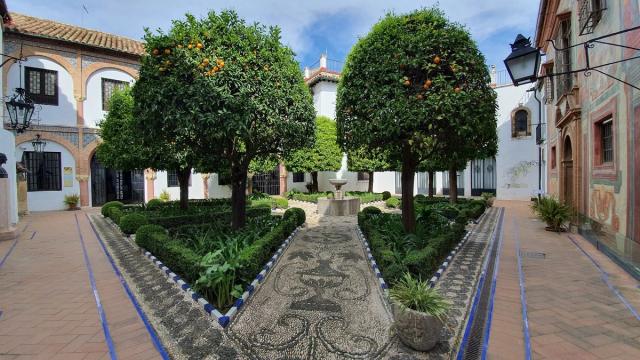


Destinations in Córdoba
Frequently asked questions
Can Córdoba be done as a day trip from Seville or Málaga?
High-speed trains reach Córdoba in about 45 minutes from Seville and 50 to 54 minutes from Málaga, which leaves a full day for the Mezquita, the Jewish Quarter and the Roman Bridge. Medina Azahara, outside the city, is hard to fit into the same day.When is the Courtyards Festival?
In the second and third weeks of May. Houses across the historic centre open their private patios to the public and compete on architecture and flowers. Accommodation in the city is very hard to find and expensive during the festival, so book well ahead.How hot does Córdoba get in summer?
July and August highs average 37 °C, and the city sees around 16 days a year above 40 °C; the airport has recorded 46.9 °C. The summer is also very dry. Carry water, stay in the shade and keep the middle of the day for indoor sights.Is there anything to watch out for around the Mezquita?
Beggars work the streets around the Mezquita, often in teams. A common trick is an unrequested palm reading followed by a demand for an inflated fee, sometimes with a child snatching money in the confusion. Keep your belongings close and walk on.Does Córdoba have an airport?
Córdoba Airport, 6 km southwest of the centre, is very small, with year-round flights to Barcelona and seasonal flights to Palma de Mallorca and Gran Canaria. The nearest larger airports are Seville (110 km), Granada (118 km) and Málaga (136 km).