The Caliphal Baths of Córdoba are a hammam built in the 10th century, under Caliph Al-Hakam II (961–976), to serve the Umayyad palace on the site now occupied by the Alcázar of the Christian Monarchs (Alcázar de los Reyes Cristianos). Buried in 1328 to make way for a square, they were uncovered by accident in 1691 and again in 1903, excavated between 1961 and 1964, and opened in 2006 as a partially reconstructed museum inside Córdoba's UNESCO-listed historic centre.
Caliphal Baths of Cordoba
Local name: Baños del Alcázar Califal

Tenth-century caliphal bathhouse in Córdoba, with horseshoe arches and vaults pierced by star-shaped skylights
- Entrance
- €3; also included in Córdoba's combined monuments ticket (Bono conjunto monumentos Córdoba).
- Accessibility
- Wheelchair-accessible entrance and wheelchair-accessible toilet.
- Parking
- Paid car park about 60 m away; free and paid street parking in the surrounding streets.
- Difficulty
- None: the museum stands on a square in the city centre, with a bus stop about 16 m away.
- Transport
- City bus stop Mártires, about 16 m away; Doctor Fléming stop about 160 m away.
- Hours
- Monday closed; Tuesday–Friday 8:15–20:15; Saturday 9:30–17:30; Sunday 8:15–14:15.
- Address
- Pl. Campo Santo de los Mártires, s/n, Centro, 14004 Córdoba, Spain
What makes it special
Daylight drops through small star-shaped openings in the vaults and lands on marble columns and horseshoe arches. That is the warm room, the largest space in the complex at roughly 40% of the bathing area, and the heart of the baths that served the caliph's palace.
The display is organised around each room, and the rooms run in the order a bather used them: cold, then warm, then hot. Bathers never sat in a pool. They sweated in the hot room and had warm water poured over them at the end, while furnaces sent hot air through conduits under the floors, much like a Roman hypocaust. The heating and water-storage system is laid out room by room.
Beyond the caliphal rooms lie a reception hall added in the 11th century and a second, smaller set of baths built by the Almohads, so three periods of Islamic Córdoba share one site.
Good to know
- Closed on Mondays, and on Sundays it shuts in the early afternoon.
- A visit takes from half an hour to an hour and a half; the Alcázar gardens are directly opposite and pair well with it.
- Signs throughout are in English and Spanish.
- There are toilets on site.
- The Almohad baths' floral plasterwork survives only in fragments, and those are at the Archaeological Museum of Córdoba (Museo Arqueológico de Córdoba).
Getting there
The baths sit on the Campo Santo de los Mártires square in the old centre, opposite the gardens of the Alcázar. The city bus stops right outside: Mártires is about 16 m away, and Doctor Fléming about 160 m.
By car, a paid car park lies about 60 m away, and the surrounding streets have both free and paid street parking. A drinking-water fountain stands about 64 m from the square.
Best time to visit
Best: Tuesday to Friday, ideally on a bright day.
Avoid: Mondays, and Sunday afternoons.
The museum is closed on Mondays and shuts early on Sundays, while on weekdays it stays open from morning to evening, and sunshine is what makes the star-shaped skylights in the vaults glow.
Things to do nearby
All tours in Córdoba on GetYourGuide
Paid links: booking through them supports YowJourney.
Sun & daylight
Nearby Places
Similar Places
Caliphal Baths of Cordoba on the map
Get directions
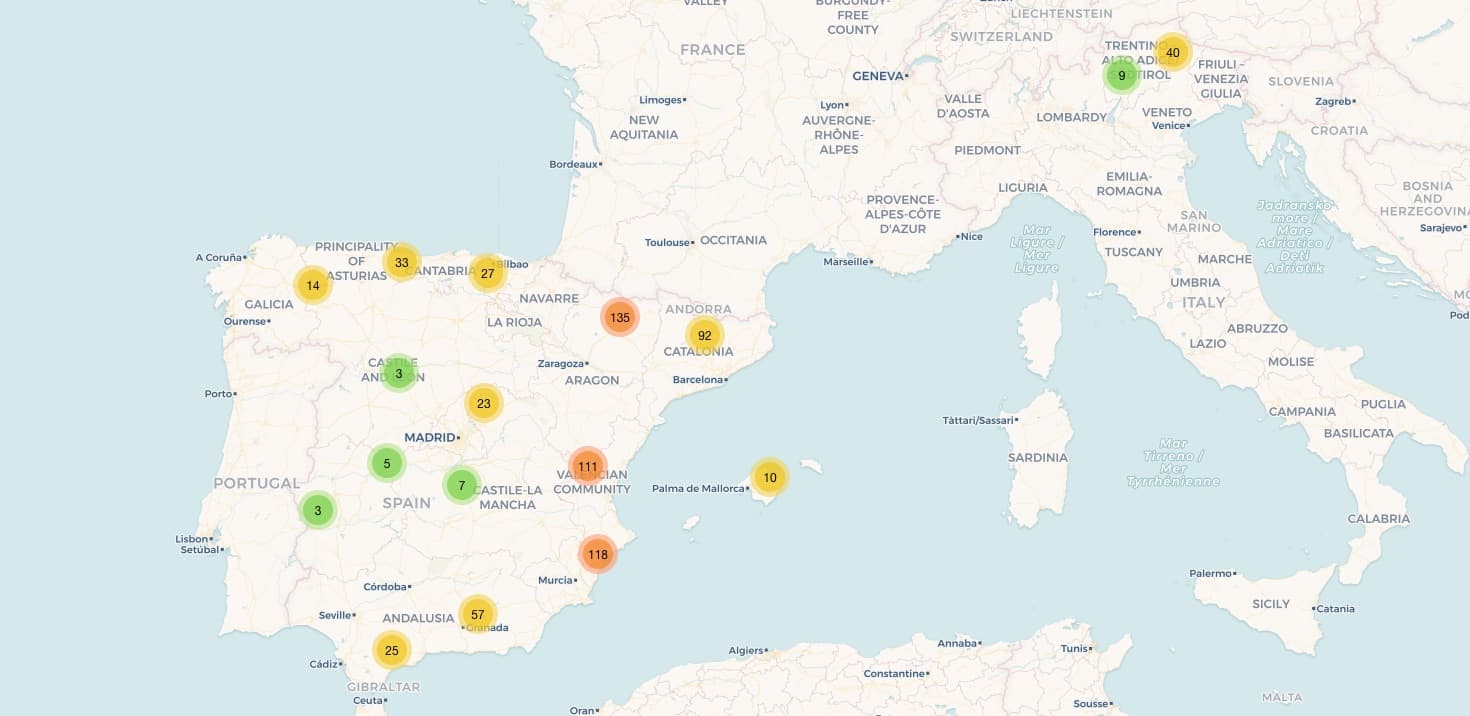
Your whole travel map in one place
Get inspired by new places around the world and find the ones worth the journey
Frequently asked questions
How long does a visit to the Caliphal Baths of Córdoba take?
From half an hour to an hour and a half. The display is organised room by room, with signs in English and Spanish.Are the Caliphal Baths open on Mondays?
No, the museum is closed on Mondays. It is open from Tuesday to Sunday, with shorter hours at the weekend and an early-afternoon closing on Sundays.Is the museum part of Córdoba's combined monuments ticket?
Yes, the baths are included in the Bono conjunto monumentos Córdoba, the city's combined ticket for municipal monuments.Who built the Caliphal Baths?
They were built in the 10th century under Caliph Al-Hakam II to serve his palace. A reception hall was added in the 11th century, and the Almohads later attached a second set of baths.Can wheelchair users visit?
The entrance is wheelchair accessible, and so is the toilet.