The Archaeological and Ethnological Museum of Córdoba is a state-owned museum in the historic centre of Córdoba, managed by the regional government of Andalusia. Founded in 1868, it is housed in the Renaissance palace of Páez de Castillejo, bought by the State in 1942 and adapted for display between 1945 and 1959; a modern annex opened in 2011. The collection runs from prehistory through Rome and the Visigoths to Islamic and Mudéjar art, and the museum's own archaeological site holds the remains of the city's Roman theatre.
Archaeological Museum of Cordoba
Local name: Museo Arqueológico de Córdoba

Archaeological museum in a Renaissance palace, its lowest level running over the excavated Roman theatre of Córdoba.
- Entrance
- Free for residents of EU countries; €1.50 for adults from outside the EU.
- Accessibility
- Wheelchair-accessible entrance and toilet; no wheelchair-accessible parking.
- Parking
- Paid public car parks nearby: Parking Sevilla 5, about 300 m away, and Parking La Ribera, about 350 m away (straight-line distances).
- Difficulty
- None: the museum opens onto a square in the old centre and you walk straight in.
- Transport
- Bus stop San Fernando, about 200 m away in a straight line.
- Hours
- Tuesday–Saturday 9:00–21:00; Sunday 9:00–15:00; closed Monday.
- Address
- Pl. de Jerónimo Páez, 7, Centro, 14003 Córdoba, Spain
What makes it special
The visit ends underground, on a route that passes over the excavated remains of the Roman theatre that stood on this site. Everything above it builds towards that moment. The first section runs in order through time: the Stone, Copper and Bronze Ages, then Rome, the Visigoths and the Umayyads. The next level regroups the finds by theme, household objects first and then pieces with a religious purpose.
Most of what is on show is Roman and Islamic, and the quality of individual pieces is often exceptional. The displays are laid out with care, so the story of the city reads clearly from case to case, from its Roman settlement through Moorish, Jewish and Christian Córdoba.
Good to know
- English translation is patchy and most labels only identify the object; the Route Proposal guide on the museum's official website fills in the history.
- QR codes around the galleries lead to an audio commentary read by a synthetic voice.
- Lockers take large bags.
- The museum has toilets, though on some days they have been closed to visitors; public toilets stand about 300 m away in a straight line.
- Allow about two hours for the full route.
Getting there
The museum stands on a square in the old centre of Córdoba, a little off the main sightseeing streets, and the last stretch is on foot through the lanes of the old town. The nearest bus stop, San Fernando, is about 200 m away in a straight line. Drivers have two paid car parks within reach: Parking Sevilla 5, about 300 m away, and Parking La Ribera, about 350 m away, both measured in a straight line. From either, the walk ends at the museum door with nothing further to climb or cross.
Best time to visit
Best: Tuesday to Saturday, when the doors stay open from morning into the evening; in summer, the hot early afternoon is a good time to be indoors.
Avoid: Monday, when the museum is closed, and Sunday afternoon, when it has already shut.
The full route takes about two hours, so a late arrival on a Sunday leaves too little time to reach the Roman theatre at the end.
Things to do nearby
All tours in Córdoba on GetYourGuide
Paid links: booking through them supports YowJourney.
Sun & daylight
Nearby Places

Similar Places

Archaeological Museum of Cordoba on the map
Get directions
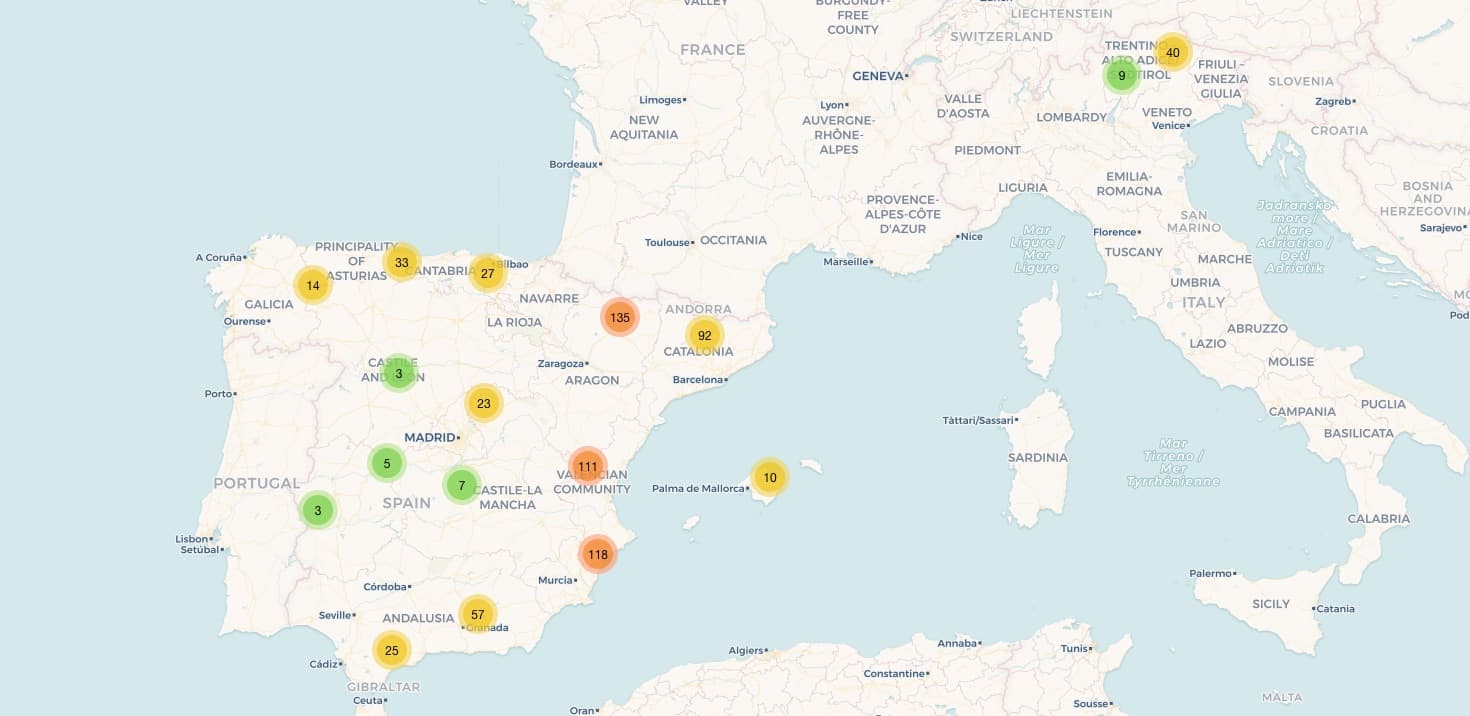
Your whole travel map in one place
Get inspired by new places around the world and find the ones worth the journey
Frequently asked questions
How long does a visit to the Archaeological Museum of Córdoba take?
About two hours for the full route, which runs through three levels and ends below ground at the Roman theatre.Can you see the Roman theatre inside the museum?
Yes. The lowest level of the museum is below ground and passes over the excavated remains of the Roman theatre on the site.Do you have to pay to get in?
Entry is free for residents of European Union countries. Adults from outside the EU pay a small fee.Is there information in English?
Some labels are translated into English, but many are not, and most only identify the object. A QR-code audio commentary and the Route Proposal guide on the museum's official website add more context.Is the museum wheelchair accessible?
The entrance and a toilet are wheelchair accessible. There is no wheelchair-accessible parking at the museum.