The Archaeological Museum of Granada was founded in 1879 and moved in the 20th century to the Castril Palace, a 16th-century mansion in the Albaicín district beside the Darro river. The palace has a Renaissance patio and a façade dated 1593. Its halls run in order from the Palaeolithic and the process of hominization through the Neolithic and Bronze Age, the colonisations and Hispano-Roman peoples, Roman and Late Roman times, the Visigothic and Mozarab period, to the Western Middle Ages and Hispano-Muslim archaeology.
Archaeological Museum of Granada
Local name: Museo Arqueológico y Etnológico de Granada

Archaeology museum in a 16th-century palace on the Darro, with finds from the Palaeolithic to the Hispano-Muslim period
- Entrance
- Free for European Union citizens; visitors from outside the EU pay an entry fee.
- Accessibility
- Wheelchair-accessible toilet inside; no wheelchair-accessible parking.
- Parking
- No public parking at the museum; the two car parks mapped about 375–430 m away are private. Paid garage parking only.
- Difficulty
- None: the entrance opens onto Carrera del Darro, the street along the river.
- Transport
- Bus stops Carrera del Darro 33 – Bañuelo (about 100 m) and Paseo del Padre Manjón – Frente a 1 (about 140 m).
- Hours
- Tuesday–Saturday 9:00–20:30; Sunday 9:00–15:00; closed Monday.
- Address
- Carrera del Darro, 41, 43, Albaicín, 18010 Granada, Spain
What makes it special
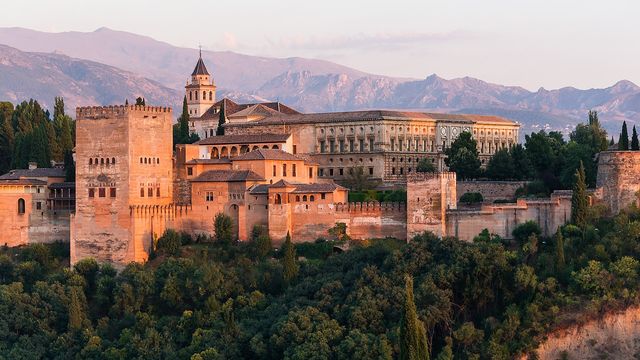
The Alhambra stands on the hill across the Darro, and the view of it from the building is reason enough to step inside. The building is the Castril Palace, a 16th-century mansion with a façade dated 1593, set around a Renaissance patio.
The collection walks through Granada's past hall by hall. Sculptures, mosaics, coins, jewellery and household objects carry the story from the Palaeolithic through the Roman and Visigothic centuries to the Hispano-Muslim period, and the astrolabes are worth finding. It is a compact museum, and that is its use. Fifteen minutes to half an hour here gives context to everything else on a walk along the river.
Good to know
- Closed on Mondays, and on Sundays it shuts in the early afternoon.
- A visit takes 15 to 30 minutes, short enough to fit into a walk along the Darro.
- Toilets are inside, including a wheelchair-accessible one.
- There is no public parking at the door: the car parks nearby are private, so come on foot or by bus.
Getting there
Carrera del Darro follows the river upstream from Plaza Nueva, with old house fronts on one side, the water on the other and the Alhambra above on the far bank. The museum opens straight onto it.
Two bus stops are close by: Carrera del Darro 33 – Bañuelo about 100 m away, and Paseo del Padre Manjón – Frente a 1 about 140 m away. A car is little help here. The two car parks mapped about 375–430 m away are private, and the parking that exists is in paid garages, which leaves a walk at the end.
Best time to visit
Best: Tuesday to Saturday, at any time of day. Avoid: Monday and Sunday afternoon.
The museum is closed on Mondays and shuts early on Sundays, while on the other days it stays open into the evening; as an indoor stop it also earns its place on a rainy day in the Albaicín.
Things to do nearby
All tours in Granada on GetYourGuide
Paid links: booking through them supports YowJourney.
Sun & daylight
Nearby Places

Similar Places
Archaeological Museum of Granada on the map
Get directions
Your whole travel map in one place
Get inspired by new places around the world and find the ones worth the journey
Frequently asked questions
Is the Archaeological Museum of Granada free?
Entry is free for citizens of the European Union. Visitors from outside the EU pay an entry fee.How long does a visit take?
Fifteen minutes to half an hour.Can you see the Alhambra from the museum?
Yes. The museum stands beside the Darro, and the building looks across the river to the Alhambra on its hill.What periods does the collection cover?
The halls run from the Palaeolithic and the process of hominization through the Neolithic, Bronze Age, Hispano-Roman and Roman times, the Visigothic and Mozarab period, to the Western Middle Ages and Hispano-Muslim archaeology.When is the museum closed?
All day on Mondays. On Sundays it closes in the afternoon.