El Bollullo Beach lies on the north coast of Tenerife, in the municipality of La Orotava, below cliffs near El Rincón. It is a beach of black volcanic sand facing the open Atlantic, and big waves are the norm here. The width of the sand shifts with the tides and the seasons; at times large parts of it disappear under the sea. The last stretch to the beach is on foot.
El Bollullo Beach
Local name: Playa El Bollullo
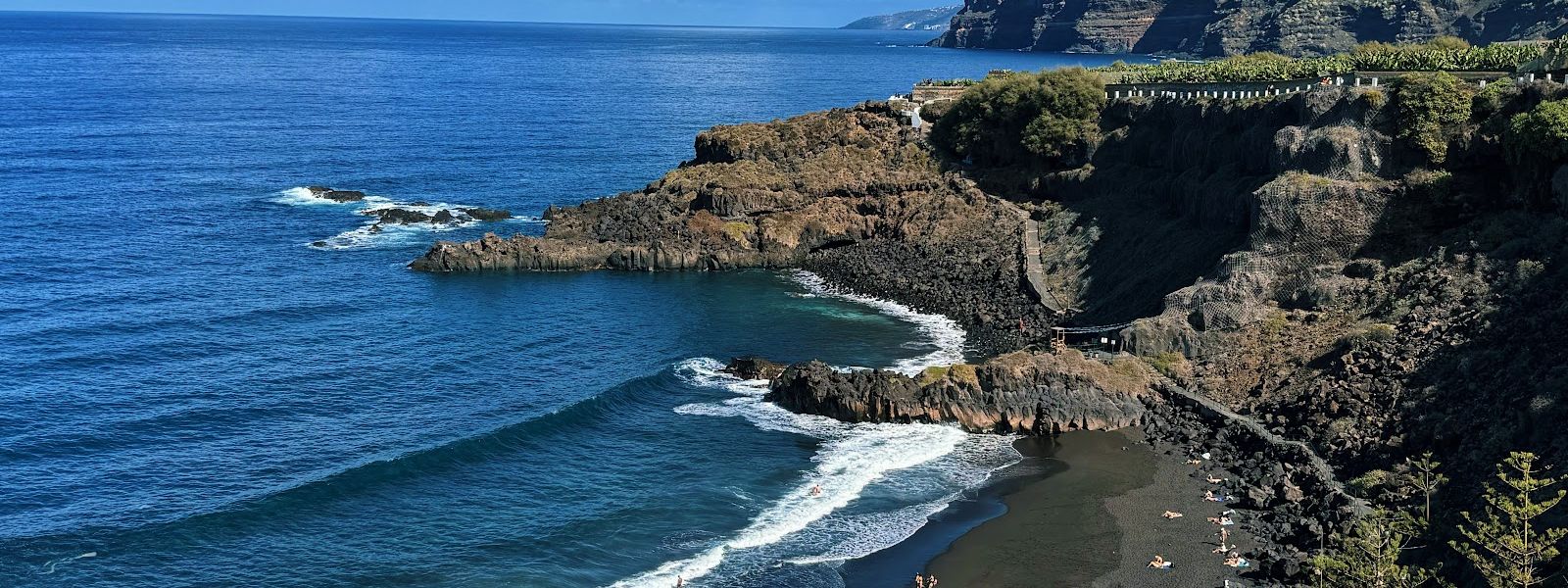
Black volcanic sand beach under cliffs, open to strong Atlantic waves and reached on foot.
- Entrance
- Free; there is no ticket.
- Accessibility
- Reaching the sand means walking over hilly ground with climbs and descents, which is hard going for anyone with limited mobility.
- Parking
- Paid car parks about 90 and 105 m away in a straight line, one on a dirt surface; plenty more parking about 1.5 km away, with a hilly walk in.
- Difficulty
- A bit of a trek: from the parking about 1.5 km away the route runs up and down hills, and the way back includes a climb.
- Transport
- Bus stop El Rincón (4835), about 430 m away in a straight line.
- Advance booking
- Not needed.
What makes it special
The waves set the mood here. Big Atlantic surf breaks almost constantly on a shore of soft black volcanic sand, with dark cliffs rising behind it, and the sound fills the whole bay.
The beach never looks the same twice. Depending on the tide and the time of year, large parts of the sand can vanish under the sea, and on other visits there is room to spread out. In the afternoon the cliffs throw natural shade across part of the beach. In the evening it turns into a sunset spot, quieter than the island's busier resort beaches. Surfers come for the swell; everyone else sits on the sand and watches it.
Good to know
- Check the tide before you go: it decides how much sand there is and what the swimming is like.
- Free toilets stand close to the beach, but there is no drinking-water point nearby, so bring your own.
- The walk in climbs and drops, and the way back includes an uphill stretch. Wear shoes you can walk in.
- The surf reaches well up the sand. Keep phones and watches away from the water's edge.
- The cliffs give some natural shade in the afternoon; bring sun cover for the rest of the day.
Getting there
Everyone finishes on foot: the beach sits at the bottom of the cliffs, and the last stretch is a walk down to the sand.
The nearest car parks are about 90 and 105 m away in a straight line; one of them has a dirt surface. There is plenty more parking about 1.5 km away, and from there the walk runs up and down hills, a bit of a trek each way, with a climb on the return.
By bus, the nearest stop is El Rincón, about 430 m away in a straight line.
Best time to visit
Best: late afternoon into sunset, at lower tide.
Avoid: high tide if you want room on the sand, and days of heavy swell if you mean to swim.
The afternoon brings shade from the cliffs and the evening brings the sunset, while the tide decides how much beach there is to sit on and how rough the water is.
Sun & daylight
Nearby Places


Similar Places
El Bollullo Beach on the map
Big Atlantic waves break here most of the time and can knock you over and pull you out: swim only when the sea is calm and never turn your back on it. Keep away from the base of the cliffs, where rock can fall.
Get directions

Your whole travel map in one place
Get inspired by new places around the world and find the ones worth the journey
Frequently asked questions
Can you swim at El Bollullo Beach?
Big waves are the norm, and the tide changes both the size of the beach and the swimming conditions. Check the tide before you go and stay out of the water when the surf is heavy.Where do you park for El Bollullo Beach?
Paid car parks lie about 90 and 105 m from the beach in a straight line. There is also plenty of parking about 1.5 km away, with a walk up and down hills from there.Can you get to El Bollullo Beach by bus?
The nearest bus stop is El Rincón (stop 4835), about 430 m away in a straight line. The last stretch down to the sand is on foot.Are there toilets at El Bollullo Beach?
Yes, free toilets stand close to the beach. There is no drinking-water point nearby, so bring water with you.Is the beach always the same size?
No. The tides and the seasons reshape it, and at times large parts of the sand disappear under the sea. Check the tide before you go.