Es Portitxol is a small bay on the north coast of Ibiza, in the municipality of Sant Joan de Labritja. Its beach is pebbles and larger stones, and a row of fishermen's boathouses stands along the shore. Cars stop at a car park at the end of the road; from there the approach is a walk of 2.5–3 km down to the water and the same back up. The bay is known for its clear water and its quiet.
Es Portitxol

Pebble-and-stone bay lined with fishermen's boathouses, at the foot of a 2.5–3 km walk downhill
- Entrance
- Free; there is no ticket.
- Accessibility
- Not accessible for wheelchairs or anyone with limited mobility: the bay is reached only by a 2.5–3 km walk on a damaged road and rough paths, and the beach is stones.
- Parking
- Car park at the end of the road, about 2 km from the bay in a straight line; one of the two car parks there is for customers only.
- Difficulty
- Demanding: 2.5–3 km each way on a damaged road and coastal paths, downhill in and uphill out. The climb back takes a fit walker around 40 minutes. Wear proper shoes.
- Transport
- The nearest bus stops, Cafeteria Es Port and Hotel Galeón, are about 3.6–3.8 km away in a straight line.
- Advance booking
- No booking needed.
- Hours
- Open at all times. Plan the walk so you are back at the car park before dark.
- Address
- Es Portitxol, 07815, Balearic Islands, Spain
What makes it special
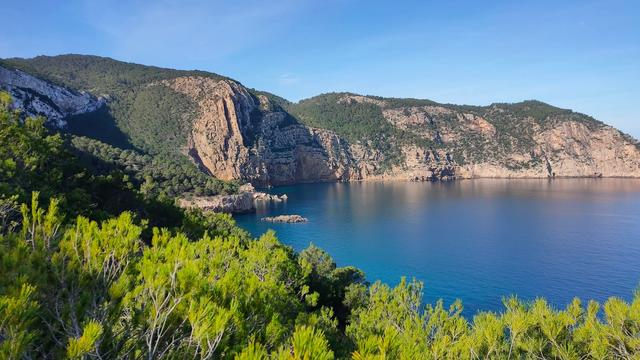
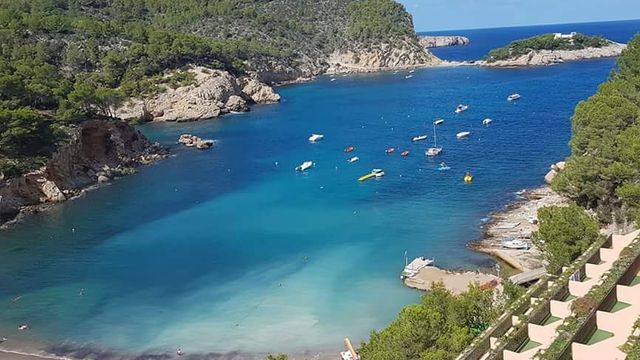
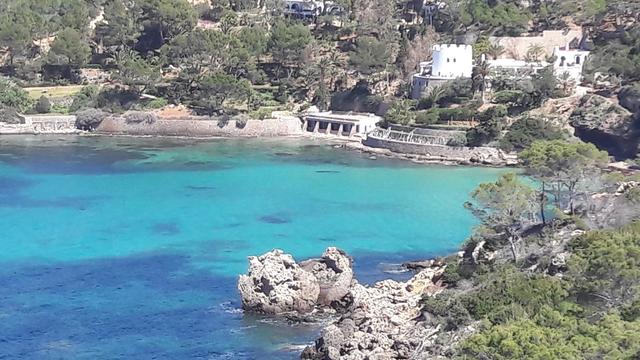
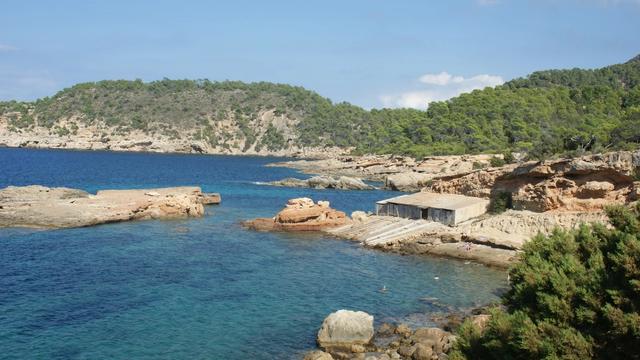
At the bottom of the path the bay opens out in a horseshoe of rock, and the first thing you see is the row of boathouses along the shore, their ramps running down to the stones. They give the place the feel of an old working harbour that time has left alone.
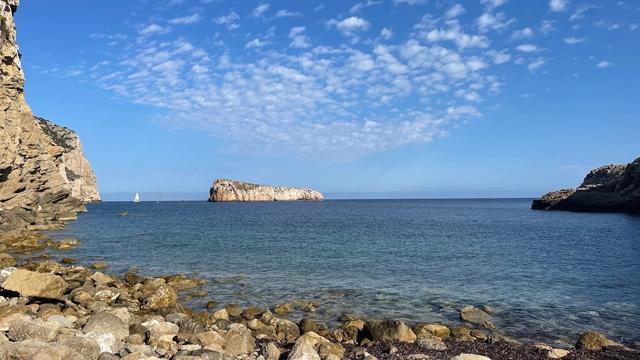
The water is crystal clear over a bottom of rock and stone. The beach itself is pebbles and bigger stones, and the bay is quiet and calm.
The walk is part of it. The track follows the coastline and drops slowly towards the sea, with views over the water most of the way down, and the bay at the end tops them.
Good to know
- No toilets and no drinking water at the bay, and none nearby. Carry all the water you need, including for the climb out.
- The walk is 2.5–3 km each way, and the return is all uphill. It is not suited to small children.
- Flip-flops are not up to the track or the stones on the beach. Ordinary trainers are enough in dry weather.
- Coming by boat: the seabed is rock, which makes anchoring hard.
Getting there
You arrive by car at the car park at the end of the road, about 2 km from the bay in a straight line. Everything after that is on foot.
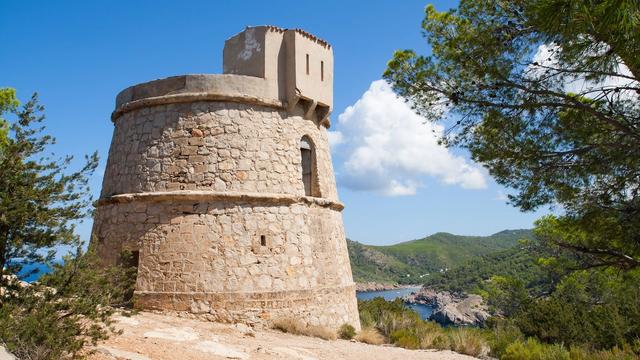
Start down the damaged road that carries on from the car park and keep left at the one or two junctions. The track runs along the coastline and drops slowly towards the water until it reaches a ruin. From the ruin several paths go down, and they all lead to the bay. The walk is 2.5–3 km each way.
The way back is the hard part: the same distance, uphill. A fit walker takes around 40 minutes for the climb, so leave yourself time and daylight for it.
Best time to visit
Best: a dry, mild day outside high summer, setting off in the morning. Avoid: the middle of a hot summer day, and days when a northerly swell is running.
The walk out is a 2.5–3 km climb with no water at the bottom, which is far harder in heat, and an open north-coast bay takes the waves when the wind comes from the north.
Es Portitxol on the map
The way out is a 2.5–3 km climb with no water at the bay; in summer heat carry plenty and avoid midday. The shore is rock and stones and takes northerly swell, so stay out of the water when waves are breaking.
Get directions
Your whole travel map in one place
Get inspired by new places around the world and find the ones worth the journey
Frequently asked questions
How long is the walk to Es Portitxol?
From the car park at the end of the road it is 2.5–3 km down to the bay and the same back up. The climb back takes a fit walker around 40 minutes.Is Es Portitxol suitable for children?
Not for small children. The walk is long and the return is uphill all the way, and the beach is pebbles and larger stones.What is the beach like?
Pebbles and bigger stones, with clear water and a row of fishermen's boathouses along the shore. There is no sand.Are there toilets or drinking water?
No. There are no toilets and no drinking water at the bay or nearby, so bring everything you need.Can you anchor a boat in the bay?
The seabed is rock, which makes anchoring hard.