Guayedra Beach is a natural beach of black sand and rock at the mouth of the Guayedra valley, on the west coast of Gran Canaria near Agaete. Mountains rise behind it and there are no facilities. It is known for its undeveloped shore, open sea views, heavy Atlantic surf and the large Gran Canaria lizards that live among the rocks. After the Castilian conquest, the lands of Guayedra were granted to Fernando Guanarteme, the last native ruler of Gáldar.
Guayedra Beach
Local name: Playa de Guayedra
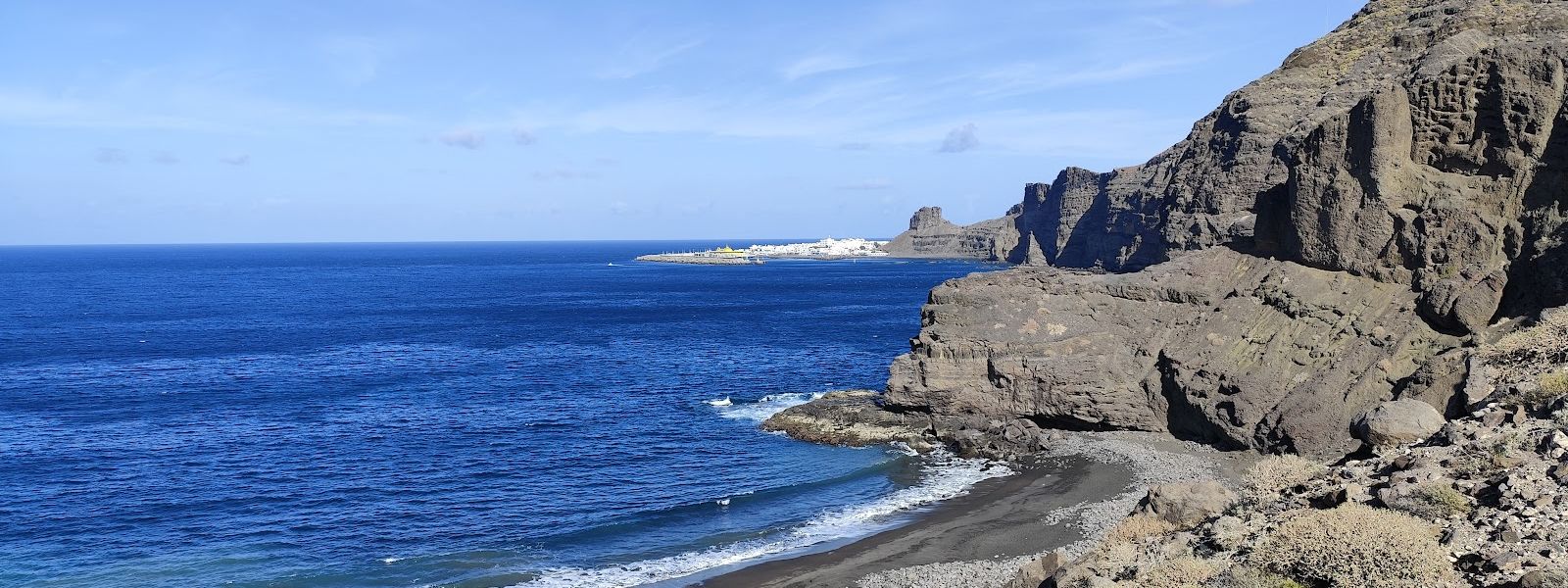
Wild beach of black sand and stones under the mountains near Agaete, reached by a gravel track and a walk down.
- Entrance
- Free; it is an open beach with no ticket.
- Accessibility
- Not suitable for wheelchairs: the beach is reached only on foot down a slightly steep path, and the shore is stones and rock.
- Parking
- Free car park about 290 m away in a straight line; cars can also stop at the mirador on the track above the beach. No parking at the end of the track.
- Difficulty
- A drive down a gravel track, then a slightly steep walk of under ten to about twenty minutes to the beach, and the same climb back. Sturdy shoes needed.
- Transport
- Guayedra bus stop, about 950 m away in a straight line.
- Advance booking
- Not needed.
- Hours
- Open at any time.
What makes it special
When a wave draws back off Guayedra, you hear the stones on the bottom rolling with it. The beach is black sand, dark as soot, broken up by stones and rock, and the mountains close in so steeply behind it that the only open side is the sea. Nothing has been built here.
Lizards, some of them big, run between the boulders and head straight for any food left out; they are harmless. The coast faces west, and on a calm evening the sun goes down into the Atlantic straight in front of you.
Good to know
- No toilets and no drinking water at the beach or nearby: bring what you need.
- The ground is stones and rock with black sand between them. Wear proper shoes for the walk down; flip-flops will not do.
- The lizards come for food. Keep it packed away.
- Swim only on a calm day. With the surf up, stay out of the water and off the rock ledge at the side of the beach.
Getting there
On the main road, the turn-off is where the bus-stop sign and the rubbish bins stand. A gravel track runs down from there; its surface ranges from well kept to stony, sandy and muddy, so drive it with care. Park at the mirador, or drive on to a lower parking area. Do not go to the very end of the track: there is no parking there and little room to turn round.
From where you leave the car, the path down to the beach is slightly steep and takes from under ten minutes to about twenty. A free car park sits about 290 m away in a straight line. Without a car, the Guayedra bus stop is about 950 m away, and the beach can be walked to from Agaete in about an hour.
Best time to visit
Best: a calm, clear day, staying on through the late afternoon to sunset.
Avoid: days when a big swell is running.
The beach faces the open Atlantic to the west, so the evening light falls straight on it, while heavy surf makes the water and the rocks dangerous and leaves little to do but watch.
Sun & daylight
Nearby Places
Similar Places
Guayedra Beach on the map
Big waves break straight onto the stones and can sweep anyone on the rock ledge at the side of the beach into the sea. Stay off the rocks when the sea is up and never turn your back on the waves.
Get directions

Your whole travel map in one place
Get inspired by new places around the world and find the ones worth the journey
Frequently asked questions
Can you swim at Guayedra Beach?
Only when the sea is calm. Waves here are often big, the bottom is stony, and with the surf running the water is best left alone.Where do you park for Guayedra Beach?
At the mirador on the gravel track, or at a lower parking area further down. There is also a free car park about 290 m away in a straight line. Do not drive to the end of the track: there is no parking there and little room to turn.Is Guayedra Beach sandy?
It is black sand mixed with stones and rock. Bring shoes that grip; flip-flops are no good on the path down.Can you walk to Guayedra Beach from Agaete?
Yes. The walk from Agaete takes about an hour.Are there toilets or water at the beach?
No. There are no toilets and no drinking water at the beach or nearby, so bring water with you.