Dedo de Dios, or God's Finger, is a 30-metre sea stack in the Atlantic off Puerto de las Nieves, the coastal settlement of Agaete in north-west Gran Canaria. It formed from basalt on the oldest stretch of the island, which began forming around 14 million years ago. The name is credited to the author Domingo Doreste. Its thin upper tip broke off and fell into the sea during Tropical Storm Delta in November 2005, and in March 2006 an expert commission advised against rebuilding it.
Dedo de Dios Rock
Local name: Dedo de Dios
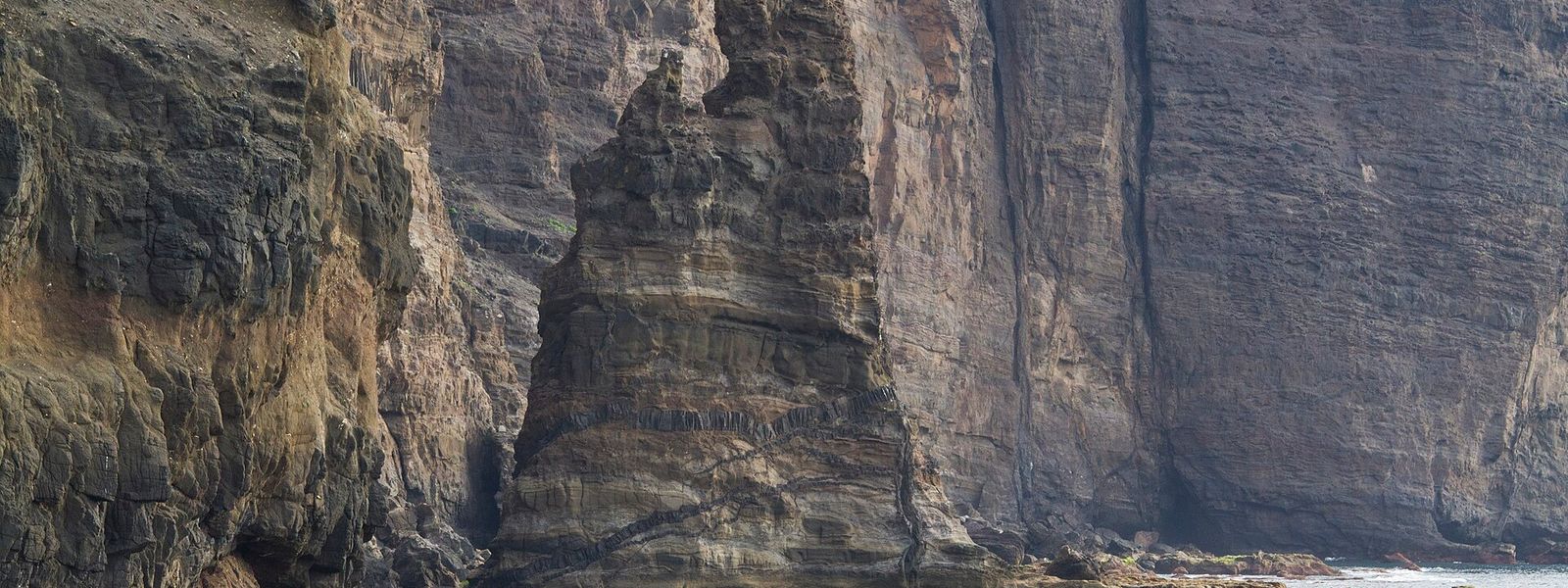
Basalt sea stack off Agaete's harbour, backed by dark cliffs and missing the slender tip a 2005 storm broke off.
- Entrance
- Free. There is no ticket: the rock is viewed from the beach and the port.
- Parking
- Two car parks, about 75 m and 200 m from the rock in a straight line.
- Difficulty
- None to speak of: the rock is viewed from the beach and the port, with car parks about 75 m and 200 m away.
- Transport
- Bus stop Puerto de las Nieves, about 430 m away; a nearer stop lies about 80 m away.
- Advance booking
- Not needed.
- Hours
- Open at any time; the rock is viewed from the shore.
What makes it special
From the beach at Puerto de las Nieves the rock catches the eye at once: a dark column of basalt standing just off the foot of the cliffs, with the Atlantic working around its base.
Until November 2005 it ended in a thin, crooked tip, and that tip is what gave it the name God's Finger. Tropical Storm Delta snapped it into the sea. What stands now is the lower part, still close against the cliff. Agaete left it that way: in March 2006 an expert commission advised against reconstruction and called for conserving what was left.
The ground here is the oldest on Gran Canaria, begun around 14 million years ago, and the stack itself took shape from the local basalt over 200,000 to 300,000 years. The rock has inspired many artists. In the evening, with the sun dropping into the sea and the cliffs behind it taking the last light, it is at its sharpest.
Good to know
- The slender tip that gave the rock its name fell into the sea in November 2005; what you see today is the lower part beside the cliff.
- It is a sea stack, standing in the water. You see it from the beach and the port at Puerto de las Nieves.
- There is no drinking-water point nearby, so bring your own.
- The fish restaurants at the port draw long queues at lunchtime, so plan around them if you want to eat with the view.
Getting there
Dedo de Dios is seen from Puerto de las Nieves, the harbour settlement of Agaete. Drivers have two car parks close by, about 75 m and 200 m from the rock in a straight line. By bus, the Puerto de las Nieves stop is about 430 m away, and a nearer stop sits about 80 m away.
From the beach and the port the rock is in full view, so there is no walk to speak of once you reach the waterfront. Free public toilets are about 230 m away.
Best time to visit
Best: late afternoon into sunset. The coast here faces west, so the cliffs behind the rock take the evening light, and the stack stays clearly visible as the sun goes down.
Avoid: lunchtime, if you also plan to eat at the port. The queues for the waterfront fish restaurants are at their longest then.
Sun & daylight
Nearby Places
Similar Places
Dedo de Dios Rock on the map
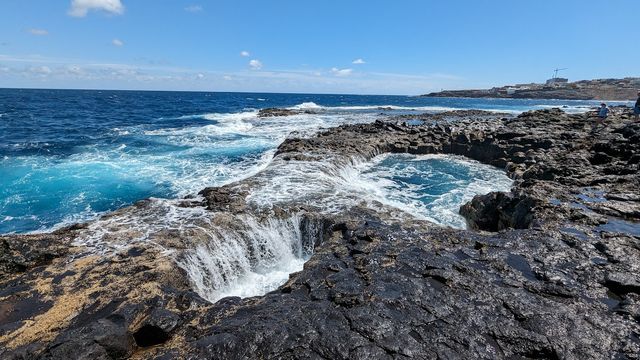
The breakwater and rocky shore at Puerto de las Nieves face the open Atlantic, and swell can wash across them without warning. Keep back from the edge when the sea is up and never turn your back on the waves.
Get directions

Your whole travel map in one place
Get inspired by new places around the world and find the ones worth the journey
Frequently asked questions
Is God's Finger still there?
Only in part. The thin tip broke off and fell into the sea during Tropical Storm Delta in November 2005. The lower part of the stack still stands beside the cliff, and in March 2006 an expert commission advised against rebuilding it.Where can you see Dedo de Dios from?
From the beach and the port at Puerto de las Nieves in Agaete. The rock stands in the sea, in full view from both.Is there parking near Dedo de Dios?
Yes. There are two car parks, about 75 m and 200 m from the rock in a straight line.Can you get to Dedo de Dios by bus?
Yes. The Puerto de las Nieves stop is about 430 m away, and a nearer stop is about 80 m away.Who named it God's Finger?
The name is credited to the author Domingo Doreste. The rock has inspired many artists since.