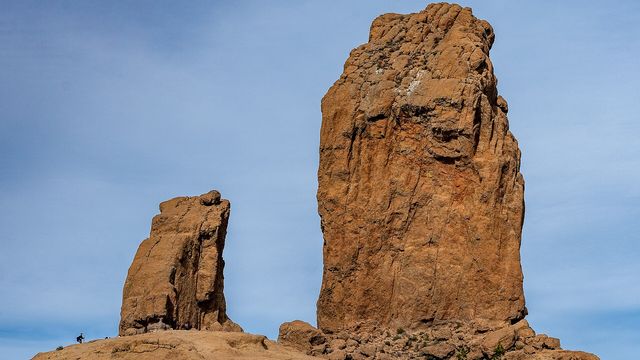
Roque Bentayga is a natural rock pinnacle in the municipality of Tejeda, at the heart of Gran Canaria. It stands 1,414 metres above sea level inside the Tejeda caldera, within Nublo Rural Park (Parque Rural del Nublo). It is a natural monument and an archaeological site: on the eastern side of its base lies the almogarén, a place of worship built by the island's aboriginal people, and the cave settlements of Cuevas del Rey and Roque Camello lie nearby. A visitor centre with a museum stands below the rock.
Roque Bentayga
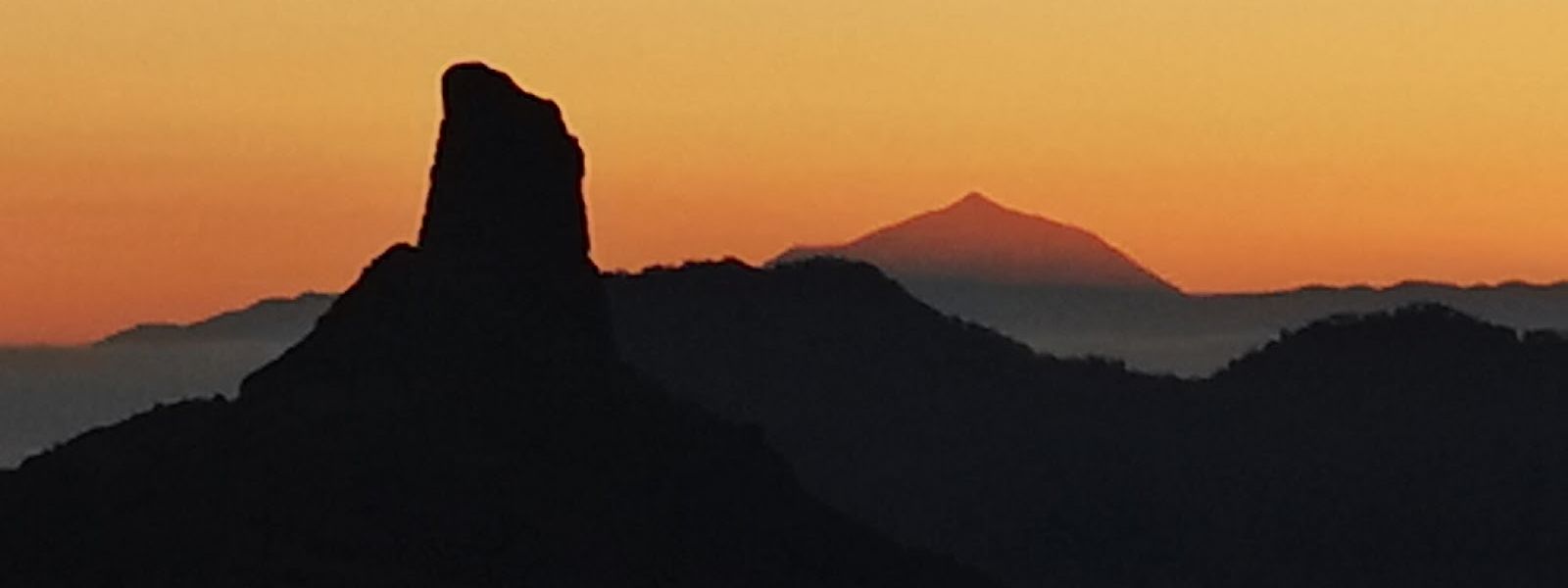
Rock pinnacle rising to 1,414 m in the Tejeda caldera, with an aboriginal place of worship at its foot
- Entrance
- Free, including the visitor centre.
- Accessibility
- Not wheelchair accessible: the entrance has no wheelchair access, and the path to the rock is rocky and narrow in places.
- Parking
- Free. Two car parks about 400 m from the rock in a straight line, one of them next to the visitor centre.
- Difficulty
- Low to medium: a well-kept but rocky path, narrow in places; 30–40 minutes up and back.
- Transport
- Nearest bus stop: Las Moradas, about 1.2 km away in a straight line.
- Hours
- Open daily 10:00–17:00; the hours are strictly kept.
- Address
- 35368 Tejeda, Las Palmas, Spain
What makes it special
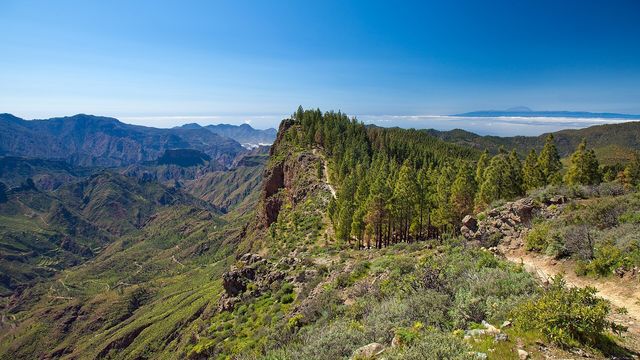
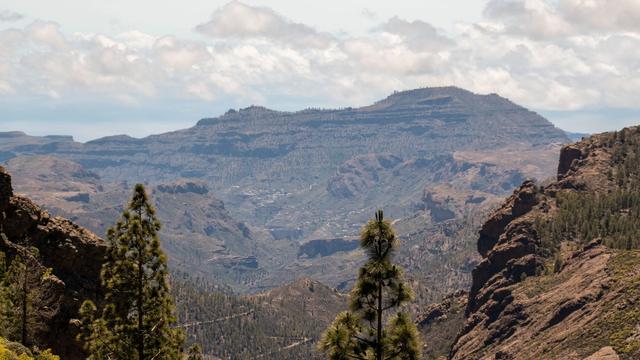
From the path up to the rock the whole Tejeda caldera opens out: the Barranco de Tejeda falling away below, Roque Nublo in plain view and, on a clear day, the sea on the horizon. Roque Bentayga stands in the middle of it, 1,414 metres above sea level.
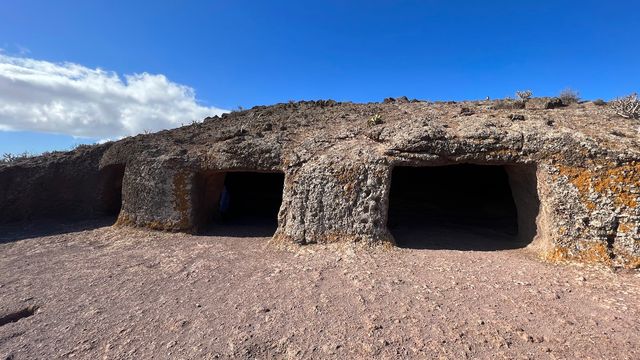
The rock was sacred to the island's aboriginal people. The almogarén, their place of worship, sits on the eastern side of the base, and a stone wall runs along its east and south sides, read either as the edge of the sacred ground or as a defensive bastion. The most widespread reading of the name is "the place that holds", an axis of the world. Nearby, the settlements of Cuevas del Rey and Roque Camello count around a hundred caves, with rooms, burials and silos.
Roque Nublo across the caldera draws the crowds. Bentayga stays quiet.
Good to know
- The opening hours are kept strictly: arrive with enough time for the walk and the visitor centre.
- The visitor centre has a museum on the island's first inhabitants, a film about the rock with an English version, and toilets.
- The road up is narrow, with wide views over the caldera.
- There is no drinking water near the rock. Bring your own.
- The entrance is not wheelchair accessible, and the path to the rock is rocky and narrow in places.
Getting there
From Tejeda the drive takes about 15 minutes, the last stretch on a narrow road with the caldera opening up beside it. Two free car parks lie about 400 m from the rock in a straight line, one of them next to the visitor centre.
From there a rocky, well-kept path climbs towards the rock, passing information boards on the almogarén and the rampart. It narrows in places. The walk up and back takes 30–40 minutes.
The nearest bus stop, Las Moradas, is about 1.2 km away in a straight line.
Best time to visit
Best: a clear morning, soon after opening.
Avoid: the last hour before closing, and days when low cloud sits over the caldera.
The view across to Roque Nublo and the sea is half the reason to come and cloud takes it away, while the strictly kept closing time leaves no slack for the walk and the visitor centre.
Sun & daylight
Nearby Places
Similar Places
Featured in our guides
Roque Bentayga on the map
The path to the rock is narrow and rocky, with steep drops beside it in places. Wear shoes with grip and keep to the path.
Get directions

Your whole travel map in one place
Get inspired by new places around the world and find the ones worth the journey
Frequently asked questions
How long does the walk to Roque Bentayga take?
Allow 30–40 minutes up and back on a well-kept, rocky path that narrows in places, plus time for the visitor centre.Can you see Roque Nublo from Roque Bentayga?
Yes. Roque Nublo is in view across the caldera, along with the Barranco de Tejeda and, on a clear day, the sea.What is the almogarén at Roque Bentayga?
A place of worship built by the island's aboriginal people on the eastern side of the base of the rock. A stone wall runs along the base on the east and south sides, read either as the edge of the sacred ground or as a defensive bastion.Is Roque Bentayga crowded?
It stays quiet. Roque Nublo, across the caldera, is the one that draws the crowds.What does the name Bentayga mean?
The origin is debated. The most widespread reading is "the place that holds", in line with the aboriginal belief that the rock was an axis of the world; another reads it as "sacred mountain".