Los Azulejos de Veneguera is a stretch of mountainside along the GC-200 in Mogán, on Gran Canaria, where the volcanic rock is banded yellow, orange, purple and green. The name means glazed tiles, which the green and blue-green layers resemble. The colours come from hot, mineral-rich water that altered the rock long after the eruptions laid it down. The area is a nature preserve, and hiking trails lead into the hills around it.
Los Azulejos de Veneguera Coloured Rocks
Local name: Los Azulejos de Veneguera
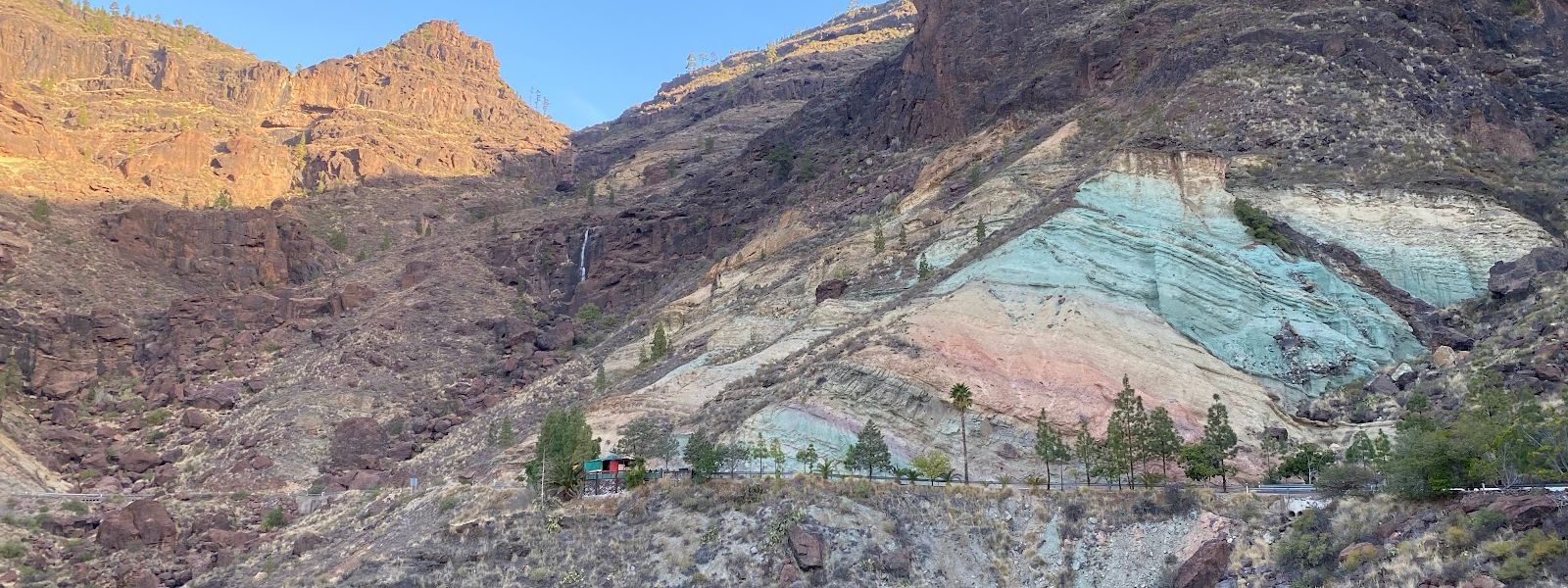
Roadside hillside of soft volcanic rock streaked yellow, orange, purple and green, on the GC-200 in Mogán.
- Entrance
- Free. There is no ticket; the rocks stand beside a public road.
- Accessibility
- Not wheelchair accessible. The colours can be seen from the roadside; reaching the viewpoints means walking along the road verge.
- Parking
- Two free car parks about 80 and 140 m from the rocks, one asphalt; more space by the roadside shop.
- Difficulty
- None for the view: park about 80–140 m away and walk along the road verge. The trails into the surrounding hills involve climbing.
- Transport
- Bus from Playa de Mogán to the Los Azulejos de Veneguera stop, about 100 m away.
- Advance booking
- Not needed.
- Hours
- Open at any time.
- Address
- GC-200, 35149 Mogán, Las Palmas, Spain
What makes it special
The colours reach you through the car window: whole slopes of soft rock in yellow, orange, purple and green, right at the edge of the GC-200. Walk back along the road and the full spread of bands fits into one frame. Traffic is light enough to stop, look and choose your angle. People do scramble onto the rocks, but the formation reads better from further out.
After rain, waterfalls run down the slopes behind, white water above the coloured stone. For anyone who wants more than a roadside stop, trails climb into the hills, and a guidepost stands about 330 m away.
Good to know
- There are no toilets and no drinking water at the rocks, and none nearby. Bring water.
- The road is the viewpoint: walk back along the GC-200 for the wider view, keeping to the verge.
- The rock is soft and crumbles. Climbing it scars the colours and the footing gives way.
- The site is not wheelchair accessible; the colours can be seen from the roadside.
- A roadside shop stands by the rocks, and you can park there.
Getting there
You arrive on the GC-200, the winding mountain road through the west of Mogán. Two car parks sit about 80 and 140 m from the rocks, one of them asphalt, and there is more room by the roadside shop. From there it is a walk along the road edge to whichever angle you want; traffic is light.
Without a car, take the bus from Playa de Mogán. It stops at Los Azulejos de Veneguera, about 100 m from the rocks, with a stop on each side of the road.
Best time to visit
Best: early morning, late afternoon, or the day after rain.
Low sun brings out the bands of colour, and after rain water runs down the slopes behind the rocks.
Avoid: the middle of a hot day.
The roadside and the slopes are bare rock with no shade, and there is no water on site.
Sun & daylight
Nearby Places
Similar Places
Los Azulejos de Veneguera Coloured Rocks on the map
The coloured rock is soft and gives way underfoot, so stay off the slopes. Walking along the GC-200, keep to the verge and watch for cars coming round the bends.
Get directions

Your whole travel map in one place
Get inspired by new places around the world and find the ones worth the journey
Frequently asked questions
Can you reach Los Azulejos de Veneguera by bus?
Yes. A bus runs up from Playa de Mogán and stops at Los Azulejos de Veneguera, about 100 m from the rocks.Is there parking at Los Azulejos de Veneguera?
Yes. Two car parks sit about 80 and 140 m from the rocks, and there is more space by the roadside shop.Are there hiking trails at Los Azulejos de Veneguera?
Yes. Trails lead into the hills around the formation, and a guidepost stands about 330 m from the rocks.Are there toilets or drinking water?
No. There are no toilets and no drinking water at the rocks or nearby, so bring what you need.Should you climb the coloured rocks?
No. The rock is soft and crumbles underfoot. The formation is best seen from the road, walking a little way back from it.