Lobos Island is a volcanic island in the Canary Islands, two kilometres north of Fuerteventura and part of the municipality of La Oliva. It has been protected as the Parque Natural del Islote de Lobos since 1982 and is a special protection area for seabirds. The name comes from the monk seals, or sea wolves, hunted out after the Spanish conquest. The highest point is Montaña La Caldera at 127 metres; the Punta Martiño lighthouse (Faro de Punta Martiño) stands at the northern tip, and its keeper's family were the last permanent residents until 1968.
Lobos Island
Local name: Isla de Lobos
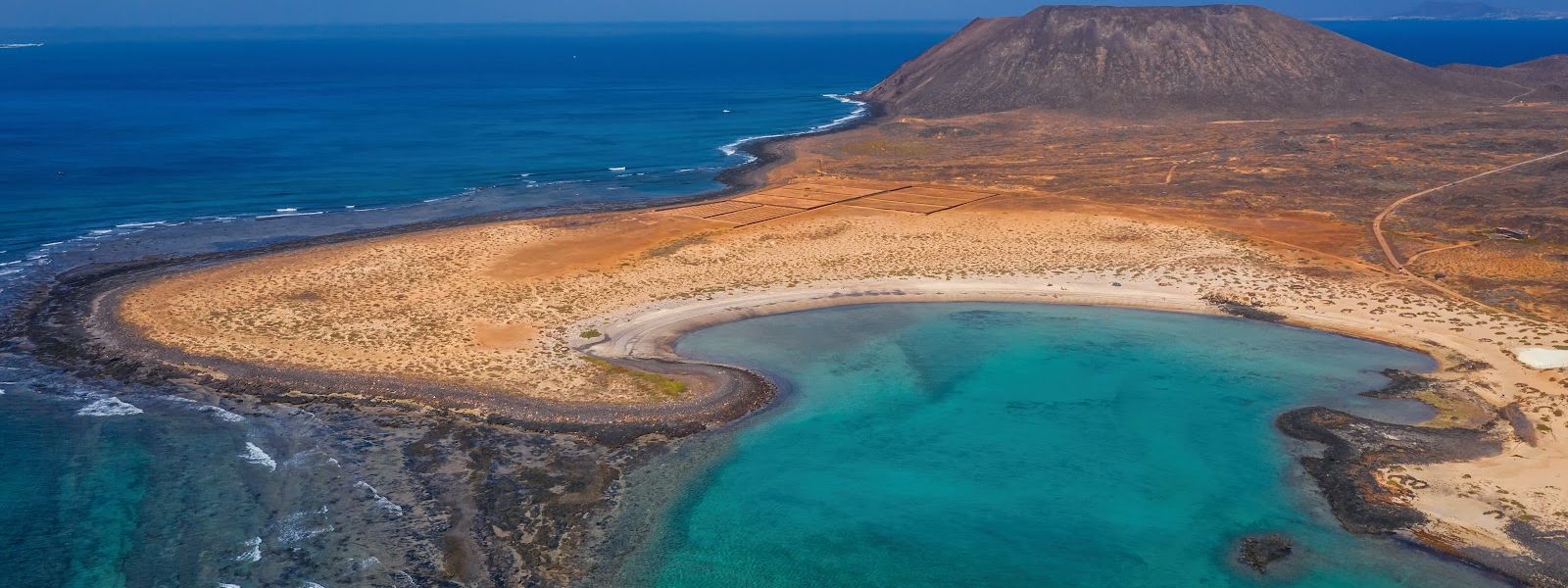
Uninhabited volcanic islet off Fuerteventura, with a crater summit, a lighthouse and a sheltered sandy lagoon.
- Entrance
- The ferry crossing from Corralejo is paid.
- Accessibility
- Everything beyond the jetty is reached on foot along walking trails over volcanic ground, with a climb to 127 metres at Montaña La Caldera; comfortable shoes are needed.
- Parking
- None on the island, which is reached only by boat; the car stays behind on Fuerteventura, in Corralejo.
- Difficulty
- Signed trails over open volcanic ground with no shade; the climb to the 127 m summit of Montaña La Caldera is manageable, and a full circuit with the lighthouse takes three and a half to four hours.
- Transport
- Ferry from Corralejo harbour, from the Líneas Romero terminal.
- Hours
- Ferries run from Corralejo during daylight hours; overnight stays are not allowed.
- Address
- Lobos Island, 35660, Spain
What makes it special
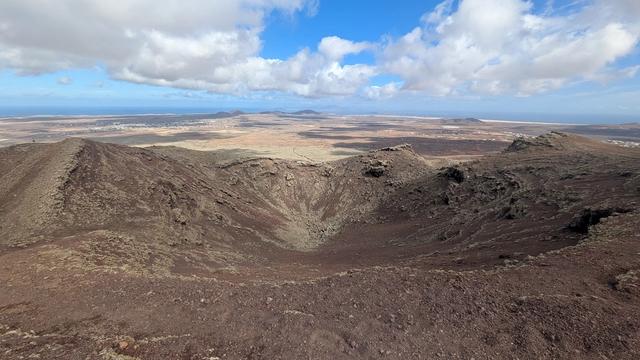
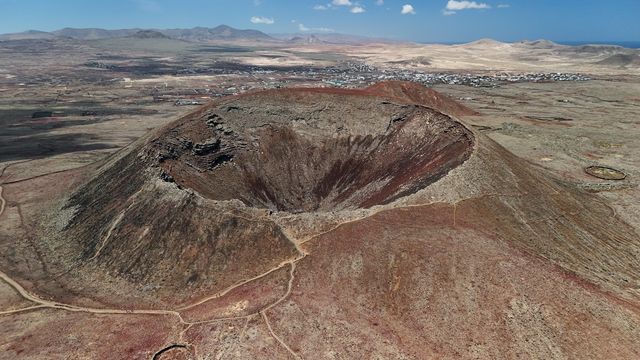
From the top of Montaña La Caldera the whole island lies open: the crater falling away to the sea on one side, lava ground running north towards the lighthouse, and across the strait the dunes of Corralejo and the long coast of Fuerteventura. The climb to 127 metres is manageable, and the view repays it.
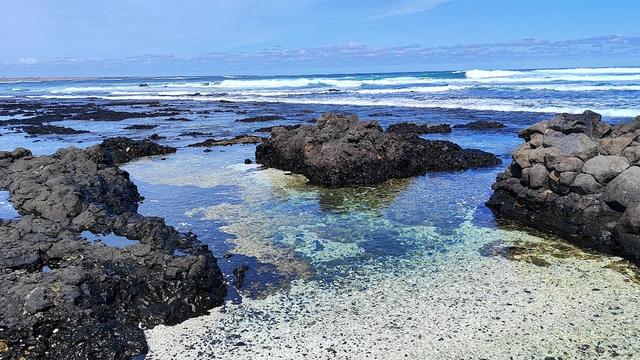
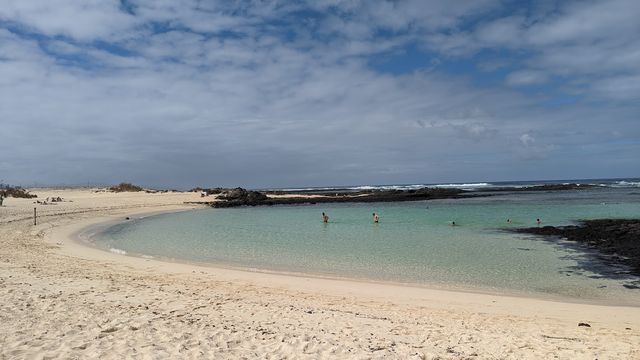
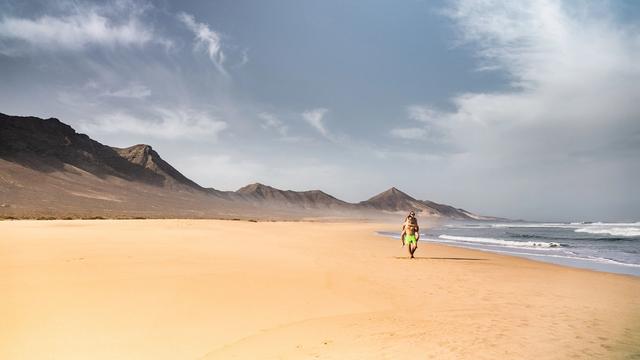
On the western shore, Playa de la Concha curls round a sheltered lagoon of pale sand and clear, calm water, with plenty of fish for snorkelling. Signed trails cross the lava to the Punta Martiño lighthouse, and the lighthouse end of the island is quiet.
The reserve protects seabirds — Cory's and little shearwaters nest on the cliffs — and more than 130 plants, among them a siempreviva found nowhere else. History runs deeper than it looks: Roman purple-dye makers camped here, and in 1405 Jean de Béthencourt used the island as a supply base for the conquest of Fuerteventura.
Good to know
- Food on the island is unreliable: the restaurant fills up and is not always open. Bring food and water for the whole day.
- Want lunch at the restaurant? Book it as soon as you step off the boat.
- There is no shade on the trails. A hat, sunscreen and comfortable shoes are essential.
- Walking the whole island, caldera and lighthouse included, takes three and a half to four hours; check the last boat back before you set off.
- Camping has been banned since 2007, so Lobos is a day trip only.
Getting there
Lobos is reached only by boat. Regular ferries cross from Corralejo harbour on the northern tip of Fuerteventura, and the ride is short: the island sits two kilometres offshore, clearly visible from the town's seafront. Hiking and snorkelling tours also run to the island.
Boats land at the jetty, and from there everything is on foot. Signed walking trails lead across the lava to the top of Montaña La Caldera and on to the Punta Martiño lighthouse at the northern tip, with Playa de la Concha the place to swim on the way back.
Best time to visit
Best: an early boat, with the walk to the caldera and the lighthouse done in the morning and the afternoon left for the water at Playa de la Concha.
Avoid: the long walk to the lighthouse in the middle of a summer day.
The island is bare volcanic ground with no shade anywhere on the trails, so the heat builds quickly once the sun is high.
Access & restrictions
Lobos is a natural park and a special protection area for birds, and the rules follow from that. Visitors may walk only on the signed trails; the rest of the island is closed off to protect the conservation areas and the seabirds nesting on the cliffs and rocks. Camping has been prohibited since 2007, so there is no staying overnight.
Things to do nearby
All tours in Fuerteventura on GetYourGuide
Paid links: booking through them supports YowJourney.
Sun & daylight
Nearby Places
Similar Places
Featured in our guides
Lobos Island on the map
There is no shade on the trails and no drinking water along them; carry water for the whole day, a hat and sunscreen. The path to the top of Montaña La Caldera runs along an unfenced crater rim — keep to the marked trail.
Get directions
Your whole travel map in one place
Get inspired by new places around the world and find the ones worth the journey
Frequently asked questions
How do you get to Lobos Island?
By ferry from Corralejo harbour in the north of Fuerteventura. The crossing is short, and boats run during daylight hours.How long do you need on Lobos?
Walking the whole island, including the climb to Montaña La Caldera and the Punta Martiño lighthouse, takes three and a half to four hours. Add time for swimming at Playa de la Concha.Can you stay overnight on Lobos?
No. Camping has been prohibited since 2007, so a visit is a day trip.Is there food on the island?
There is a restaurant, but it fills up and is not always open. Book lunch as soon as you land, and bring enough food and water for the whole day either way.Can you swim on Lobos?
Yes, at Playa de la Concha, a sheltered lagoon with a sandy beach and clear, calm water that is good for snorkelling.