Corralejo Natural Park covers more than 2,600 hectares in the municipality of La Oliva, in the north of Fuerteventura, and was declared a natural park in 1994. It protects a field of mobile dunes, the largest in the Canary Islands, which partly covers older fossil dunes, probably from the Upper Pleistocene. The sand is organic, formed from crushed mollusc shells and other marine organisms. After its white-sand beaches, the dunes are the island's main attraction.
Corralejo Natural Park
Local name: Parque Natural de Corralejo
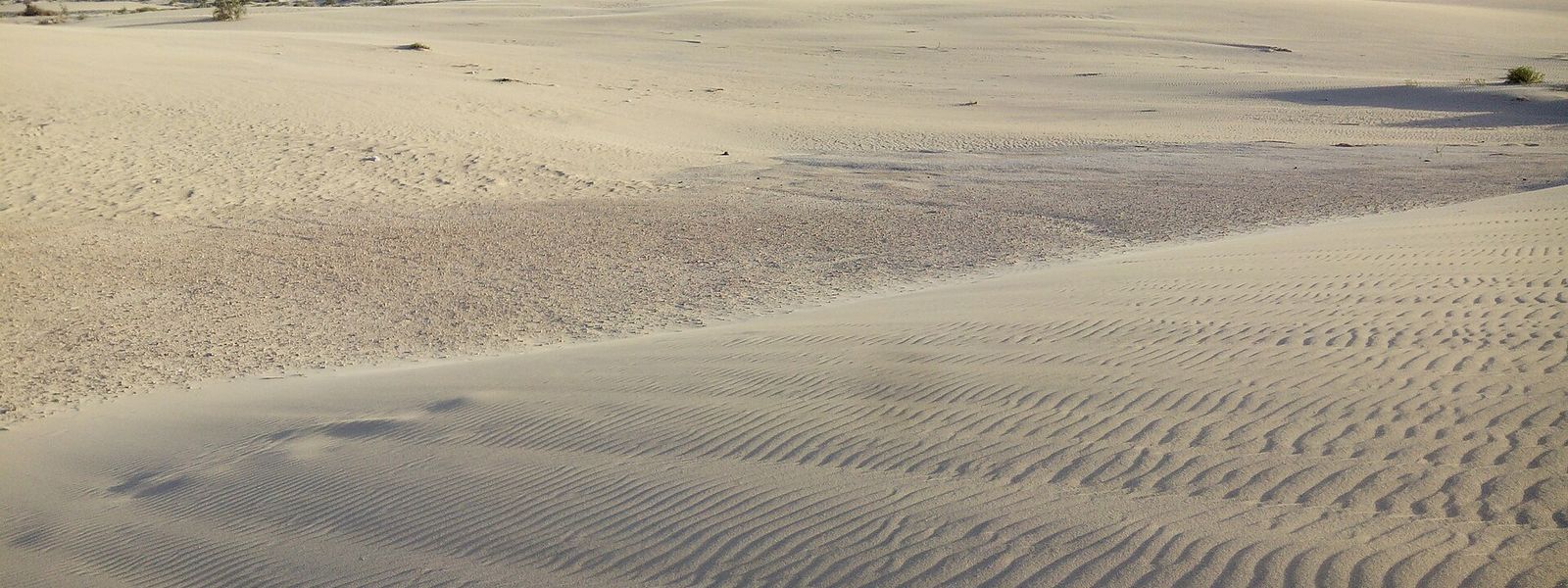
Protected field of shifting shell-sand dunes meeting white beaches in the north of Fuerteventura.
- Entrance
- There is no ticket; entry to the park is free.
- Accessibility
- The ground is loose sand throughout, heavy going for wheelchairs and pushchairs; the dunes can be seen from the road and the roadside parking.
- Parking
- Free parking along the roadside through the dunes, plus free and paid car parks.
- Difficulty
- Easy: park by the road and walk onto the sand; the dunes are easy to climb. Walking in from Corralejo town centre takes about an hour and a half each way.
- Transport
- Bus from the centre of Corralejo; Hotels Tres Islas stop, about 3.1 km away in a straight line.
- Advance booking
- No booking needed.
- Hours
- Open land crossed by a public road, accessible at any time.
What makes it special
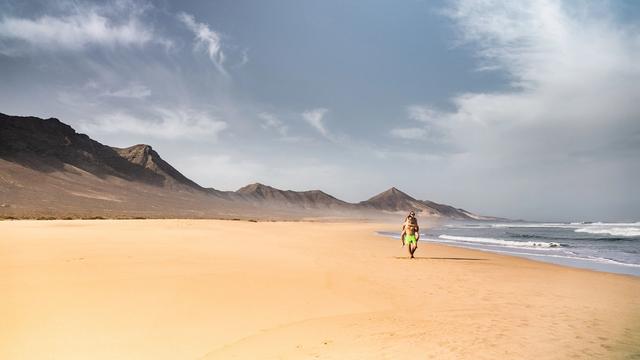
Pale dunes roll straight down to the Atlantic, and from their crests you can watch kitesurfers working along the coast. The sand is almost white and powder-fine, and it comes from the sea itself: mollusc shells and the skeletons of other marine creatures, broken down and heaped up by the wind.
These are the largest dunes in the Canary Islands, yet they are easy to climb, and stepping off the road is enough to put you among curves of sand with nothing else in sight. Under the moving dunes lie older, fossil ones, probably from the late Pleistocene, and in places along the shore a fossil beach shows through, studded with the remains of marine life. Below, the beaches run on so far that parking lines the road for much of their length, and the water is cold and very clear.
Good to know
- There are no toilets, drinking water or information point by the dunes, and none nearby — bring water with you.
- The dunes have no shade at all; a hat and sun protection matter more here than on most beaches.
- The sea is cold and very clear, and the open coast is where kitesurfers come for the wind.
- Wind lifts the sand: keep cameras and phones covered and expect grit in your eyes on breezy days.
- Sand drifts onto the road through the park, so drive slowly and watch the verges when you pull in.
Getting there
A road runs through the dunes, and most visitors arrive by car and simply pull over: parking along the roadside is plentiful, since the beach stretches over such a large area, and there are both free and paid car parks as well. Watch for sand spilling onto the tarmac as you go.
A bus runs from the centre of Corralejo; the stop named Hotels Tres Islas is about 3.1 km away in a straight line. Walking in from the town centre takes about an hour and a half each way. A good loop goes out alongside the road and comes back along the ocean front, with the dunes on one side and the sea on the other.
Best time to visit
Best: early morning or late afternoon.
Avoid: the middle of the day, and days of strong wind.
A low sun picks out the ripples and curves of the dunes and keeps the heat bearable, while at midday the pale sand throws back glare and there is no shade anywhere; a strong wind drives the sand into the air.
Access & restrictions
The dunes have been a protected natural park since 1994, and the protection exists for the moving dune field itself. Keep vehicles on the road and in the car parks and never drive onto the sand. Leave the sand, shells and the fossil beach deposits where they are: the dunes are built from that shell material.
Sun & daylight
Nearby Places
Similar Places
Featured in our guides
Corralejo Natural Park on the map
The beaches face the open Atlantic, with breaking waves and currents that can pull swimmers away from the shore; stay out of the water when the sea is rough and never swim beyond your depth.
Get directions
Your whole travel map in one place
Get inspired by new places around the world and find the ones worth the journey
Frequently asked questions
Do you have to pay to visit Corralejo Natural Park?
No. There is no ticket and the road through the dunes is open. Roadside parking is free, and there are paid car parks too.Can you walk to the dunes from Corralejo?
Yes. From the town centre it takes about an hour and a half each way. You can go out alongside the road and return along the ocean front.Is there a bus to the dunes?
Yes, a bus runs from the centre of Corralejo. The stop named Hotels Tres Islas is about 3.1 km away in a straight line.Are the dunes hard to climb?
No. The dunes are easy to climb, and you can walk onto the sand straight from the roadside parking.Are there toilets or water at the dunes?
No. There are no toilets, drinking water or information point by the dunes, and none nearby, so bring what you need.