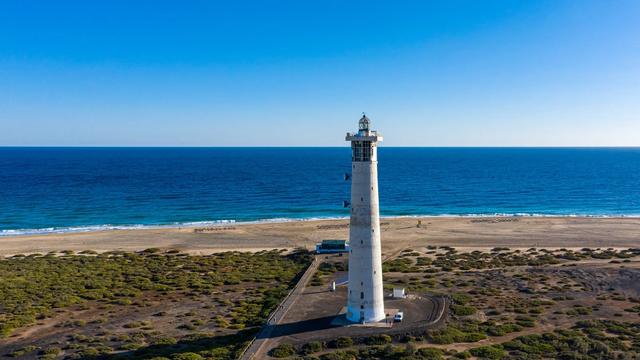
Jandía Natural Park takes in most of the Jandía peninsula, the southwestern end of Fuerteventura in the Canary Islands, joined to the rest of the island by the Istmo de la Pared. The peninsula lies entirely within the municipality of Pájara and has been protected since 1987. Pico de la Zarza, the island's highest point at 807 m, rises within it. The resorts of Morro Jable and Jandía Playa stand on the south and east coasts, Cofete and Villa Winter on the north side, and the west coast has wide sandy beaches used by surfers.
Jandia Natural Park
Local name: Parque Natural de Jandía
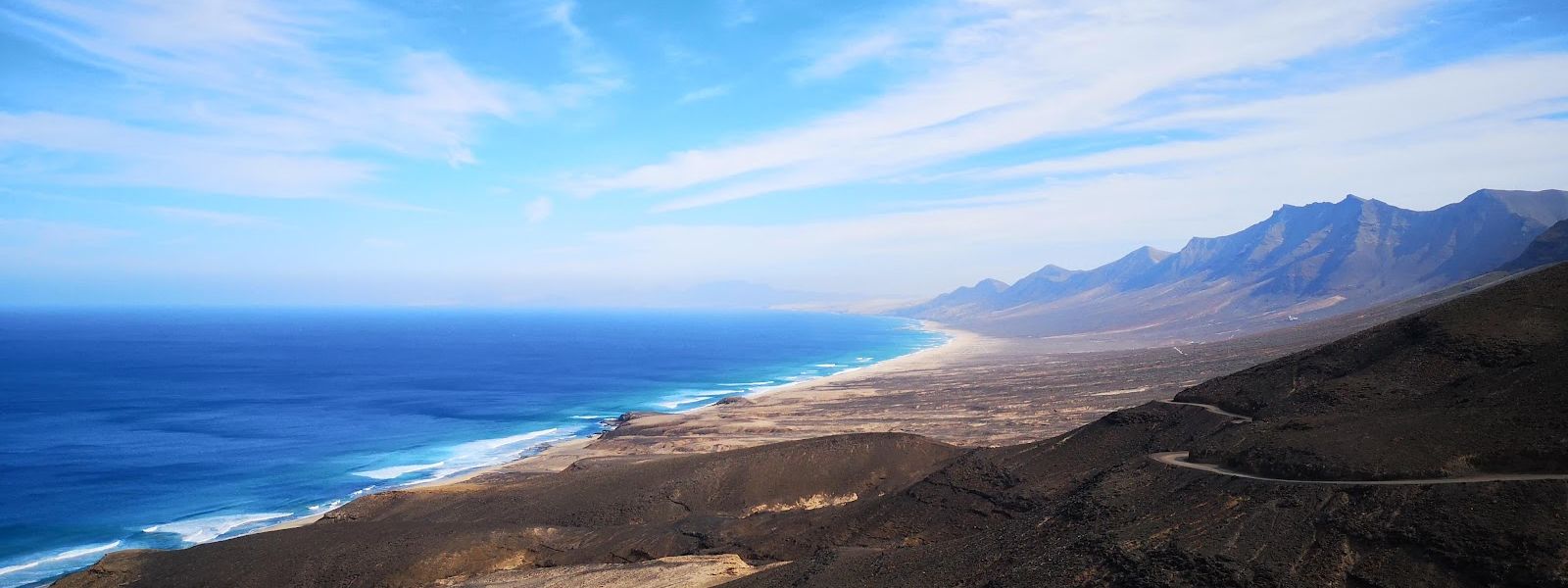
Protected peninsula of dunes, scrub-covered hills and Atlantic beaches, rising to Fuerteventura's 807 m summit.
- Entrance
- Free; the park is open countryside with no gate or ticket.
- Accessibility
- Rough ground: the Cofete car park is on sand and the tracks into the park are rough and uneven.
- Parking
- Free car park on sand at Playa de Cofete; a second car park by the restaurant in Cofete.
- Difficulty
- Depends on the route: beach walks are on sand, while the ascent of Pico de la Zarza (807 m) is fully exposed to the sun, with a very windy summit.
- Transport
- Nearest bus stops: Cofete and Playa Cofete, on the north side of the peninsula.
- Hours
- Open at all times.
- Address
- Pico de la Zarza, 35626, Las Palmas, Spain
What makes it special
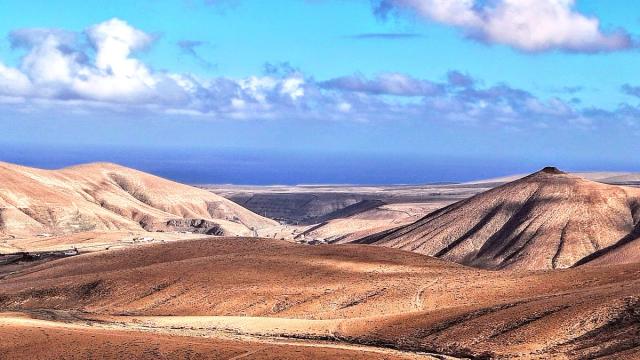
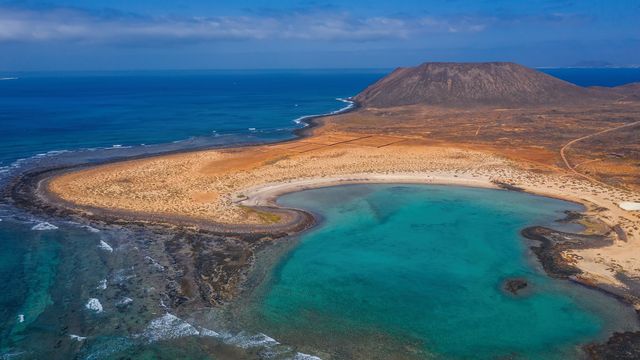
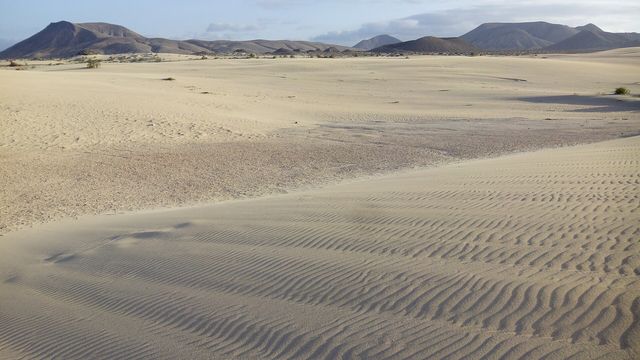
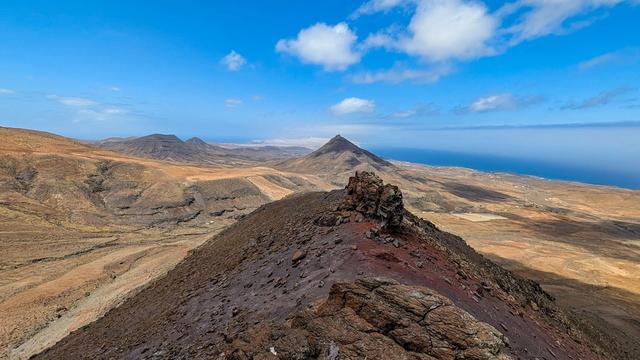
The views from the high ground are what people come back talking about. Brown hills under low scrub run down to sand dunes and long gold beaches, with blue Atlantic water beyond. On the north side the land falls to Cofete, a handful of houses and Villa Winter above the shore. The west coast holds some of the sandiest beaches on Fuerteventura, and surfers use them.
Pico de la Zarza, at 807 m the highest point on the island, stands inside the park, and the walk up it is open to the sky all the way. Animals are easy to meet. Goats wander close enough to stop for, Barbary ground squirrels dart about near the beaches, and the scrub carries plenty of birdlife.
Good to know
- Some rental contracts do not insure cars on the park's rough tracks, so check yours. A small car copes, but rain turns the tracks to mud.
- There are no toilets and no drinking water up in the hills. Carry all the water you need.
- The climb towards the summit has no shade and the top is very windy: bring sun protection and a windproof layer.
- Wind on the beaches drives the sand hard enough to sting bare skin.
Getting there
The park fills the peninsula beyond the Istmo de la Pared, the narrow neck of land that joins Jandía to the rest of Fuerteventura. Morro Jable and Jandía Playa sit on its south and east coasts. Parts of the park are reached only over rough tracks, which some rental insurers will not cover and which turn muddy after rain, although a small car manages them in the dry.
On the north side, Playa de Cofete has a free car park on sand, and there is a second one by the restaurant in Cofete. Bus stops named Cofete and Playa Cofete stand close by. From there the beach and the hills are on foot.
Best time to visit
Best: early morning or late afternoon on a dry day; late afternoon also brings the low sun round over the west-coast beaches.
Avoid: the middle of the day on any climb, and driving the tracks straight after rain.
The slopes give no shade from the sun, and wet weather turns the tracks to mud.
Sun & daylight
Nearby Places
Similar Places
Jandia Natural Park on the map
The west and north coasts face the open Atlantic, with heavy surf and strong currents. Stay out of the water when the sea is up, and never turn your back on the waves.
Get directions
Your whole travel map in one place
Get inspired by new places around the world and find the ones worth the journey
Frequently asked questions
Do I need a 4x4 to visit Jandía Natural Park?
Not necessarily. The tracks are rough and some rental contracts do not cover them, so check yours first. A small car copes in dry weather, but rain turns the tracks to mud.What is the highest point in the park?
Pico de la Zarza, also called Pico de Jandía, at 807 m the highest mountain on Fuerteventura. The ascent has no shade and the summit is very windy.Is it safe to swim at the park's beaches?
The west and north beaches face the open Atlantic, with heavy surf and strong currents. Stay out of the water when the sea is rough.What wildlife can you see?
Goats roam the hills, Barbary ground squirrels live near the beaches, and the scrub holds plenty of birdlife.Are there toilets or drinking water in the park?
There are none up in the hills. Bring all the water you need before you set out.