Los Volcanes Natural Park covers about 100 km² of Lanzarote across the municipalities of Tinajo, Tías and Yaiza, and was declared on 19 June 1987. Its western edge wraps around Timanfaya National Park, and to the east it borders the protected landscape of La Geria. The park holds some of the island's finest lava flows and lapilli fields, much of them from eruptions in the eighteenth and nineteenth centuries. Seabird colonies at Janubio make it a special protection area for birds.
Los Volcanes Natural Park
Local name: Parque Natural de Los Volcanes
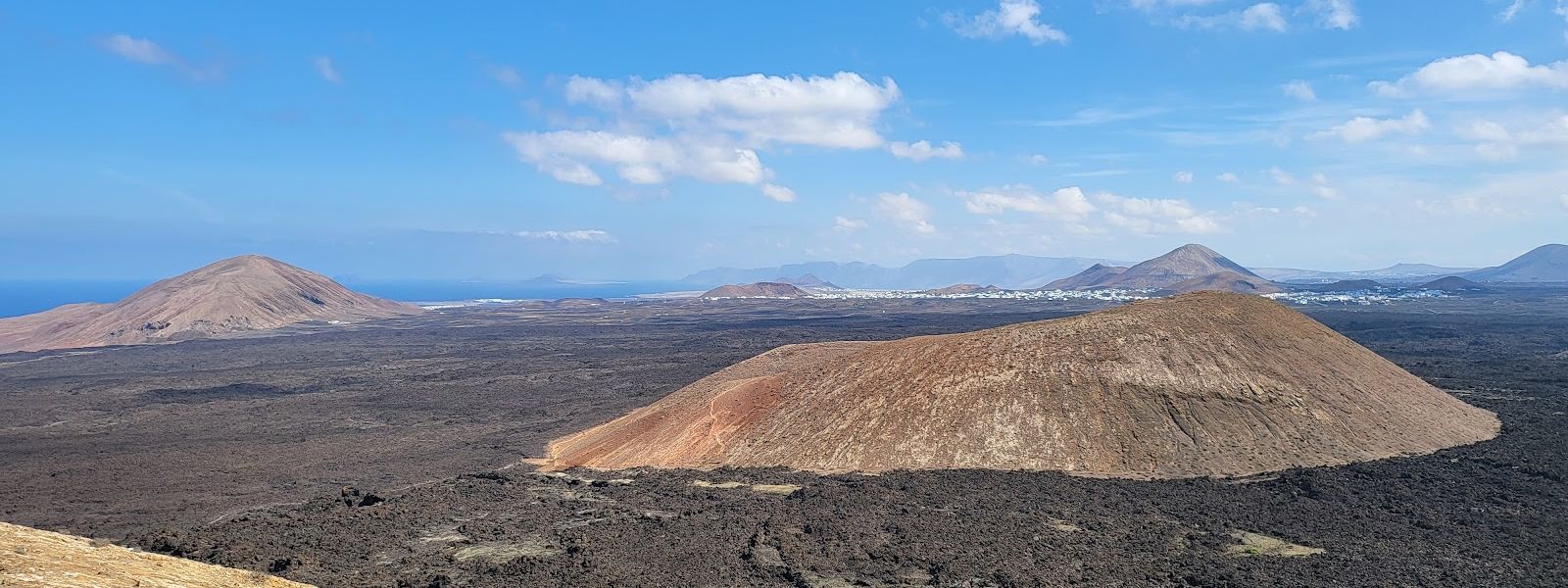
Natural park of lava flows, black lapilli fields and craters, wrapped around Timanfaya on Lanzarote
- Entrance
- Free; there is no ticket for the natural park.
- Parking
- Car parks at Caldera de los Cuervos and Caldera Blanca (free, unsurfaced); the Mancha Blanca visitor centre car park is free for the centre's visitors.
- Difficulty
- Depends on the starting point; from the Caldera de los Cuervos car park the crater is about 15 minutes on foot.
- Transport
- Nearest bus stop: Mancha Blanca, about 3.7 km away in a straight line.
- Address
- Calle Montaña Tenesar, 6B, 35560 Tajaste, Las Palmas, Spain
What makes it special
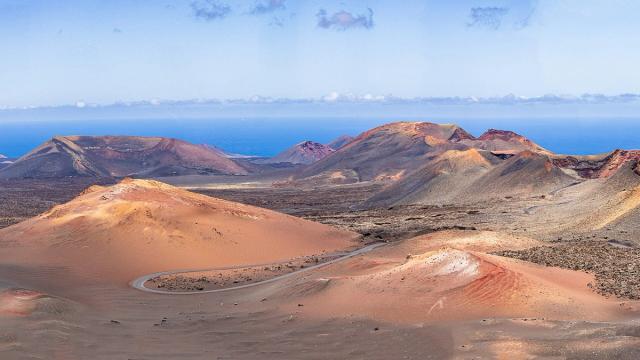
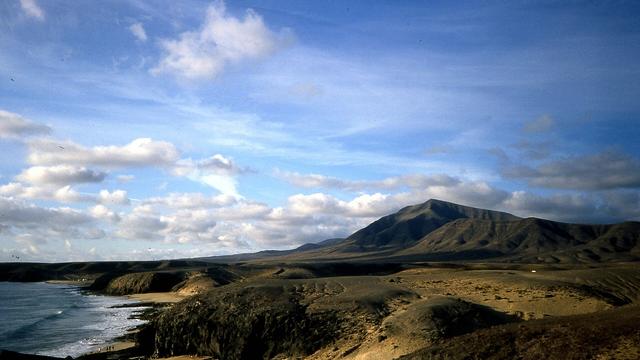
Black lava runs to the horizon in frozen ridges and buckled slabs, with fields of loose black lapilli between them and the sea showing in the distance. Most of it poured out in the eruptions of the eighteenth and nineteenth centuries, and almost nothing grows on it yet.
The older rock tells a different story. It carries lichens, close to a hundred species of them, and in the cooler hollows wild geranium takes hold. Reptiles and birds are the animals that have adapted to this ground, and down at Janubio on the coast the seabird colonies add another reason to come.
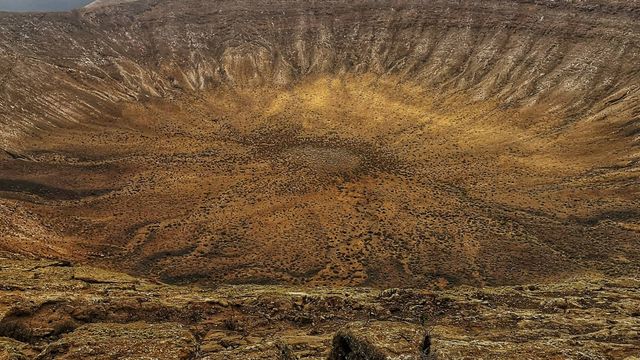
The easiest way into the landscape is Caldera de los Cuervos: about 15 minutes on foot from the car park and you are at the crater.
Good to know
- There is no shade on the lava. Bring a hat, sunscreen and water.
- Lava is sharp-edged and uneven, so wear closed shoes with firm soles.
- The park spreads over three municipalities. Pick your starting point — Caldera de los Cuervos, Caldera Blanca or the Mancha Blanca visitor centre — before you set off.
- The Mancha Blanca visitor centre car park is for people visiting the centre.
Getting there
The park has no single entrance: you reach it at one of several points along the roads that cross the lava. For Caldera de los Cuervos, leave the car at its car park and walk about 15 minutes to the crater. Caldera Blanca has its own free car park on unsurfaced ground. The Mancha Blanca visitor centre (Centro de Visitantes e Interpretación de Mancha Blanca) also has a car park, free for the centre's visitors. The nearest bus stop is in the village of Mancha Blanca.
Best time to visit
Best: early morning or late afternoon, when the low sun throws the lava ridges into relief and the heat is easier to bear.
Avoid: the middle of the day, when the sun stands overhead on bare black rock.
The lava offers no shelter anywhere, so the hour you choose decides how comfortable a walk will be.
Access & restrictions
The park has been protected land since 1987, and it is also a special protection area for birds and an area of ecological sensitivity. Keep to the existing paths, drive only on the roads, and leave lava, lapilli and plants where they lie: the lichens on the older rock grow slowly and break underfoot.
Sun & daylight
Nearby Places
Similar Places
Los Volcanes Natural Park on the map
The lava is sharp and uneven, and a fall on it cuts skin and turns ankles. Wear closed shoes with firm soles and keep to the paths.
Get directions

Your whole travel map in one place
Get inspired by new places around the world and find the ones worth the journey
Frequently asked questions
Is Los Volcanes Natural Park the same as Timanfaya National Park?
They are separate protected areas. The natural park's western edge wraps around Timanfaya National Park, and to the east it borders the protected landscape of La Geria.How long is the walk to the crater of Caldera de los Cuervos?
About 15 minutes on foot from the car park.Where can I park?
Caldera de los Cuervos and Caldera Blanca both have car parks, the one at Caldera Blanca free and unsurfaced. The Mancha Blanca visitor centre car park is for the centre's visitors.What wildlife lives in the park?
Reptiles and birds, both adapted to the bare lava. Seabird colonies nest at Janubio, which is why the park is a special protection area for birds.