Rambla de Castro is a protected landscape of about 45 hectares on the north coast of Tenerife, in the municipality of Los Realejos. Protected since 1987, it covers a slope of cliff and shore crossed by cobbled paths and stairs, with palm groves and historic buildings, among them the Castro manor house and a coastal fort. It is known for its sea views and for the walk down to a beach of more stones than sand.
Rambla de Castro Protected Landscape
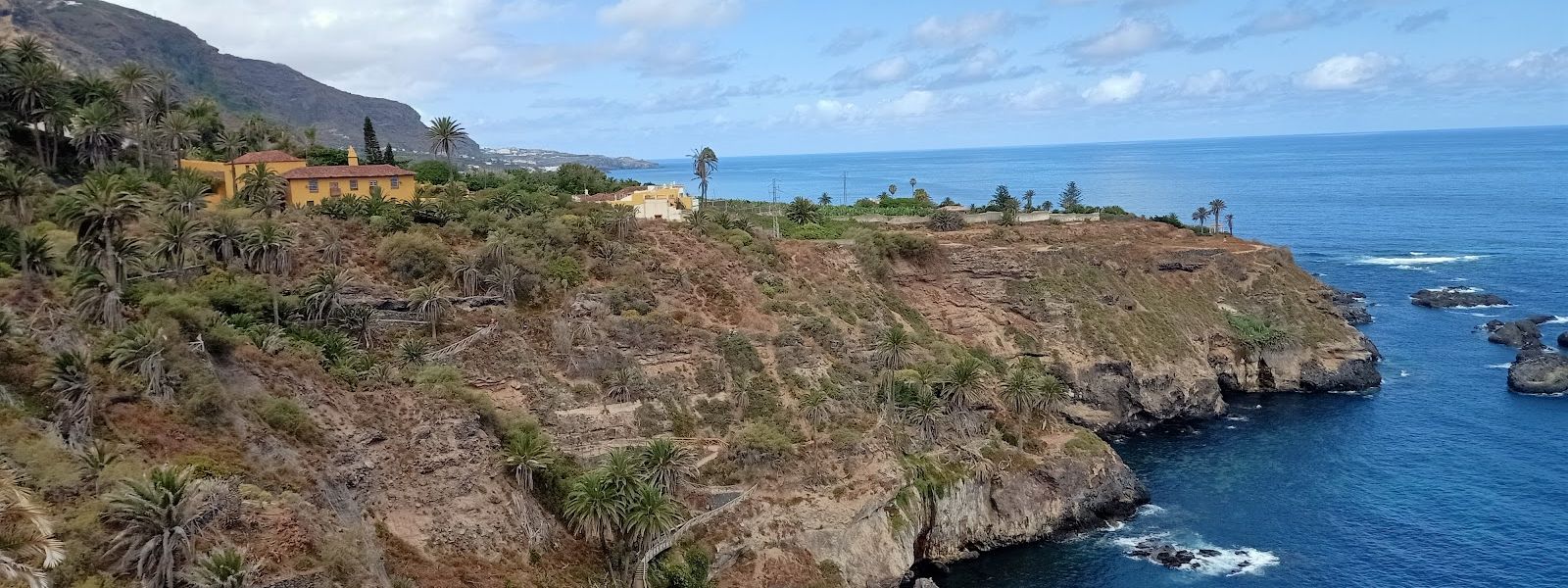
Protected coastal landscape of palms, cobbled paths and stairs dropping to a stony Atlantic beach
- Accessibility
- Not accessible by wheelchair: the paths are cobbled and stony, with lots of stairs, especially on the way down to the beach.
- Parking
- Free car park at the top of the reserve, next to the signposts; free street parking as well.
- Difficulty
- Easy to moderate, with some steep bits: about twenty minutes down cobbled paths and stairs to Castro Beach, and twenty back up.
- Transport
- Bus stops La Tropicana (stop 5260) and San Agustin (stop 4330), about 170 m away in a straight line.
- Hours
- Open at all times.
- Address
- TF-5, 38410 Los Realejos, Santa Cruz de Tenerife, Spain
What makes it special
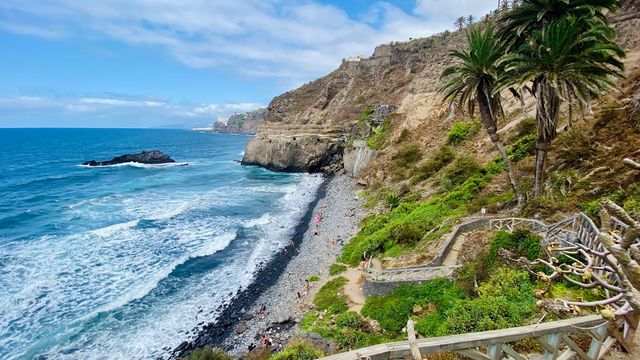
The sea view starts at the car park: the Atlantic spread out below, palms along the slope. From there cobbled paths and stairs wind down to Castro Beach (Playa de Castro), a cove of more stones than sand about twenty minutes below the top.
The way down passes the buildings that give the place its history — the Castro manor house (Casa de Castro) among the palms, and San Fernando Fort (Fortín de San Fernando), a gun battery built to watch the sea. The paths and steps are well made, the walking is easy to moderate with some steep bits, and at sunset the whole coastline takes the last of the light.
Good to know
- Wear hiking shoes or trainers with thick soles: the paths are cobbled and stony, and flip-flops are a poor choice.
- There are no toilets and no drinking water in the reserve or nearby — bring water with you.
- The way down to Castro Beach is mostly stairs, and the climb back up takes as long as the descent.
- Castro Beach is more stones than sand.
- Dogs are allowed on the paths.
Getting there
Drivers leave the car at the top of the reserve, where signposts stand beside the car park and point the way in. The sea view begins right there, so even without the walk the stop is worth making.
The descent to Castro Beach takes about twenty minutes on cobbled paths and stairs, with some steep bits, and the climb back up takes about twenty more. By bus, two stops, La Tropicana and San Agustin, lie about 170 m away in a straight line.
Best time to visit
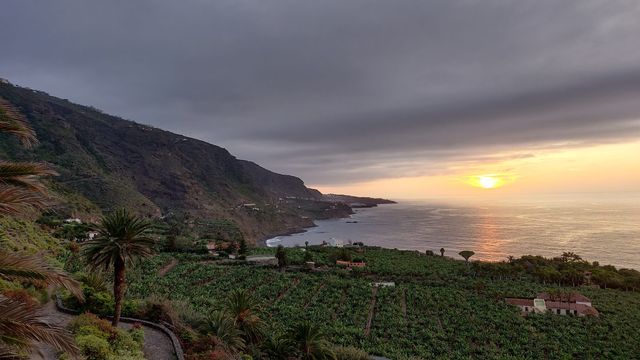
Best: late afternoon into sunset, when the light drops low over the Atlantic and the palms and the old buildings catch it.
Avoid: wet days and rough seas.
Cobbles and stony steps turn slippery in the rain, and the beach at the bottom is only worth the stairs when the weather is calm.
Sun & daylight
Nearby Places


Similar Places


Rambla de Castro Protected Landscape on the map
Castro Beach faces the open Atlantic and takes heavy swell. Keep off the wet rocks at the waterline and never turn your back on the sea.
Get directions
Your whole travel map in one place
Get inspired by new places around the world and find the ones worth the journey
Frequently asked questions
How long does it take to walk down to the beach?
About twenty minutes down to Castro Beach and twenty back up, much of it on stairs.Are there toilets or drinking water at Rambla de Castro?
No. There are no toilets and no drinking water in the reserve or nearby, so bring water with you.What shoes should I wear?
Hiking shoes or trainers with thick soles. The paths are cobbled and stony, with uneven stones and lots of stairs.Can I bring children and dogs?
Yes. Dogs are allowed, and the walk is easy to moderate and suits children, though the stairs and some steep bits rule out a pushchair.