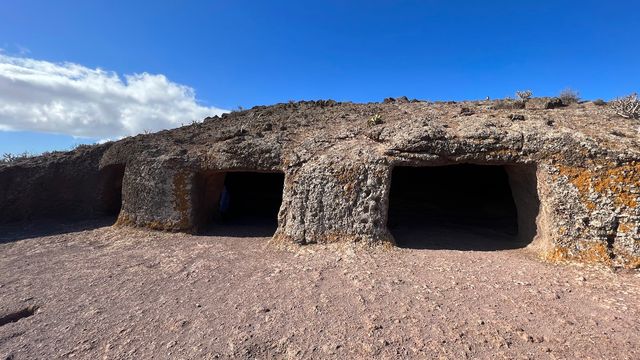
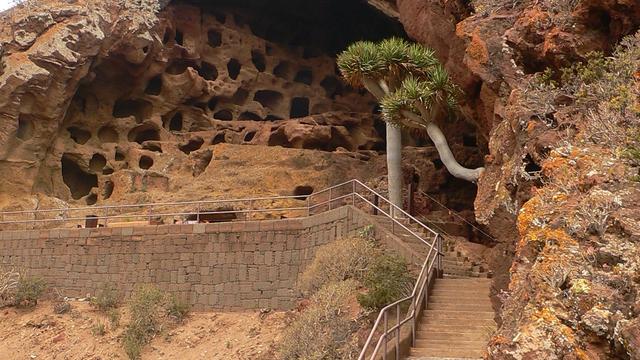
Risco Caído is an archaeological site and cultural landscape in the mountainous centre of Gran Canaria. Its cliffs and ravines hold cave dwellings, granaries, cisterns and cult caves of the island's pre-Hispanic people, along with two sacred temples, or almogarenes: Risco Caído itself and Roque Bentayga. UNESCO listed it in July 2019, the first World Heritage Site on Gran Canaria. The site is presented at an interpretation centre in Artenara (Centro de Interpretación del Paisaje Cultural de Risco Caído y Montañas Sagradas).
Risco Caido
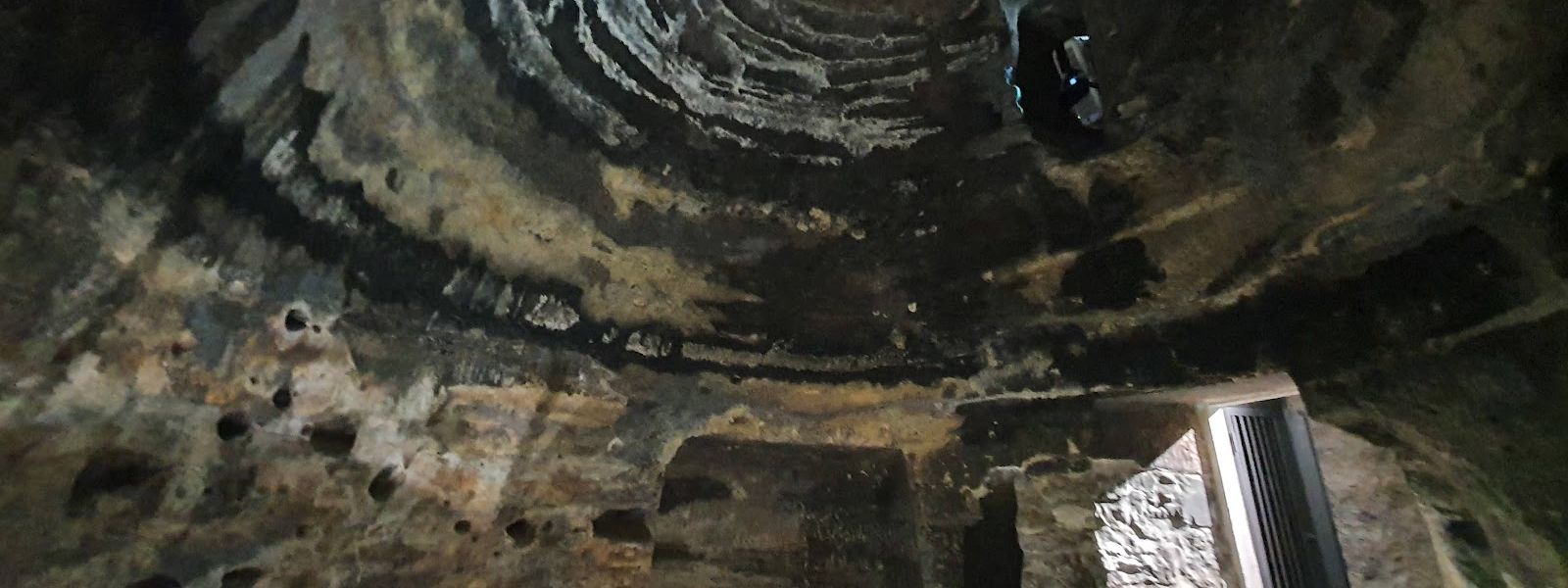
UNESCO-listed landscape of pre-Hispanic cave dwellings, granaries and cave temples in the mountains of Gran Canaria
- Entrance
- Free.
- Accessibility
- Wheelchair-accessible entrance, parking and toilet.
- Parking
- Free car park about 40 m away; a second parking area by the Mirador La Cilla, about 60 m away.
- Difficulty
- None: park about 40 m away and walk in through a wheelchair-accessible entrance.
- Transport
- Bus stop Artenara, about 50 m away.
- Hours
- Daily 10:00–17:00.
- Address
- C. Cam. de La Cilla, 17, 35350 Artenara, Las Palmas, Spain
What makes it special
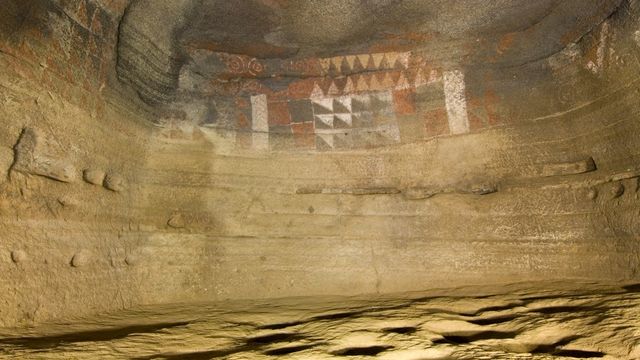
The centre in Artenara puts the cave temple of Risco Caído in front of you: a replica of the cave, videos, interactive tests and staff who explain what the panels leave out. The case it makes is that the island's first people read the sky here, with sunlight entering the domed cave through an opening and moving across carved symbols as the seasons turned.
That theory carried the UNESCO listing in 2019, and it has critics. The mathematician José Barrios and the geographer Eustaquio Villalba both argue that no published study supports the observatory. Go knowing both sides.
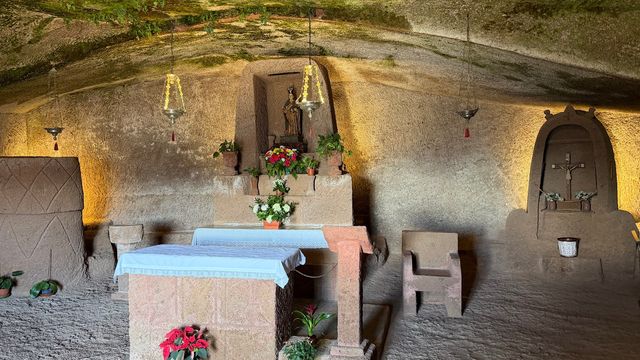
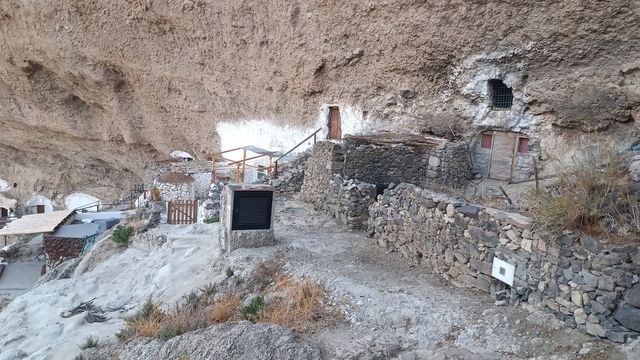
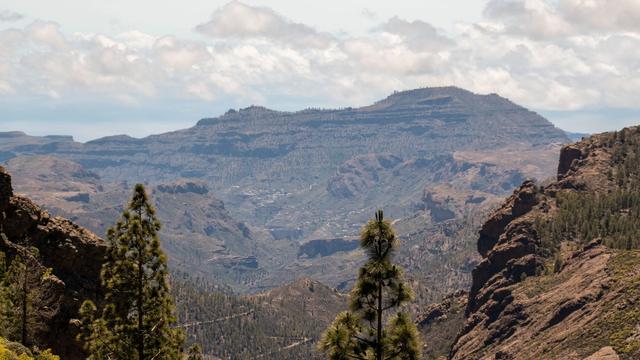
Step outside afterwards and the wider listing is in view: cliffs, ravines and the rock of Roque Bentayga, the second sacred temple of the site.
Good to know
- Allow about an hour: the videos and interactive displays take time to work through.
- Information is in Spanish and English, with notebooks in German.
- The interactive displays work well with children.
- Everything is indoors, so the visit holds up when cloud sits on the summits.
- Toilets and a drinking-water point stand by the car park and the municipal picnic area.
Getting there
The interpretation centre stands in the village of Artenara, beside the Mirador La Cilla. A free car park lies about 40 m away, with a second parking area by the viewpoint about 60 m off. The Artenara bus stop is about 50 m from the door.
Toilets and drinking water sit within about 80 m, at the municipal picnic area (Merendero municipal). About 70 m away a guidepost marks the S-90 and S-88 footpaths, and an information map stands close by.
Best time to visit
Best: a day when cloud hides the summits, or a clear morning to pair the centre with the view from the Mirador La Cilla.
Avoid: arriving late in the afternoon.
The centre keeps daytime hours, and an hour inside goes quickly once the videos start.
Things to do nearby
All tours in Artenara on GetYourGuide
Paid links: booking through them supports YowJourney.
Sun & daylight
Nearby Places
Similar Places
Featured in our guides

Your whole travel map in one place
Get inspired by new places around the world and find the ones worth the journey
Frequently asked questions
Do you pay to enter the Risco Caído interpretation centre?
No. Entry is free.How long does a visit take?
About an hour, with time for the videos, the interactive displays and the cave replica.Is the centre accessible by wheelchair?
Yes. The entrance, the parking and the toilet are wheelchair-accessible.Which languages is the information in?
Spanish and English, with notebooks carrying the information in German.Was Risco Caído really an astronomical observatory?
The idea is disputed. It was the main reason for the UNESCO listing, but the mathematician José Barrios and the geographer Eustaquio Villalba argue that no published study supports it.