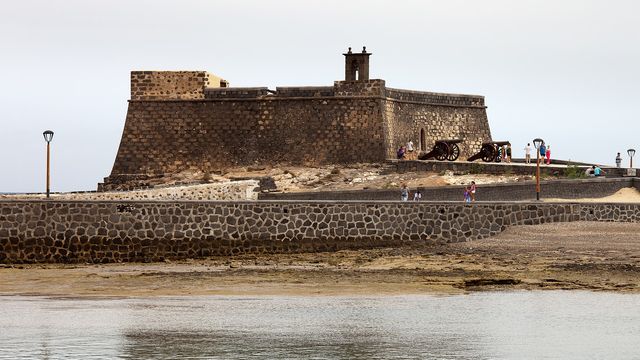
Castillo de San José is a fortress built between 1776 and 1779 on a cliff above the Port of Naos (Puerto de Naos) in Arrecife, Lanzarote. Charles III ordered it as a defence against pirates and as paid work for islanders hit by famine, which earned it the name Fortress of Hunger (Fortaleza del Hambre). In the 1970s César Manrique redesigned the interior, and since 1976 it has housed the International Museum of Contemporary Art (MIAC), with abstract work from 1950 to 1980.
San Jose Castle
Local name: Castillo de San José
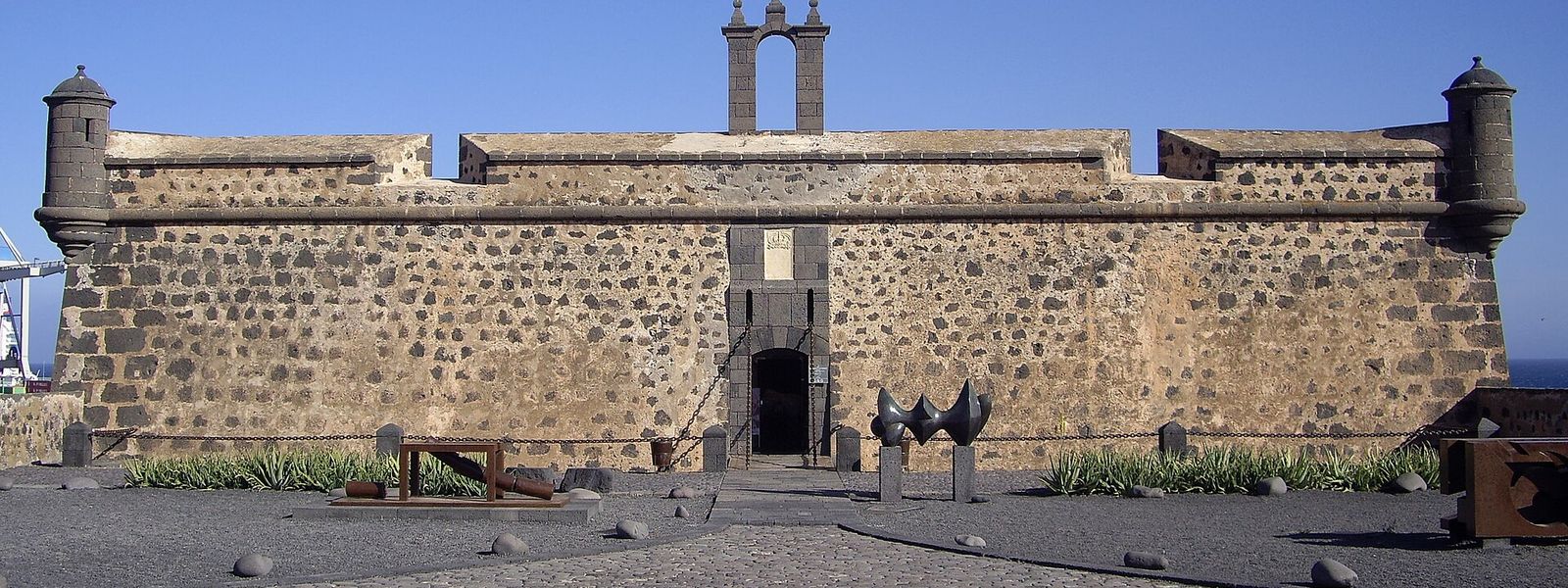
D-shaped 18th-century fortress on a cliff above Arrecife's port, housing a museum of abstract art.
- Accessibility
- Wheelchair-accessible parking and toilet. The roof is reached by worn lava-rock steps, and the restaurant below the museum by a spiral staircase.
- Parking
- Free car park for visitors in front of the castle, about 60 m away.
- Difficulty
- None to speak of: you park in front of the castle and cross the drawbridge to the gateway. The roof means a climb up worn lava-rock steps.
- Transport
- Bus routes 5 and 23 to the Lloret (Ikea) stop, about 375 m away in a straight line.
- Hours
- Daily, 11:00–18:00.
- Address
- Ctra. los Castillos, 35500 Arrecife, Las Palmas, Spain
What makes it special
A drawbridge over a moat leads into a gallery of abstract art. The castle went up between 1776 and 1779, partly to guard against pirates and partly to give work to islanders starving after drought and the Timanfaya eruption of 1730–1736. Locals called it the Fortress of Hunger. Its barrel-vaulted powder stores now hold work by Antoni Tàpies, Eusebio Sempere and the El Paso group, with a section given to the Canarian artist Pancho Lasso, in rooms César Manrique redesigned in the 1970s.
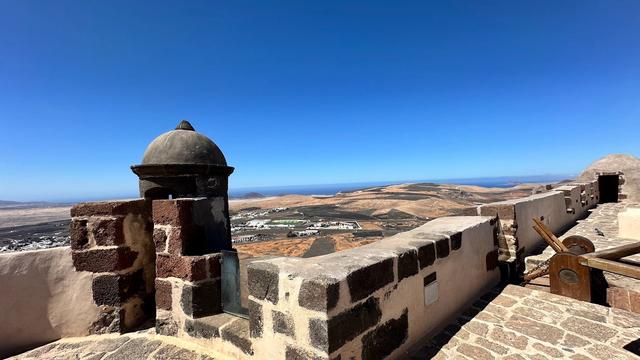
Worn lava-rock steps climb to the roof, where more pieces stand against the port and the rest of Arrecife. The old lookout towers are open: stand inside and look out through the slots, and find the double latrine that dropped straight to the ground below. Down a spiral staircase, the restaurant's curved floor-to-ceiling glass looks over the harbour and docks.
Good to know
- The collection fills a few ground-floor rooms; leave time for the roof, the lookout towers and the garden as well.
- The roof is reached by worn lava-rock steps and the restaurant by a spiral staircase, so neither is step-free.
- A shoreline bar serves coffee below the castle; the steps and path down to it are on the left-hand side of the building.
- The gardens run around the side of the building and back up to the car park, with sculptures set in the grounds.
- Toilets are inside, including a wheelchair-accessible one.
Getting there
The castle stands on a cliff above the Port of Naos, away from the centre of Arrecife. By car you pull into the free visitors' car park in front of the building, about 60 m away. Sculptures stand in the grounds as you cross towards the moat, and the drawbridge takes you over it to the main gateway.
The nearest bus stop, Lloret (Ikea), is about 375 m away in a straight line. For the shoreline bar, follow the steps and path on the left-hand side of the building.
Best time to visit
Best: a clear day.
Avoid: haze or low cloud if you are coming for the view.
The roof, the lookout towers and the garden are open to the sky, and their reward is the view over the port and Arrecife; the galleries are indoors and work in any weather.
Things to do nearby
All tours in Arrecife on GetYourGuide
Paid links: booking through them supports YowJourney.
Sun & daylight
Nearby Places
Similar Places

Your whole travel map in one place
Get inspired by new places around the world and find the ones worth the journey
Frequently asked questions
What is in the museum at Castillo de San José?
Abstract work from 1950 to 1980, including sculpture, kinetic art and geometric abstraction, mainly by Spanish artists such as Antoni Tàpies, Eusebio Sempere and the El Paso group. One section is given to the Canarian artist Pancho Lasso, and more pieces stand in the courtyard and on the roof.Why is it called the Fortress of Hunger?
It was built between 1776 and 1779 partly as public work for islanders during famine, caused by drought and by the Timanfaya eruption of 1730–1736, which had ruined most of the island's farmland. Charles III ordered the fortress built.Is there parking at the castle?
Yes. A free car park for visitors sits in front of the building.Can you eat at Castillo de San José?
Yes. A restaurant sits beneath the museum, reached by a spiral staircase, with curved floor-to-ceiling windows over the harbour. A shoreline bar on the left-hand side of the building serves coffee.Can you get there by bus?
Routes 5 and 23 stop at Lloret (Ikea), about 375 m from the castle in a straight line.