The Atlantic Center of Modern Art (CAAM) is a contemporary art museum in Vegueta, Las Palmas de Gran Canaria. The architect Francisco Javier Sáenz de Oiza designed the building, keeping the façades of two older neoclassical houses, and it opened on 4 December 1989 to house the Canarian art collections of the Cabildo de Gran Canaria, the island council. Its permanent collection of more than 2,600 works is shaped around the dialogue between Europe, Africa and the Americas.
Atlantic Center of Modern Art (CAAM)
Local name: Centro Atlántico de Arte Moderno
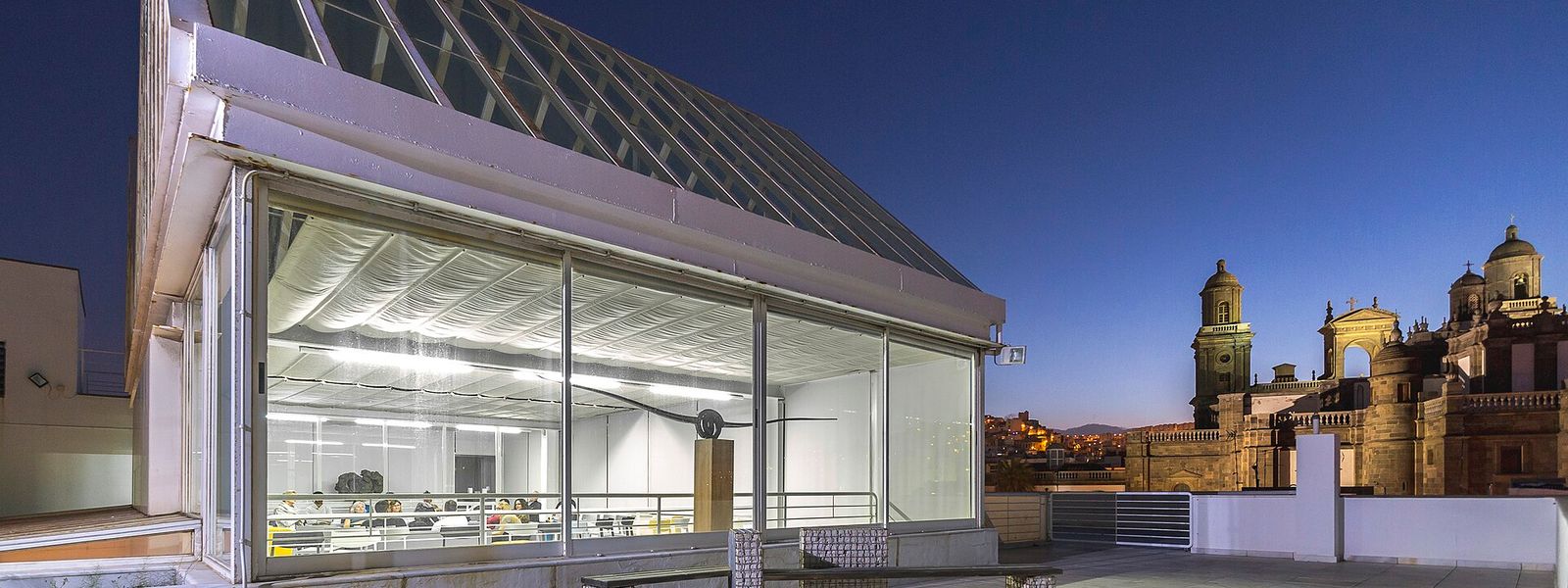
Contemporary art museum behind two neoclassical façades in Vegueta, with over 2,600 works from three continents.
- Entrance
- Free.
- Accessibility
- Wheelchair-accessible entrance and toilet. Galleries on three floors. No wheelchair-accessible parking.
- Parking
- Paid public car park at the Mercado de Vegueta, about 200 m away. No wheelchair-accessible parking.
- Difficulty
- None: the entrance opens straight off the street in Vegueta.
- Transport
- Bus stop Reyes Católicos 9 (stop 171), about 130 m away.
- Hours
- Monday closed; Tuesday to Saturday 10:00–21:00; Sunday 10:00–14:00. Closes between exhibitions.
- Address
- C. los Balcones, 11, 35001 Las Palmas de Gran Canaria, Las Palmas, Spain
What makes it special
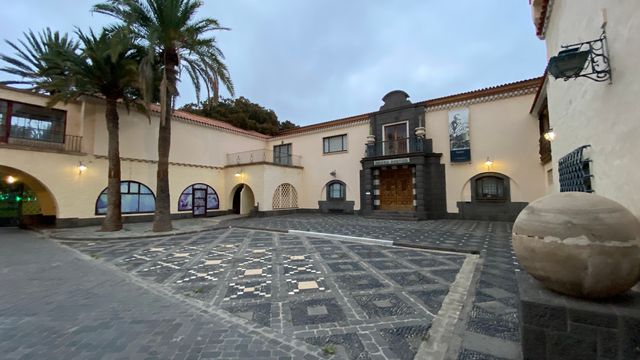
From the street you see two old neoclassical house fronts. Behind them, Sáenz de Oiza's building rises through three floors of galleries.
The museum reads Canarian art through what it calls tricontinentality: the islands sit between Europe, Africa and the Americas, and the permanent collection of more than 2,600 works follows that line. The Canarian holdings are the best known, with Manolo Millares, Martín Chirino and Pablo Serrano from the El Paso group and the Informalist movement. Spanish work from the 1980s and 1990s by José María Sicilia, Cristina Iglesias and Luis Gordillo shares the collection with pieces by Andreas Schulze and Jiri Georg Dokoupil.
Temporary exhibitions rotate across the three levels and take in painting, drawing, sculpture, graphics and mail art.
Good to know
- The museum closes between exhibitions, at times keeping a single room open with no other facilities. Check caam.net before you go.
- There are toilets inside, including a wheelchair-accessible one. A free public toilet stands about 110 m away.
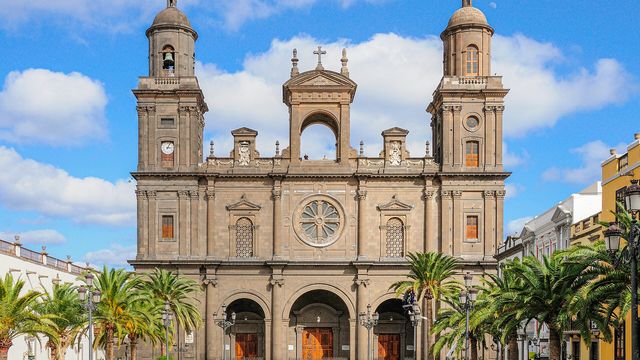
- The cathedral (Catedral de Canarias) is about 80 m away, so the museum fits easily into a walk around Vegueta.
- Galleries spread over three floors and the museum is suitable for children.
Getting there
The museum stands in Vegueta, the old quarter of Las Palmas, in the streets near the cathedral. The nearest bus stop, Reyes Católicos 9, is about 130 m away, and the rest is a walk through the old town.
Drivers can leave the car at the paid car park by the Mercado de Vegueta, about 200 m away, and walk from there. The entrance opens straight off the street and takes a wheelchair.
Best time to visit
Best: Tuesday to Saturday, when the museum keeps its full opening day into the evening.
Avoid: Monday, when it is closed, and Sunday afternoon, when it has already shut.
The galleries are indoors, which makes them a good use of a hot midday or a wet day in Vegueta; just confirm an exhibition is running before you set out.
Things to do nearby
All tours in Las Palmas de Gran Canaria on GetYourGuide
Paid links: booking through them supports YowJourney.
Sun & daylight
Nearby Places
Similar Places

Your whole travel map in one place
Get inspired by new places around the world and find the ones worth the journey
Frequently asked questions
What is in the permanent collection of the Atlantic Center of Modern Art?
More than 2,600 works, many from the Americas, Africa and Europe. The best-known part is Canarian art, including Manolo Millares, Martín Chirino and Pablo Serrano from the El Paso group and the Informalist movement.Is the museum always open?
No. It is closed on Mondays, and it also closes between exhibitions, sometimes leaving only one room open. Check caam.net before you go.Can a wheelchair user visit?
Yes. The entrance and a toilet are wheelchair accessible. There is no wheelchair-accessible parking.Who designed the building?
The architect Francisco Javier Sáenz de Oiza, who kept the façades of two older neoclassical houses. The museum opened on 4 December 1989.