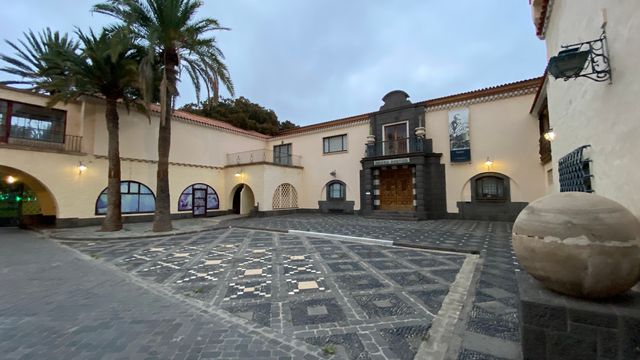
Casa de Colón is a public museum and study centre in the historic Vegueta district of Las Palmas de Gran Canaria, run by the Cabildo of Gran Canaria. The building joins several late sixteenth-century houses, one of them held to be part of the old Governor's House that Christopher Columbus is believed to have visited in 1492 while seeking repairs for the Pinta. Thirteen rooms around two courtyards cover his voyages, the Canaries on the Atlantic route, pre-Columbian America, the city's history and painting from the sixteenth to the twentieth century.
Casa de Colon
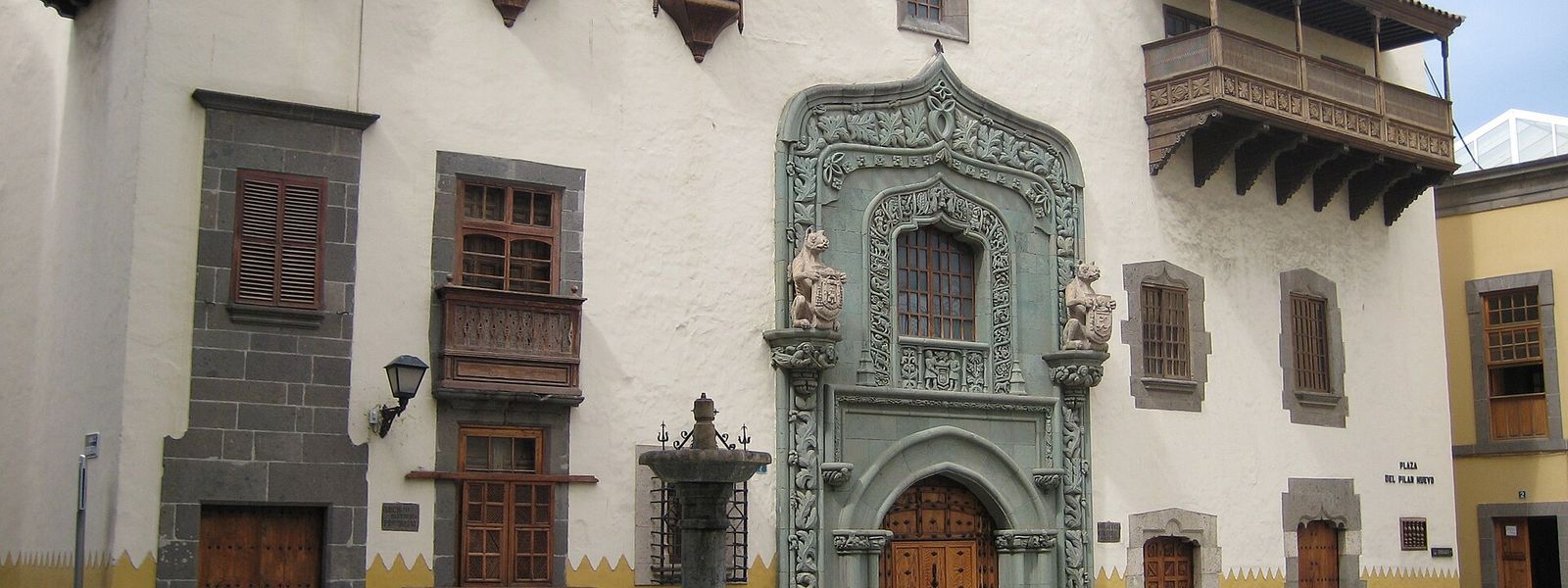
Museum of Columbus and the Canaries' ties to America, in a sixteenth-century Vegueta house with a Gothic well-head
- Entrance
- €4 for adults, €2 for seniors and pensioners; free on Sundays.
- Accessibility
- Wheelchair-accessible entrance and an accessible toilet; the parking is not wheelchair-adapted.
- Parking
- Paid car park at the Mercado de Vegueta, about 170 m away; no wheelchair-accessible parking.
- Difficulty
- None: the museum opens onto a street in Vegueta, about 100 m from the nearest bus stops.
- Transport
- Bus stops Ctra. del Centro (Teatro Guiniguada) and Plaza de las Ranas, both about 100 m away.
- Hours
- Monday to Saturday 10:00–18:00; Sunday 10:00–15:00.
- Address
- C. Colón, 1, 35001 Las Palmas de Gran Canaria, Las Palmas, Spain
What makes it special
In the main courtyard, a Gothic stone well-head stands beneath a Renaissance arcade brought here from the convent of Santo Domingo, which the Dutch corsair Pieter van der Does destroyed in the sixteenth century. Look up as you walk through the rooms. The carved wooden ceilings are the house's other treasure, and the one in the cartographer's room is worth stopping for.
The Columbus rooms tell the voyages through models of caravels, nautical charts, navigation instruments and a reconstruction of the Admiral's cabin. Down in the crypt, original ceramics of the Esmeraldas and Tolita cultures share space with Yanomami baskets, harpoons and arrows. Upstairs, the paintings run from four Flemish panels, which reached the island through the sugar trade with Flanders, to Mexican pictures set with mother-of-pearl.
Good to know
- Labels are only partly in English; the ship models, maps and instruments carry the story on their own.
- The painting galleries upstairs are part of the same visit, with no separate ticket.
- In the cartographer's room, look up at the ceiling before you move on.
- The gift shop sells local artisan crafts.
- Temporary exhibitions, talks, courses and concerts run through the year alongside the permanent rooms.
Getting there
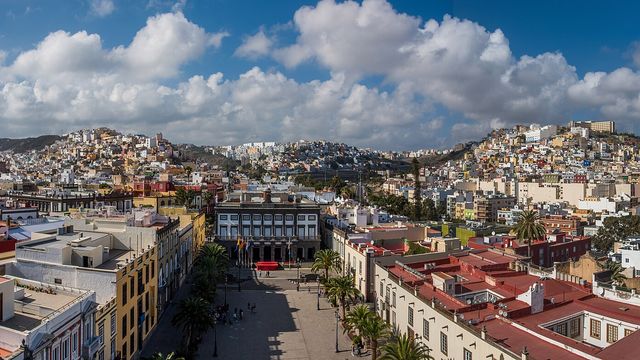
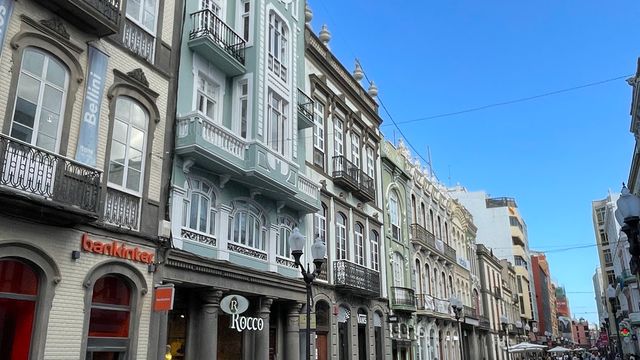
Casa de Colón stands in Vegueta, the old quarter of Las Palmas de Gran Canaria, among the streets around Santa Ana Cathedral. Buses stop about 100 m away, on the Carretera del Centro by the Teatro Guiniguada and at Plaza de las Ranas. Drivers can use the paid car park at the Mercado de Vegueta, about 170 m in a straight line from the museum.
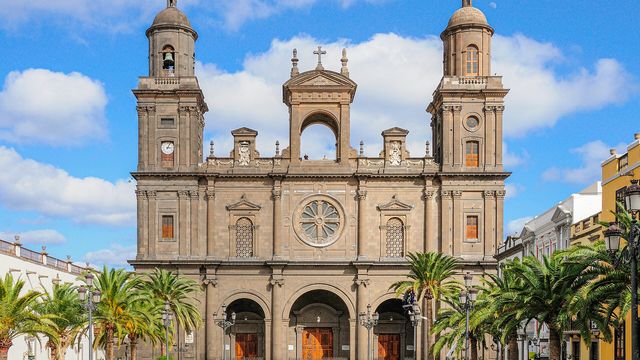
Either way the last stretch is on foot through the old town. From the museum the walk carries on easily to the cathedral, its square and the street of wooden balconies (Calle de los Balcones).
Best time to visit
Best: around midday, or on a rainy day. Nearly all of the visit is indoors, so it fills the hours when the old town's streets are at their hottest or wettest.
Avoid: a late Sunday visit. Sunday opening ends hours earlier than the rest of the week, which leaves little time for thirteen rooms and two courtyards.
Things to do nearby
All tours in Las Palmas de Gran Canaria on GetYourGuide
Paid links: booking through them supports YowJourney.
Sun & daylight
Nearby Places
Similar Places

Your whole travel map in one place
Get inspired by new places around the world and find the ones worth the journey
Frequently asked questions
Did Columbus really stop at this house?
Part of the building is held to be the old Governor's House, which Columbus is believed to have visited in 1492, on his first voyage, to ask for help repairing the Pinta. The house as it stands joins several dwellings, with original sections from the sixteenth century and rebuilding since 1950.Is Casa de Colón good for children?
Yes. Models of caravels, navigation instruments and the reconstructed cabin of Columbus give children plenty to look at, and a scale model of Gran Canaria shows the whole island at once.Are the labels in English?
Partly. Some explanations are in English, and where they are not, the models, maps and objects still get the gist across.What is in the crypt?
The rooms on America before Columbus: panels on the peoples of pre-Columbian America, original ceramics of the Esmeraldas and Tolita cultures, reproductions of Aztec, Maya, Zapotec and Mixtec pieces, and twentieth-century Yanomami baskets, harpoons and arrows.